In 2020, a lot of advertising took place in potentially brand-damaging digital environments
In a study, Zulu5 examined the placement of digital ads in critical advertising environments in Switzerland during the second half of 2020. The results show that 72 of the 100 most active Swiss companies in terms of advertising placed ads in digital environments that could be considered potentially harmful to their respective brands.


As part of a follow-up study to the Brand Safety Report H1 2020, Zulu5 again analyzed over one million national and international potentially brand-damaging Internet domains and investigated the extent to which Swiss advertisers exposed themselves in corresponding advertising environments in the second half of 2020.
72% of the largest Swiss advertisers affected
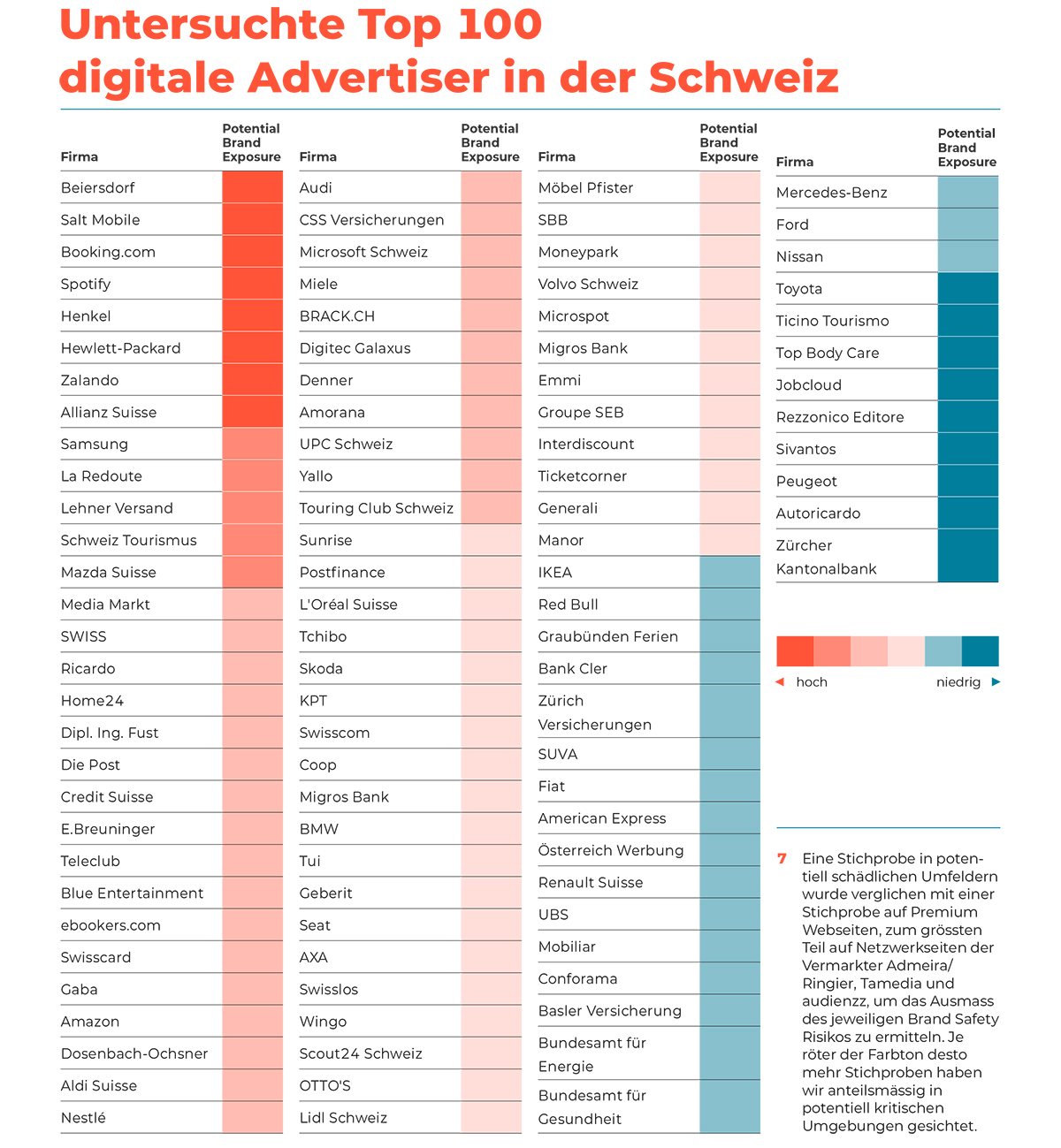
While in the first half of the year 46 of the 100 largest Swiss advertisers placed ads in digital environments that could be classified as potentially damaging to their brand, between July and December 2020, 72 percent of companies did so. This represents an increase of over 50 percent.
The increase is probably due to the fact that many companies froze their advertising spending in the first half of the year and then spent it in the second half. According to the report, brands such as Beiersdorf, Salt, Booking.com, Spotify and Zalando were particularly exposed to potentially brand-damaging digital environments.
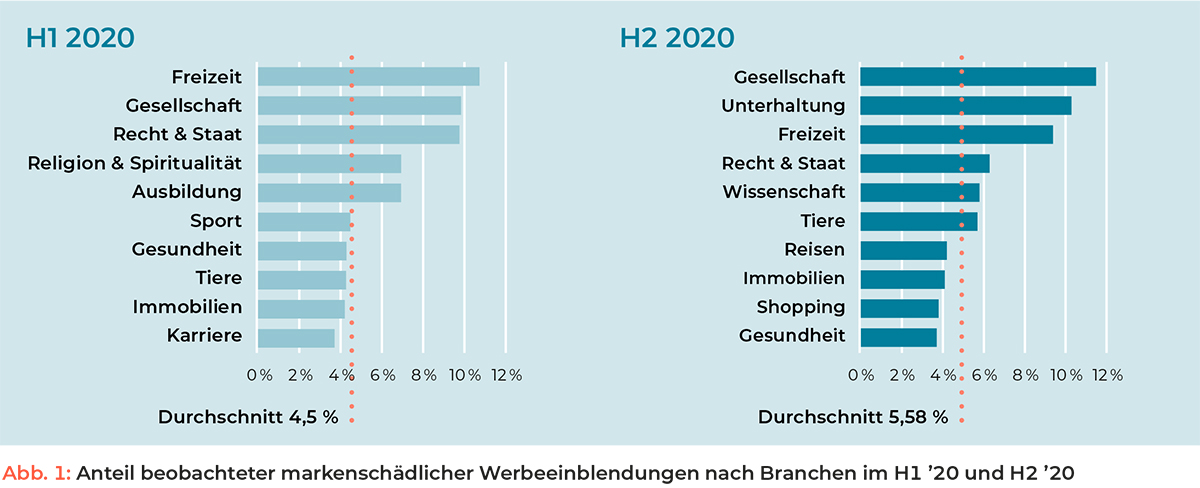
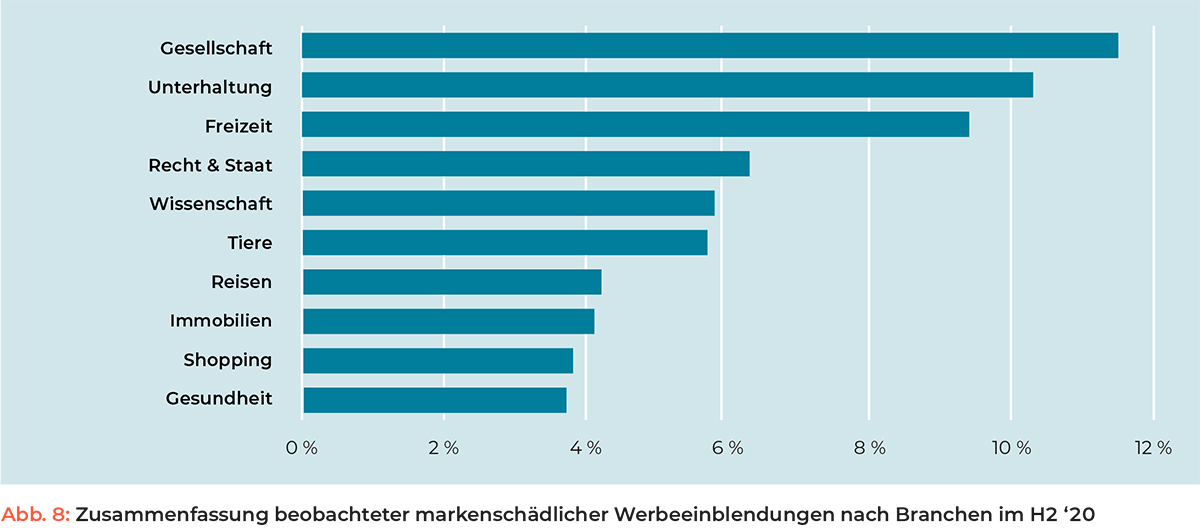
An overall analysis of all Swiss advertisers who were particularly affected by digital advertising in brand-critical environments in the second half of 2020 shows that community and dating platforms and the entertainment industry in particular were exposed to an increased risk. This finding should be understood in the context of the Corona pandemic, which was at a new peak in the second half of 2020. During this period, community and dating platforms ("social" industry) as well as the entertainment and leisure industries ran broad-based campaigns. The larger advertising spend by advertisers from these sectors - especially also via programmatic booking channels - led to increased ad placements in potentially brand-unsafe environments.
Around one million websites and YouTube channels monitored
To monitor which Swiss advertisers were exposing themselves to potentially brand-damaging environments, Zulu5's crawlers combed through approximately one million national and international potentially brand-damaging and fraudulent websites and YouTube channels between July and December 2020, following an "outside-in" approach.
The advertising environments were divided into two levels of severity: "Legal Safety" - advertising environments that violate the law or advertising guidelines, and "Brand Suitability" - brand-specific safety requirements.
The study for the second half of 2020 identified around 900,000 incidents where Swiss website visitors were shown ads in potentially brand unsafe or fraudulent environments - 84 percent of which could be attributed to "brand suitability."
An evaluation of the top 100 advertisers shows how many of them were spotted in potentially brand-damaging environments in percentage terms. To determine the extent of the brand safety risk, the sample of harmful incidents was compared with a sample on websites of major Swiss publishers. If the study recorded more than 2 percent of all registered incidents on potentially brand-damaging sites compared to the sample on premium sites, the brand was flagged as exposed. Below the 2 percent mark, it was also exposed, but to an extent that must be reckoned with when digital advertising is placed.
Prevent advertising playout in brand-damaging environments
This Brand Safety Report from Zulu5 reveals that ads booked and played by leading Swiss advertisers through open international programmatic advertising networks regularly appear in potentially brand-damaging environments. As Andreas Gysler, founder of Zulu5 explains, it is therefore important for advertisers to think about brand safety and take appropriate precautions to minimize the risk. "In the worst case scenario, brands that advertise in potentially brand-damaging environments have to reckon with their brand value being affected and even fear consequential economic damage through lost sales. They can counter this problem by establishing a stronger auditing culture and monitoring in real time whether their digital ads are being played in a potentially harmful environment," says Gysler.
The Brand Safety Report Switzerland H2 2020 can be downloaded at Zulu5.com downloaded for free be