"Clichéd campaigns are often not bad faith...
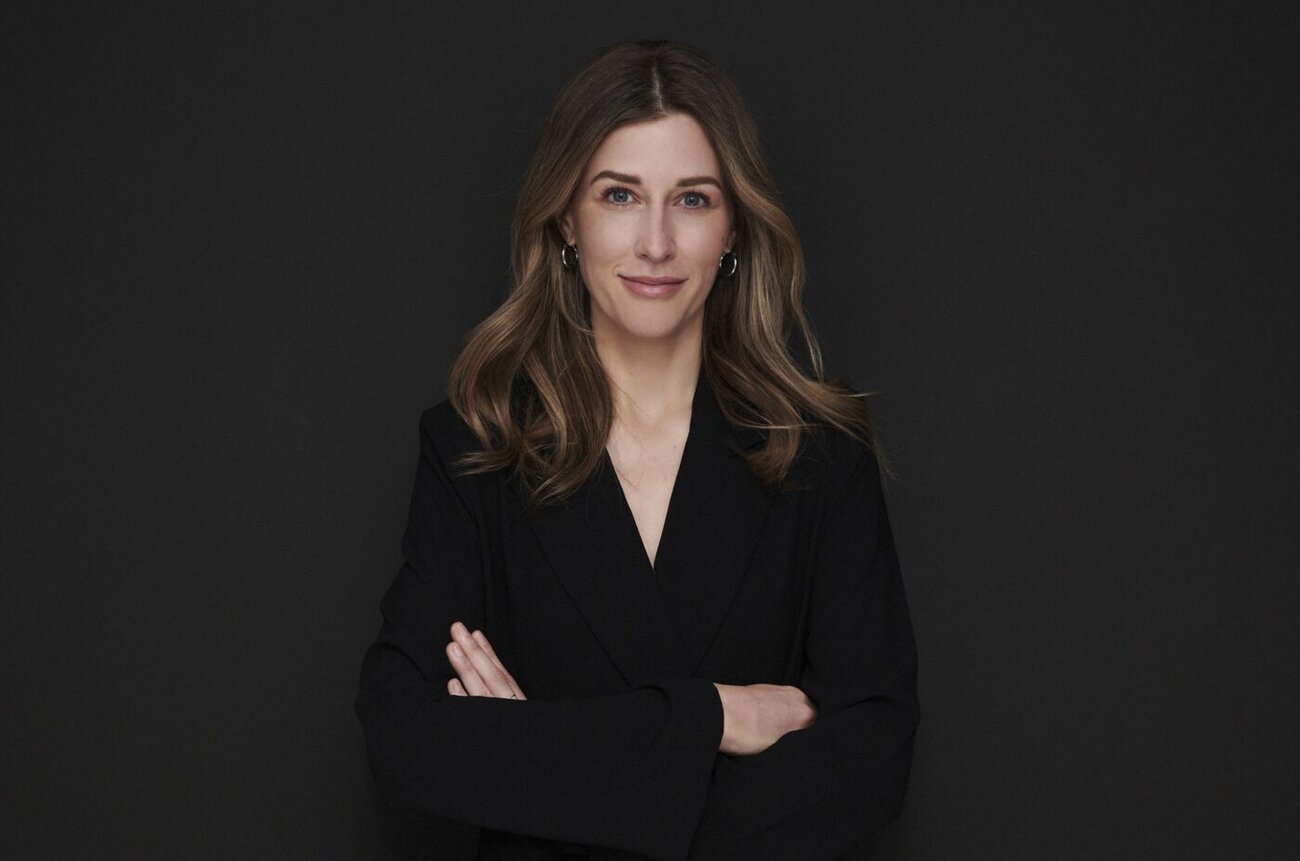
»… but a lack of awareness,” says Nina Bieli, co-founder and president of the Gislerprotokoll, which is celebrating its 5th anniversary today, on International Women’s Day. In this interview, she talks about the early days and the mission of the organization, which is committed to promoting diversity in advertising.


 m&k: You write that in February 2021 the typical question came up at Jung von Matt: "What do we communicate on International Women's Day?"- and that something completely different came out of it. What was the one realization at that moment that led you away from the "we show our employees" reflex and towards working on the advertising impact itself?
Exactly this change of perspective: away from us as an organization and towards our own work. And the case quickly became clear. We were implementing clichéd campaigns far too often - stereotypical role models that were constantly repeated, little diversity, everything looked pretty much the same. And not just for us, but for the whole industry. At that moment, it was clear to us that we wanted to make a difference.
The Gisler Protocol was launched on March 8, 2021 - "still in a homemade design". What was more important to you back then: getting the topic out quickly or setting it up perfectly? And would you launch it the same way again today - five years later?
Clearly: get out quickly. Annette and I have the same energy. To be honest, we hadn't really thought that much about it (laughs). We wanted to set an example and see where the journey would take us from there. I would definitely do it again. And I'm sure Annette would too.
You describe the danger that companies mainly talk about themselves on March 8. What would be a "good International Women's Day post" for you in 2026 from the perspective of an agency or brand - and how can you tell that it's just a fig leaf?
Fig leaves wither quickly. Therefore, anything that is communicated on March 8 and has no impact before or after is actually obsolete. And is often punished by the community today. That's why it's better to work continuously on topics that make a lasting difference. Or implement radical changes that are really noticeable. If you then use March 8 to make this commitment visible: Why not.
You say that clichéd campaigns are often not malicious intent, but a lack of awareness. How do you manage to ensure in workshops/consultations that teams don't become defensive ("That's not how it was meant") but take responsibility ("That's how it works")?
This depends very much on the awareness of the problem. If the other person doesn't see a problem in stereotypical communication, we start at a different point. The first step is to become aware of what the consequences of such communication are and, above all, where the opportunities of more diverse communication lie. And then it's also about pointing out concrete implementation options that don't feel like a compulsory program or a pointless to-do list for the company. Experience shows: Anyone who has experienced that diverse communication is neither complicated nor restrictive and that it is received positively or certainly neutrally by the audience will take this with them into their next job
In summer 2021 there were 10 agencies, later 50 - and today you have 242 members. What triggered this leap: pressure from outside (public debate), pull from within (community), or specific tools/services such as analyses, talks, summits?
Probably a combination of all three factors. The motivations of our members are and have always been different. Some want to improve, others want to set an example. Others are looking to exchange ideas with like-minded people. And we always try to make the association attractive so that the impression is created: "There's something going on here that I'd like to be part of."
You founded the association in 2022 because otherwise it "wouldn't work". What one thing suddenly became possible thanks to the association structure - and what one thing perhaps became more complicated as a result?
Nothing became more complicated. Except perhaps the founding of the association itself (laughs). I had no previous association experience and was honestly surprised at how much documentation you have to collect. A lot of things are now possible. Especially because our board is so committed. We have a clean onboarding process for new members, we have our communication under control, the finances are in order and we always try to think the association forward together.
Your timeline states that the 2024 stereotype analysis shows a "significant decline for the first time". What is your hypothesis: What specific changes in the industry (briefings, casting, visual language, storytelling, client side) could best explain this decline?
Here again: the interaction. This is based - at least this is our interpretation - on the growing awareness that I mentioned earlier. The more people realize how stereotypical some ideas are, how one-sided certain castings are, the more often these stereotypes are broken and castings become more diverse. And the more normal it becomes to have multi-faceted communication that doesn't feel like a "must".
You write that an idea without a 5-year plan has become a "name in the industry" - a sign of diversity. If you had to formulate a new 5-year bet for the anniversary: What one change in advertising/marketing in Switzerland in 2031 would be the best proof for you that the # cliché has become a reality?
I'm still not so good with 5-year plans (laughs). But what I would like to see in the next five years are more diverse teams and more diverse representation on the committees that represent our industry. Because that's where it starts: The more perspectives at the table, the greater the chance that we will see visual worlds that go beyond what has been dominant up to now. The best creative work stands out from the sea of sameness. Our teams and decision-makers should do the same.
The Gisler Summit will take place on March 26. Tickets are available here.