Diana Engetschwiler: Is AI Suited to Be a Co-CEO? | Text Akademie Podcast #50


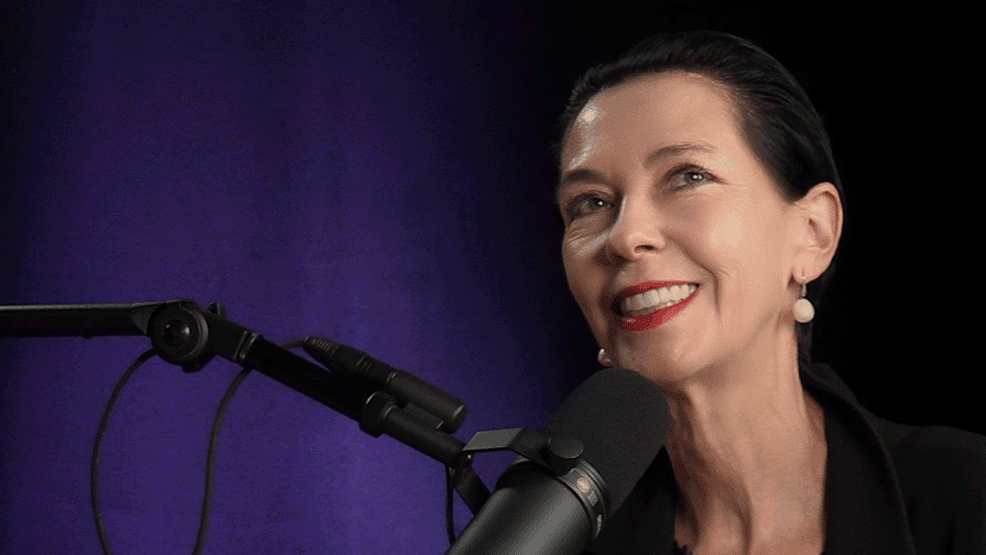
She was a member of the national volleyball team, worked at FIFA, and helped shape Switzerland’s digital future as deputy head of digitalswitzerland. Today, Diana Engetschwiler leads an interdisciplinary ETH AI team and is building an AI platform for the financial industry. In the Text Akademie podcast, she explains why AI isn’t yet a co-CEO in leadership roles, why only 5 percent of AI prototypes in companies create value, and how to recognize a genuine AI strategy.
Host Christoph Soltmannowski poses a provocative question: Is AI suited to be a co-CEO? Engetschwiler’s answer is matter-of-fact. «Right now, it’s an executive assistant,» she says. A dashboard that consolidates emails, calendars, and to-do lists in one place would be the first step. Many executives don’t even take that step. AI processes large amounts of data, recognizes patterns, and understands context. What it lacks is access to the emotions and relationships of those involved. In a crisis, a CEO must unite politically connected stakeholders with their own interests. These relationships are cultivated by humans.
Engetschwiler came to the topic of leadership through sports. After completing a training program in Boston that included the usual case studies, she realized: «I need to be able to practice these leadership skills.» Just like in volleyball—over the course of weeks, with feedback. This insight led to her first AI startup: an AI coach for young executives.
Empathy can be simulated
When it comes to empathy—which, according to the WEF report, is one of the most important future skills—AI is yielding surprising results. Engetschwiler cites a study from Ukraine: One group of women received counseling from a psychologist three times a week for 60 minutes each session, while the other group received counseling from AI. The psychologist reduced her clients« anxiety by 45 percent, while the AI reduced it by 35 percent. »Somehow, the AI can simulate this empathy,« says Engetschwiler. It can’t feel anything, but it can recognize patterns—such as whether a face looks sad or happy. On the Replika platform, 30 million people are in a relationship with an AI. Host Christoph Soltmannowski notes: »It works—that’s a fair assessment.« Engetschwiler’s response: »Apparently so.”
Why Only 5 Percent of AI Projects Create Value
Engetschwiler is particularly clear about the state of AI projects in companies. According to the NANDA report, only 5 percent of prototypes create value. She attributes the causes to people: fears, a lack of interest, and AI that isn’t integrated into the work process. If the in-house product is too weak, employees fall back on their personal ChatGPT or Claude. She identifies a genuine AI strategy by three things: buy-in from the board of directors, a clear vision, and a dedicated budget. «Many claim, »We’re doing AI,« and have simply installed Copilot. To me, that’s not an AI strategy.» This also includes the willingness to let an innovation project fail. Here she sees a weakness in Switzerland: Those who fail are portrayed negatively, whereas in America they’re heroes. “We Swiss could really learn a thing or two from that.”
Mini Silicon Valley on the Limmat
Engetschwiler is confident about Switzerland as an AI hub. The country ranks in the top 3 in the World Competitiveness Ranking and has held the top spot for infrastructure for the past five years. Anthropic, OpenAI, and Google are expanding their operations in Zurich. ETH and EPFL are developing their own language model, Apertus, with high ethical standards. «We’re creating a mini-Silicon Valley here,» she says. In terms of adoption, Switzerland ranks third in Europe behind Norway and Denmark, though this is primarily in the private sector. Many companies restrict its use in the workplace.
When asked whether it will be commonplace for AI to be part of every executive team in five years, Engetschwiler answers no. Technologically, she says, it’s possible. «But I’m not sure whether we humans will adapt to it that quickly.» And there’s one decision she would never leave to AI alone: judging other people.
The podcast episode on Spotify
The episode featuring Diana Engetschwiler is part of the video series «AI and Society—Paths to a New World,» produced by the Swiss Text Academy Foundation, the Swiss Prompt Engineering Academy, Science City Davos, and Lab42 Davos. It is available at YouTube, Spotify, and all major podcast platforms. Produced by castalavista.com