A typical smartphone user looks at their cell phone an average of 88 times a day. At least that is the result of the study by Bonn scientist Alexander Markowetz. According to the study, the user checks 35 times whether a message has arrived or wants to know what time it is. Users unlock their device 53 times a day to write a message, take a photo, start an app or surf the web. Their importance in everyday life is also reflected in the sales figures: 1.43 billion smartphones were sold worldwide in 2015, 10% more than in the previous year. In Switzerland alone, 3.1 million devices were sold in 2014.
"Office in your pocket"
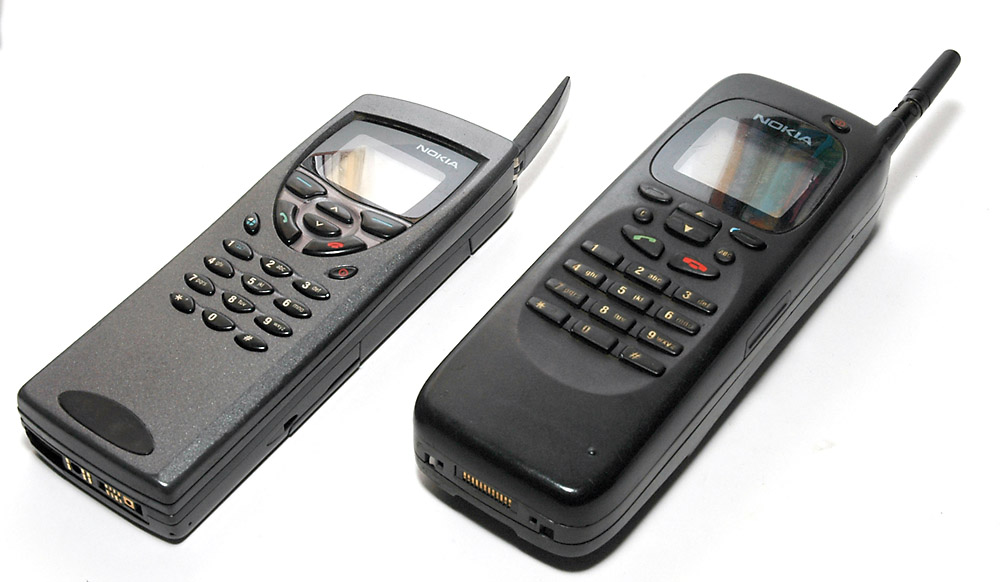
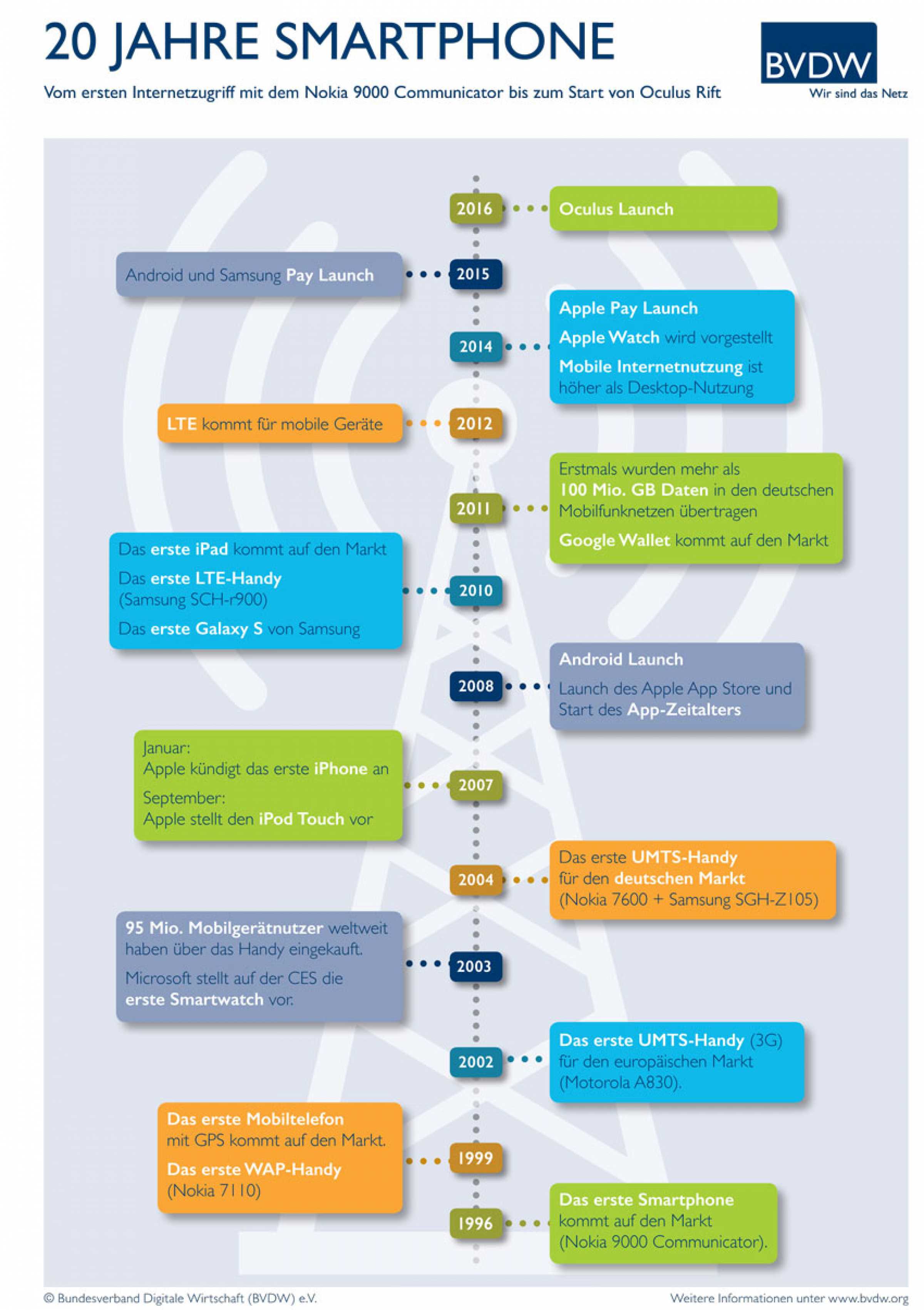
This mass trend was not yet in sight at the beginning of the smartphone era 20 years ago. This era began in 1996 - more than ten years before the first iPhone. At CeBIT in Hanover, the Finnish mobile communications company Nokia announced the "Nokia 9000 Communicator" as a "pocket-sized office", which was then launched on August 15, 1996. One of the most important functions advertised at the time was that the fold-out "Communicator" could also send and receive faxes. The device, which weighed around 400 grams and was sold in Switzerland for around 2,200 francs, also came with an electronic calendar, a digital address book, a note-taking application and a calculator. Some experts see the "Simon Personal" as the world's first smartphone, which was sold by IBM in the USA from August 1994. However, unlike Nokia's "Communicator", IBM's clunky "Simon" could not be used to surf the web, which for most technology historians helped define the term "smartphone". And while IBM soon withdrew from the market, Nokia continued to push ahead. In 1999, the Finns launched the "Nokia 7110", the first WAP cell phone on the market, which could be used to call up web pages formatted for mobile connections. Together with Samsung, Nokia then launched the third generation of UMTS mobile phones in Germany in 2004.
Overrun by the iPhone
However, it was left to Apple boss Steve Jobs to give the smartphone market the decisive impetus. In a now legendary presentation at the start of the MacWorld trade fair on January 9, 2007, he promised the audience three devices at once: a music player with touch operation, a revolutionary telephone and a fundamentally redesigned Internet communicator. Jobs repeated the three terms so often that everyone in the room understood and cheered loudly: All three functions were in one housing. The iPhone entered the stage and was to fundamentally change the market. The mobile pioneers of the time, Nokia, Motorola and Blackberry, were caught off guard by the iPhone announcement and even years later still had great difficulty giving an appropriate response. Only Google, with its then CEO Eric Schmidt, was well prepared. Schmidt had also been a member of Apple's Board of Directors since 2006 and was well aware of the future trend in mobile communications. In October 2008, the first Android smartphone, the HTC Dream, was launched on the market. Apple boss Jobs was furious because the Android interface was so similar to the iPhone. However, Apple did not succeed in having the Google system stopped across the board in court. Jobs' successor Tim Cook finally put an end to the patent war. Alongside Google, Samsung can consider itself the winner of the subsequent Android boom. In the first quarter of 2012, the South Koreans replaced Nokia as the world's largest mobile phone manufacturer. Nokia had held this top position since 1998.
No turnaround through sale to Microsoft
The Finns' decline accelerated from 2011 onwards because Nokia's developers were unable to update their Symbian system into an attractive alternative to Apple's iOS or Google's Android. In February 2011, the then Nokia CEO Stephen Elop implored his employees: "If you are standing on a burning oil platform, you have two options: Either stay and burn, or jump into the deep end." Nokia took the plunge and was picked up by the Microsoft lifeboat with its Windows system. However, the maneuver could not save Nokia's smartphone division from sinking. This Nokia division and the Finnish company's patents ended up with the US group for 5.4 billion euros in April 2014. However, after a series of poor quarterly results, the division has already been wound up by new Microsoft boss Satya Nadella. (SDA