Whether reader comments die out is up to us
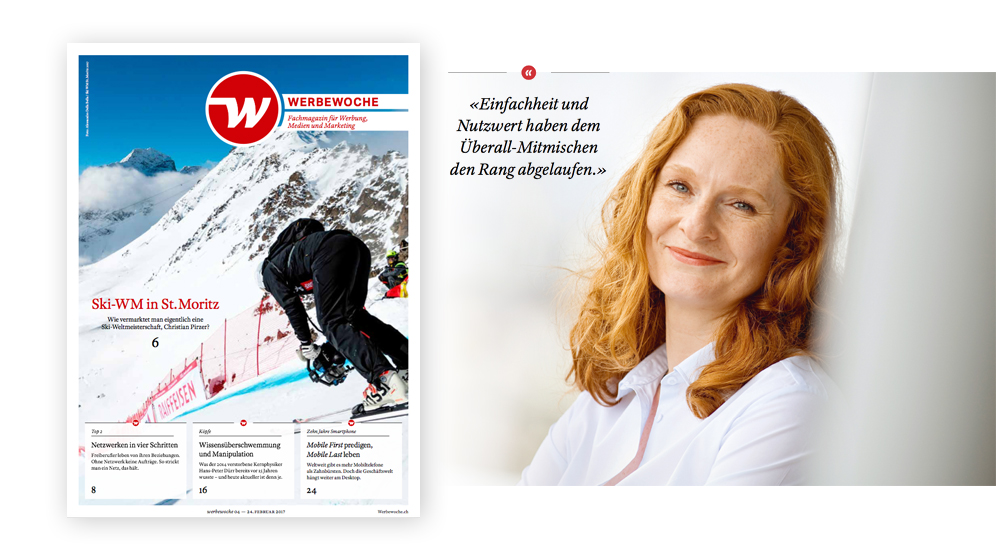
The editorial by *Werbewoche* Editor-in-Chief Anne-Friederike Heinrich from Issue 4/2017, dated February 24, 2017.


I can still remember it well: My father had sent a letter to the editor to our regional newspaper at that time - and the letter had been printed. A great event for our family! With pride, the tear-out was passed from aunt to aunt and shown around the neighborhood: "Dad's in the paper!" If you have an opinion that interests others, you're somebody.
Times have changed. We now live in the age of postfactualism, in which blathering statements of attitude and sentiment count for more than well-researched, well-founded facts and intelligent commentary on world events. At least, that's what's being said everywhere. But is that really true?
Anyone who follows how readers' letters pages and comment columns are developing gets a different impression: No one says what they think anymore. Obviously, readers and users are losing the desire to participate, think and discuss - if they ever had the desire to do so at all. Only those who always make their opinions known everywhere, unasked and unqualified, continue to participate. The NZZ justifies the shutdown of its comment function with this development. The benefits and reader loyalty are too low, the work is too great, the ranting is getting out of hand, smart people are withdrawing. And who still takes the trouble to write a "real" letter to the editor? For a long time now, such contributions have no longer been hacked into the typewriter using the two-finger eagle search system (Dad must have spent three hours working on his "input" back then), but quickly "posted" on Facebook. Even the NZZ am Sonntag no longer quotes Anton Eggenschwiler from Schönholzerswilen on its reader's letter page, which still exists, but "Maya on Face- book" - a shaky source reference for a quality newspaper.
When we debated in the editorial office whether the NZZ was censoring its comments, we quickly agreed: Yes! A survey by Werbewoche showed that 63 percent of those responding felt that the comment blockade was a muzzle (as of 15. 2. 2017). However: the NZZ is also right. Sorting out and maintaining reader comments costs too much of the time that journalists no longer have for their research - which in turn favors the proliferation of post-factualism.
Just two years ago, community building and the comment function on the website were the saving grace: only the participating reader who can easily express his or her opinion and discuss it with others was considered a loyal reader. But isn't the more loyal reader the one who takes the time to comment on an article in a qualified manner? And isn't he the one who is finally heard? Then the NZZ has found the right hedge trimmer against comment wild growth: switch off.
But what has actually happened? Are our readers tired of all the disseminated opinions? Do they no longer form any themselves? Or do they no longer need newspapers (print or digital) to communicate, preferring to do so on social media? Are they afraid that the Big Data specter might steal their opinion and sell it to advertisers or bots?
The truth is much simpler: After information and opinion overload, a lethargy of participation has set in in broad circles. We only want selected, well-ordered news; we no longer want to hear everyone's opinion and be everyone's friend; we no longer want to participate everywhere. A Cumulus card, a credit card, a Miles and More card will do. Simplicity and utility have taken the place of being in on everything. Ergo, the media must offer facts that are so well researched and so beautifully presented, that are so useful and meaningful for daily work, for daily life, that readers once again feel like dealing with them.
The comments will then come all by themselves - and so will reader loyalty.
Anne-Friederike Heinrich, Editor-in-Chief