These apps are used the most


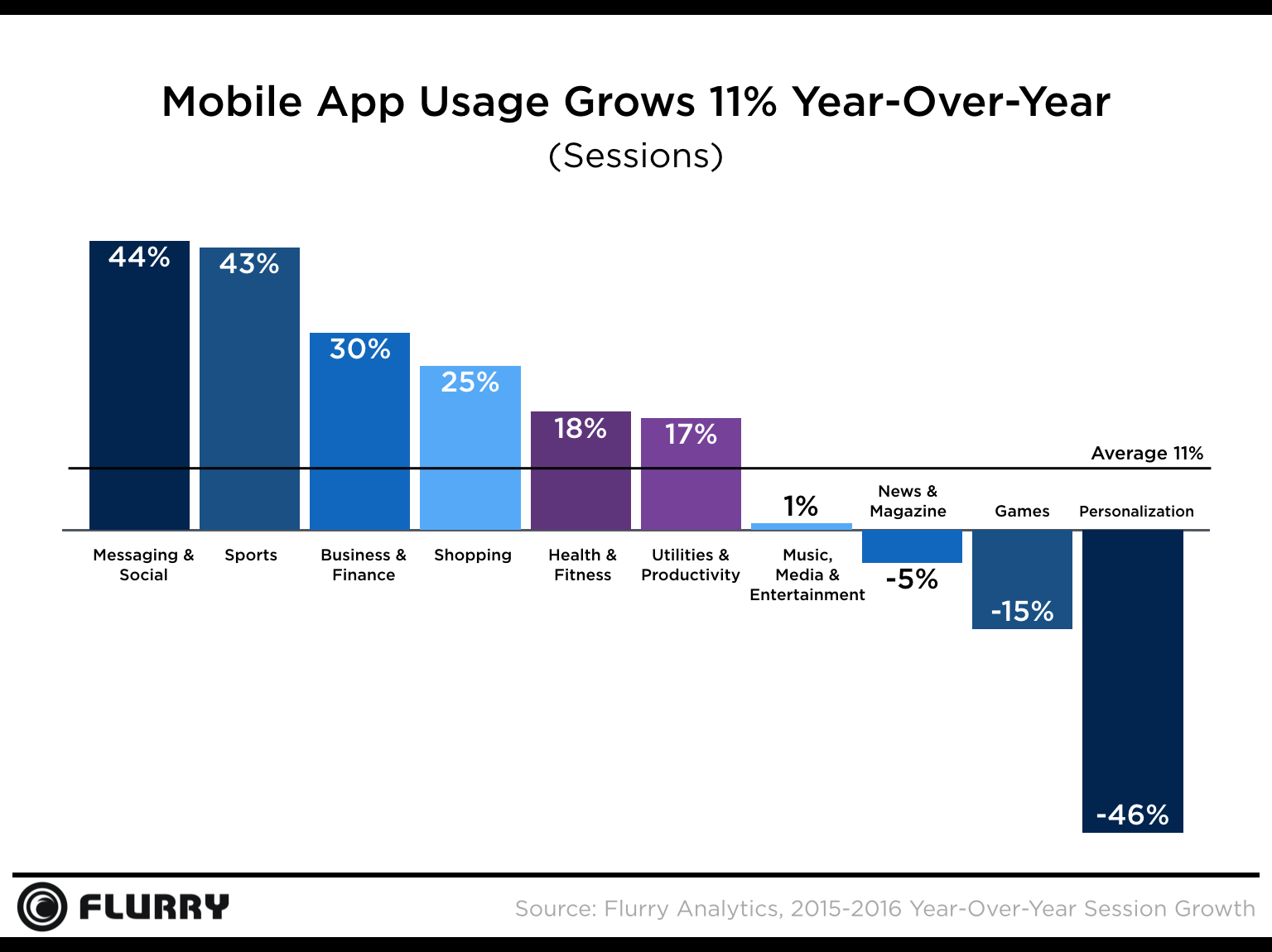
 In 2016, overall app usage increased by 11 percent. The time users spend with apps increased by 69 percent. However, in contrast to previous years, when the various app categories tended to grow in parallel, this year mobile apps are outpacing each other. While there was growth in sessions as well as time spent in some app categories, it was at the expense of other categories. While the number of sessions in messaging and social apps increased by 44 percent over the course of the year, the number of sessions in apps in the personalization category decreased by 46 percent.
Social displaces media and phone servicesThe amount of time users spent in social and messaging apps increased by a staggering 394 percent in 2016. This makes them the clear growth driver of time spent in apps. One of the reasons for this is that users are increasingly using their social and messaging apps for voice and video calls. In addition, the so-called communitainment phenomenon comes into play here. In contrast, sessions in the news and magazine categories decreased by 5 percent, while media and entertainment only increased by 1 percent. This is clear evidence that social has absorbed the media industry.
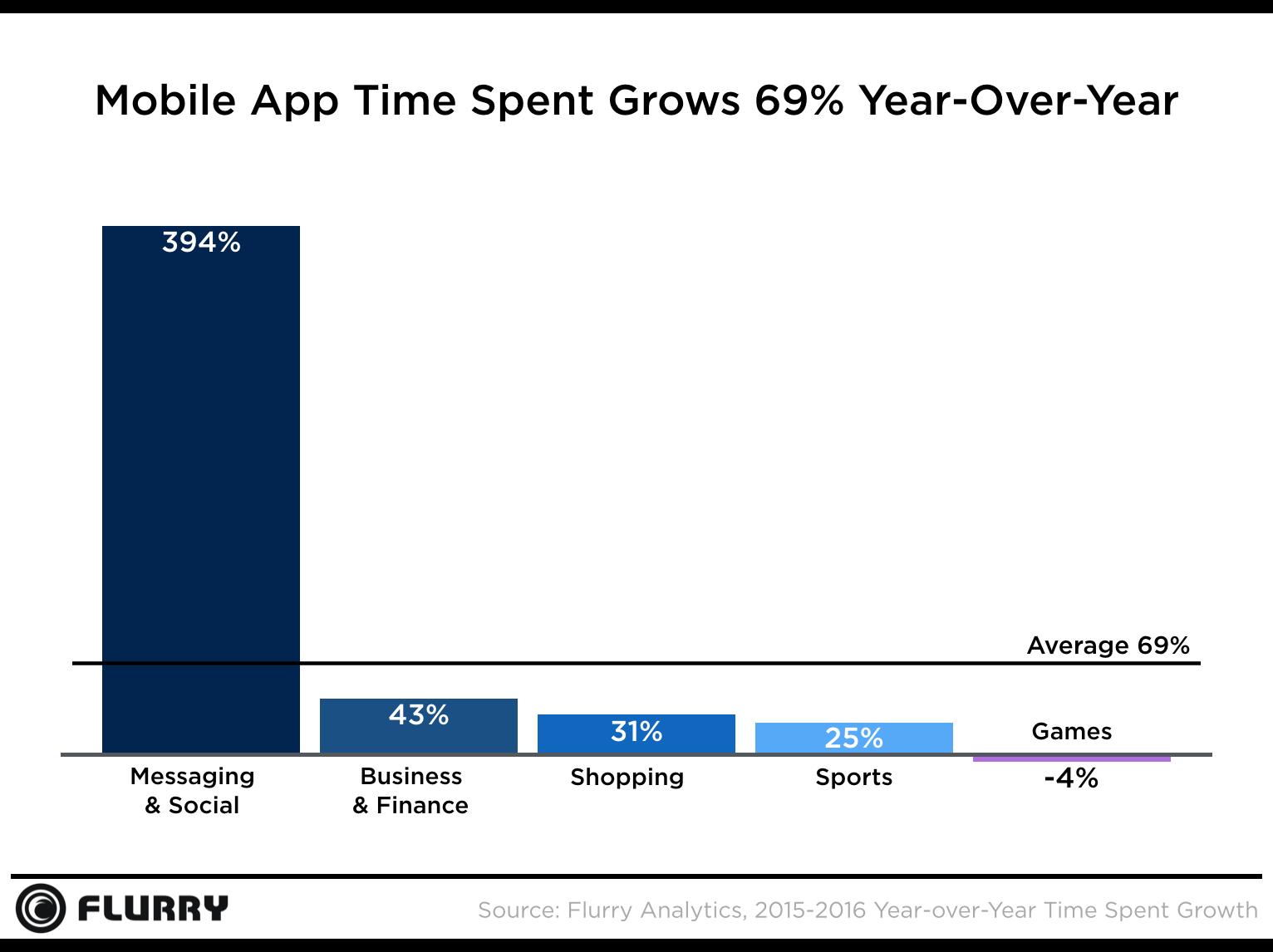
Daily processes fundamentally influence the most important appsBusiness and finance apps (up 43 percent in time spent there) and sports (up 25 percent) proved immune to declining growth, as they relate exclusively to mobile activity and are based on real-time data. Growth can be expected to continue in these categories as users' daily habits move away from traditional media channels, such as live sports, market reports and the morning news on TV, to apps on their smartphones.Decline in the gaming industryIn the gaming category, the former "darling of the mobile industry," time spent decreased by 4 percent. Users increasingly tend to buy their way through a game rather than being tied to the screen for long periods of time. According to Apple's latest App Store Report, this led to a sharp increase in revenue for the mobile gaming industry. Nonetheless, gaming remains an industry driven by sales hits. As the first major success of the year, interest in "Pokemon Go" declined after a short time, as users often only returned for popular events.Shopping apps as the downfall of retailIt was almost impossible to miss the disappointing post-holiday news from the major retailers. Things were markedly different in the mobile retail world. Time spent in shopping apps increased 31 percent in 2016. A report from Adobe also shows very healthy growth in online sales. In this regard, 38 percent of holiday sales transactions can be attributed to Amazon. This growth was primarily driven by cell phones and their apps, which, unlike the desktop, can respond quickly to impulse purchases.Phablets on the riseAs expected last year, phablets have become the dominant format worldwide with a market share of 41 percent. Users continue to find value in the larger screens. This is directly related to the increase in media consumption and social engagement apps. While the less mature smartphone markets are adopting larger phones, phablets will slowly push mid-sized phones out of the market and eliminate small phones altogether.Flurry Analytics is integrated by developers into app programming code to evaluate user behavior. Last year, Flurry Analytics monitored more than 940,000 apps across more than 2.1 billion devices with 3.2 trillion app sessions.The full report is available here.