The competition continues

While Publicitas Cinecom was long the only cinema marketing agency in Switzerland, a second player—WerbeWeischer—has been on the scene since 2013. What has changed since then? Who has gained ground? What does 2014 hold? The competitors engaged in an email debate.

Unbenannt-12_16

WW: For a year now, Publicitas Cinecom has had a competitor in Swiss cinema marketing in the form of WerbeWeischer. Publicitas Cinecom started with a market share MA of 71 percent (all of Switzerland), 56 percent in German-speaking Switzerland, WerbeWeischer with an MA of 44 percent (German-speaking Switzerland), 29 percent (all of Switzerland) (see tab.). Is there a change at the start of 2014?
Christian Wittmer CW: We do not expect any significant changes in market shares. Due to the renewals of important partnerships, e.g., in the Zurich area with Arena Cinemas and Neugass Kino, we will market a total of 13 new screens in Zurich in 2014. With these and other partnerships throughout Switzerland, Publicitas Cinecom remains the market leader in all language regions.
Nils Schilling NS: The fact is: there have been significant changes in market shares since WerbeWeischer entered the Swiss market. In German-speaking Switzerland, we now have a market share of 47 percent. In terms of MACH Cinema pools, WerbeWeischer has a 77 percent share in Lucerne, 48 percent in Berne, 80 percent in St. Gallen/Schaffhausen and 56 percent in Zurich - not least thanks to our collaboration with Arthouse - while Publicitas Cinecom only has a market share of 44 percent here. We are by far the market leader in the key cities of German-speaking Switzerland - and the development for 2014 is not yet complete, so that overall there will be further shifts in favor of WerbeWeischer.
CW: Including the closures and new openings of cinemas in 2014, which do not yet seem to have been taken into account in Nils Schilling's calculation, we arrive at the previously mentioned market shares according to our projections (based on MACH Cinema's 2013 market shares). We assume the following market shares in 2014: Basel (88%), Bern (52%), Geneva (100%), Zurich (52%, excluding Winterthur 58%), Lausanne (100%) and Lugano (100%). We are thus the only marketer able to continue offering our advertising customers a nationwide cinema portfolio. The new movie theaters of our partners already announced for 2014 are essential components of a realistic forecast of market shares in 2014.
NS: We find it misleading that Publicitas Cinecom argues with market shares for Zurich that are based on cinemas that have not yet opened and thus on visitors that do not yet exist.

WerbeWeischer has so far been active exclusively in German-speaking Switzerland. This is probably related to the division of the two largest cinema operators. WerbeWeischer has the second-largest cinema operator, Kitag, on board, but it is not present in French-speaking Switzerland. The number one, Pathé, which operates throughout Switzerland, is marketed by Publicitas Cinecom. Nils Schilling, you wrote that further shifts are to be expected in 2014. Is this also about western Switzerland?
NS: Our market entry was aimed at the whole of Switzerland from the outset, and of course we will also be active in French-speaking Switzerland.

In 2014, however, you will not yet be able to market any halls in western Switzerland, right?
NS: That is correct.

Christian Wittmer, when was the last time the contracts with Pathé were extended? And: When do they expire?
CW: We have long-term contracts with both Pathé and our second-largest partner Arena Cinemas - exclusive marketing mandates.

Does that mean that Pathé and Arena will remain with Publicitas Cinecom for the next two to three years?
CW: We do not provide information on the content of our contractual agreements with partners.

Publicitas Cinecom and WerbeWeischer differ in their pricing and billing models. Will there be any adjustments in 2014? Will the CPM change, for example? (Publicitas Cinecom: CPM at least CHF 12; WerbeWeischer: CPM at least CHF 11.50).
CW: Publicitas Cinecom will not be changing its price level in 2013/2014. In 2014, we will launch new packages that further simplify access to the medium of cinema and make it more transparent.
NS: Since entering the market, WerbeWeischer has been billing every single visitor for every single cinema performance. More transparency and precision is not possible. Publicitas Cinecom, on the other hand, still calculates using a projection based on a city pool and has no access to this level of detail. Our cost-per-visit billing method at Weischer-Kinopark is the hardest currency in the cinema market. We receive up-to-date data from the box offices on a daily basis. Traceability, transparency and performance-based billing are part of our mission, and cinema operators and advertising clients benefit from this in equal measure. On the question of price development: Overall, there will be a moderate price increase of around five percent across all our products next year, as there is high demand for film-specific bookings and special forms of advertising in cinemas.
CW: With a portfolio of more than 100 partners throughout Switzerland, access to all box office systems is more complex than with a comparatively much smaller partner environment. For this reason, we currently bill on the basis of ticket sales from ProCinema. As an industry association, ProCinema provides a reliable and valid basis. We are also working on an efficient solution that enables billing directly via the box office systems and does justice to the high level of coverage that we offer our customers throughout Switzerland. For the customer, the same applies in both cases: Cinema is the medium with the hardest and therefore most transparent currency.
NS: For clarification, I would like to add: The procedure established by Cinecom merely represents an inaccurate extrapolation of weekly visitor data from the largest cities to the respective campaign. This procedure is not comparable with the billing system introduced by WerbeWeischer at the market launch, which uses the daily attendance figures of each cinema performance from the box office - and thus offers the highest precision and complete transparency for advertising customers.
CW: It seems daring to me to speak of inaccurate projections. We receive figures down to the level of individual movie theaters from the Swiss Association for Cinema and Film Distribution in order to prepare our accounts.

How do things look in the area of cross-media offerings?
CW: We are further expanding our cross-media offerings in 2014. In addition to Star-TV, other TV stations will be included in the offering. Cineman. ch and Kinowetter.ch will be followed by further online portals.
NS: In the online sector, we will also be cooperating with 20 Minuten in future, in addition to our existing cinema web offering, and will market cinema in the entertainment sector exclusively for Tillate.com. Here, our partners will also benefit from the high level of experience we have gained in Germany in online dialog with cinema target groups. Other cross-media offerings include ad screens, our monitor system for foyer advertising, and numerous touchpoints in cinemas that we use to showcase our brands.

Cross-media offers may lead to an increase in revenue for cinema operators. However, it is unattractive for cinema marketers that it is not recorded in the advertising statistics. Agreed?
NS: Of course, we have a great interest in ensuring that each advertising medium provides proof of its performance - in this respect, we are positively disposed toward possible developments for recording cross-media offerings. But in general, I would like to emphasize: We cannot strengthen the medium of cinema by means of advertising statistics.
CW: Publicitas relies heavily on cross-channel media solutions. Individual measures can already be measured in one way or another. Due to different currencies, the need for explanation on the part of the customer may increase, but advantages such as the increased effectiveness of a cross-media campaign outweigh this. For example, a study commissioned by Publicitas Cinecom from the research company Brand Science showed that cinema in the media mix both generates additional revenue and strengthens the overall campaign.

WW: How high is the "non-cinematic" share (i.e. everything except cinema screen) in cross-media campaigns?
CW: That depends very much on the campaign. Within the Publicitas portfolio, cinema can be only a small part of a cross-media campaign on the one hand, while on the other hand there are clients who use cinema as their main medium and complement it with other offers.
NS: On average, we record a "non-cinematic" share of around ten percent for cross-media campaigns. For individual campaigns, however, this share can sometimes exceed 50 percent of the total campaign budget. We definitely see potential for growth in this area.

Digitization has opened up the possibility of cooperation with private national TV stations, regional broadcasters or even Publisuisse. Are there any plans in this area?
NS: We see our task as marketing cinema - and we are one hundred percent passionate about this task. Cinema has a unique contact quality, and if the medium of cinema is to be networked with other media in terms of campaigns, this is primarily the task of media agencies to develop efficient solutions here. And one more thing: Our cinema partners also expect us to ensure that our marketing activities do not move outside the cinema-affinity radius.
CW: As a marketer of TV stations as well, Publicitas is focusing strongly on an increasingly intensive exchange between TV and cinema. Cross-media campaigns are increasingly in demand among our agency and direct customers.

Final question: Cinema advertising is a niche medium due to its low reach. When WerbeWeischer entered the market, the motto was: competition stimulates the market. How successful were you in this respect, and was cinema advertising able to gain additional shares of the advertising pie overall?
NS: In our view, the decline in cinema advertising of around 40 percent between 2003 and 2012 (gross advertising print advertising market statistics Media Focus) was caused by marketing of cinema that was no longer in line with the times. There has been no further development of the medium during this time - in this respect, there was a high need for reform when we launched in the Swiss market at the beginning of last year. Not least through the cinema advertising model "Cinema Reloaded," WerbeWeischer is providing the urgently needed innovative impetus here. Against this background, we see even more potential for cinema in the media mix - also because of the extraordinary impact of this wonderful medium.
CW: The gross figures for advertising pressure calculated in Media Focus are the wrong figures for determining the share of the advertising pie. With regard to market development, the advertising statistics with their recording of net sales are decisive across all sectors, not advertising print. According to the Stiftung Werbestatistik Schweiz (Swiss Advertising Statistics Foundation), the cinema market has been at a stable level since 2008, while in 2011 to 2012 net sales even increased by 25 percent - the downward trend was thus already absorbed before the competitive situation arose (net sales 2009: CHF 26 million, 2010: CHF 28 million, 2011: CHF 24 million, 2012: CHF 30 million). Another aspect is the share of cinema advertising in total advertising expenditure, and here we cannot complain: With a share of around 0.7 percent, Switzerland is relatively high in an international comparison and shows a higher value than, for example, Germany with a share of cinema advertising of around 0.5 percent (source: SAWA). We see this as reinforcing our strategy of continuous further development of the medium, which we are pursuing on a sustained basis with the expertise of the long-standing market leader in Switzerland.

Moderation: Isabel Imper

Unbenannt-16_5
Unbenannt-14_9
Unbenannt-15_8

jetzt-Abonnent-werden_7

How much doping can our food take?

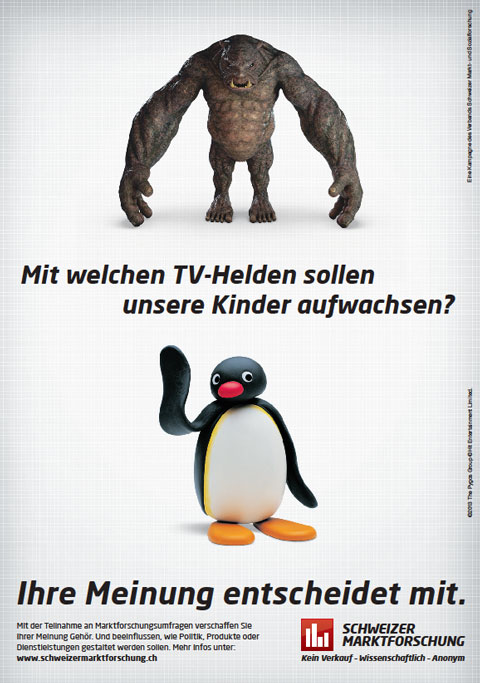
The «Your Opinion Matters» campaign by the Swiss Association for Market and Social Research is entering its second phase. Using polarizing topics, the campaign highlights the value of market and social research.

The Swiss Association of Market and Social Research (VSMS) aims to actively inform the public about its work and encourage the Swiss population to participate in surveys through its campaign «Your Opinion Counts.» By focusing on polarizing topics, the campaign aims to demonstrate that those who participate in surveys make their voices heard and thus help shape decisions on important issues. With the seal of quality «Swiss Market Research: No Sales – Scientific – Anonymous,» the association distinguishes itself from direct marketing and sales.

The ads will appear in various daily and Sunday newspapers throughout Switzerland. In addition, there will be banners, an informational flyer, and the campaign website Schweizermarktforschung.ch. In addition to its public relations efforts, the association is working on developing transparency and quality criteria to make performance standards in market research more transparent and measurable.

Contact person at VSMS: Mitja Ruggle, Roland Rosset, and Nicole Siegrist. Person in charge at Humans: Res Matthys and Sebastian Jerez.

1.helden.1_0
1.helden.2_0
1.helden.3_0
 

Communication turnaround

The energy market is in upheaval. Alternative energies are in demand. The BKW Group is a pioneer for renewable energies in Switzerland. The brand is to be repositioned with this image. This is accompanied by the BKW magazine.

Unbenannt-5_25
Martin Schweikert (l.) has been Head of Corporate Communications and Marketing at BKW Energie AG since summer 2013. He was previously Head of Marketing & Corporate Communications at Swisscom IT Services AG. Michael Hählen is Partner, Head of Consulting and Member of the Executive Board at In Flagranti in Lyss.

WW: What was the impetus that created the spark for a BKW magazine?
Michael Hählen: In Flagranti has been the agency for "1to1 energy" for seven years. This is an electricity brand for end customers that BKW operates together with around 140 energy suppliers from 15 cantons and the Principality of Liechtenstein. In connection with this mandate, we discovered that BKW has very different communication needs than the other partners. We discussed on various occasions how we could create our own channels and share common content. A year ago, these discussions led to the creation of the BKW Magazine product - as an independent medium.
 
On December 20, 2013, a special issue on "Mühleberg" was distributed throughout Switzerland. What was the aim?
Martin Schweikert: It is a response to the great media attention we experienced in connection with the decision to shut down Mühleberg. We recognized that the BKW Group is very strongly associated with Mühleberg in the public mind. However, the reputation studies paint a different picture. We therefore wanted to show how BKW is moving forward in connection with the energy transition.
 
What does it take for a magazine realized by an electricity producer to be credible and not simply perceived as manipulation?
Schweikert: Of course, objectivity is needed. The information needs of readers and customers are at the center. We also want to show the importance of electricity. After all, industrialization and a large part of the comfort of the last 50 years have to do with the availability of electrical energy. Electricity is of immense importance, also for the economy. It is therefore important that we have solutions ready when the classic fossil or nuclear energy sources dry up.
 
Does the consumer want such a magazine?
Schweikert: Yes, that is the case. The response is immense. When we publish a call for entries for a guided tour of a power plant or launch a competition, the feedback is great. Clearly, the public does not find such a magazine superfluous, but sees added value in it.
 
What is the task of the BKW customer magazine?
Schweikert: To provide information about current issues and, above all, to show the future of energy supply. What can the public, what can customers expect from BKW? Of course, the BKW magazine is also a product in which BKW wants to present itself: How do we, as an energy service provider, deal with the issues of electricity production, grid expansion and overall energy solutions? We are constantly looking for skilled workers and training apprentices: So the magazine is also a medium for our positioning as an employer.
 
Mühleberg is a political issue. What influence did that have on the tone of the special edition?
Hählen: In addition to the studies mentioned by Mr. Schweikert, we have conducted our own street surveys and seen that there are very differentiated opinions on the subject of Mühleberg among the Swiss population. Many customers are asking themselves the question: How should things continue? What are the alternatives? Because electricity is a complex and very abstract topic, this issue is naturally associated with a very high need for explanation. What will the energy world of tomorrow look like? What are the possible paths of a supplier like BKW? This can no longer be explained on a poster or with a simple statement. What is needed is an impetus that allows customers and the public to look behind the scenes, form an opinion and then understand what BKW is up to. And then perhaps ask the right questions. So it's also an impetus medium, in addition to a PR instrument.
 
Schweikert: A magazine like this has to take up different opinions and also allow critical voices to have their say. After all, BKW's decision to decommission the nuclear power plant in 2019 was not made for political reasons, but for business reasons. Nuclear power is a type of energy that was accepted for a long time and is still accepted by large sections of the population. But there have been problems with nuclear power around the world that have led to a rethink. In the meantime, new technologies have come onto the market, and we are already using them. Society appreciates these new technologies, even if they currently still come at a high price. Now, as co-creators of this energy transition, we have to show what the consequences of new electricity production are. Above all, we must make it clear that we cannot replace Mühleberg with renewable energies overnight. Especially since the feed-in of highly fluctuating energies into the power grids is not entirely problem-free.
 
Hählen: Customers want energy according to three criteria: clean, safe, close. Power lines over land are always provoking new discussions because of their alleged electrosmog. The customer expects answers to these questions. What comes out of the socket is clear. But how does the electricity get into the socket? That's an open question that is attracting a great deal of interest.
 
What was the reaction to the magazine?
Schweikert: We included the special issue nationally in the Sunday press and regionally in the Saturday editions in the coverage area. The response was very positive. Many people thought it was good that we as BKW have the self-image and also the pride to actively communicate our new position. After all, it will be around 20 years before Mühleberg is a greenfield site again, and by then BKW will be a completely different company.
 
What is BKW doing in terms of alternative energy and energy transition?
Schweikert: BKW started testing new technologies very early on. It founded its own companies for this purpose and left BKW behind for traditional electricity production. In the process, BKW has done pioneering work, especially in wind and solar energy. From the Jungfraujoch to Switzerland's largest wind farm on Mont Crosin to the world's largest stadium solar power plant, the Stade de Suisse. In the solar sector, we are increasingly focusing on installing and operating the plants, but we will no longer necessarily act as an investor. In wind power, on the other hand, we definitely see ourselves continuing to act as an investor and operator of wind farms, including in nearby countries such as Germany and Italy.
 
The energy market is in a state of upheaval. How do you approach this in terms of communication? It's no coincidence that you joined BKW in the summer of 2013.
Schweikert: We are changing from an energy supplier to a provider of total energy solutions. In the past, the supplied customer had a guarantee from the supplier, but was also bound by it. In the future, they will be free to choose. For us, this is a change that we have to accompany in terms of communications, because we want to retain customers, of course, but also win new ones. This means that we have to strengthen the BKW brand. To do this, we want to integrate the new technologies, which were previously managed under other names, and thus reposition ourselves as BKW. As the innovative service provider that can offer customers comprehensive solutions.
 
Naive question: everything comes out to the same outlet. How can I see what kind of power is being supplied to me?
Schweikert: Of course, you can't see that at all - electricity is electricity. But if you buy "green electricity" from your provider, you thereby oblige your provider to increase the proportion of "green electricity". So if, for example, 90 percent of BKW customers pay for "green", then we also have to produce 90 percent "green" or buy in Germany , for example, where the proportion of newly renewable energy is already very high. If the political will is there, we will also build up corresponding capacities in Switzerland. We are working on that.
 
Hählen: In Switzerland, there is a guarantee of origin for the origin and quality of the electricity. This is EU-compatible, because Switzerland is not an electricity island. The market is also changing rapidly. Seven years ago, we were still talking about consumers. Today, we're talking about customers who produce their own electricity and feed it into the grid, for example via photovoltaic systems. This opens up completely new opportunities.
 
Schweikert: In a way, we are going back to the beginning: At the beginning of electrification, there were not yet the big power plants. Many companies produced their own electricity, for example using a mill or running a small power plant. Then large power plants were built for centralized energy supply, but there are now ecological and economic problems with them. The current trend is back to small decentralized suppliers, for example using photovoltaics or electricity from heat pumps. A new market is emerging here. And we want to report on these developments in the magazine.
 
What options do you have available to you as head of communications?
Schweikert: The communications department comprises around 40 people, including the support staff at our visitor centers, exhibitions and trade fairs. We are also heavily involved in sponsoring, are present at events and actively lobby. And last but not least, our brand and communications specialists give the company a face both internally and externally.
 
How is the collaboration for the magazine with the agency? Counting: It's a cooperation. You can't simply outsource a magazine as a company; it's a collaboration. An agency can be useful if it understands something about the market and is a sparring partner, but also brings in the outside perspective and wrestles with the customer about content and presentation. In this way, you can support each other.

Interview: Andreas Panzeri

bkw

New "Geyst" in the agency world

In early 2014, the three companies Straumann, Hesskisssulzersutter, and Profil1 merged. This created a communications agency with over 50 employees and a wide range of services.

geyst_0
In a nutshell
The communication agency Geyst was created at the beginning of 2014 through the merger of the three companies Straumann, Hesskisssulzersutter and Profil1. With over 50 employees, Geyst combines know-how from the areas of consulting, creation, realization and systems (web development, Web2Print). Headed by CEO Florian Walz (previously CEO Straumann), Geyst is managed by a total of 10 Managing Partners, all of whom also hold shares in the company. Chairman of the Board of Directors and Partner is Daniel Straumann (previously Chairman/owner of Straumann). Customers include companies such as Alprausch, Heineken, Mercedes and Lalique.

A whole 1200 square meters, two open-plan offices worthy of the name, a photo studio, meeting rooms, lounges and a "culture room/lab". There is truly enough space in Zurich-Altstetten for the newly founded Geyst agency. 52 people moved into the offices at the beginning of the year - all the staff previously employed by Hesskisssulzersutter, Profil1 and Straumann. The walls have been freshly painted, the carpets cleaned. Otherwise, the investments have been kept within limits. The offices in the older building complex, whose future is still uncertain, could be rented inexpensively for temporary use. If all goes according to plan, this will be Geyst's home for the next two to four years. The foundation for the agency's creation was laid by Straumann and Profil 1. The service provider, which specializes in visual communication and the development of corresponding web application solutions, and the graphic and web design agency decided last year to go their separate ways. Expertise in other areas, such as text, was to be tapped through cooperation. That was the original idea. When Hesskisssulzersutter heard about the planned merger and came into play as a cooperation partner, plans were soon made for a three-way merger. The chemistry was right. And with Hesskisssulzersutter, Profil1 and Straumann expanded their strengths in the text and classic consulting areas. At the beginning of the year, the merger was completed. Geyst is headed by 10 Managing Partners. These include Tamás Kiss (previously CD/Member of the Executive Board of Hesskisssulzersutter) and Johannes Just (previously Managing Director/Partner Profil1). The post of CEO has been taken over by Florian Walz, who until now has led the business at Straumann.
 
WW: How did the merger come about?
Florian Walz: We wanted to unite all services in the communications sector under one roof: creation, consulting, text, graphics, design, digital, development, software, infrastructure, research etc. By merging into one agency, we can serve customers holistically. At the same time, it should be possible for customers to obtain only a subarea or a specific service, such as animation or creative retouching.
 
How much of the previous agencies' structure will remain?
Johannes Just: The structures are completely dissolving.
 
How does the new leadership work?
JJ: Each Managing Partner has a field of expertise that he organizes. But all employees are on the same level. We want to maintain the flexibility we had as small agencies. In the end, the CEO bears the overall responsibility.
 
Tamás Kiss, your former business partner Roland Sutter left Hesskisssulzersutter at the beginning of 2013. Does the merger have anything to do with that?
Tamás Kiss: No, we didn't look for a new solution after Roland left. The decisive factor was rather the power of the idea. It was Geyst's vision that convinced us.
 
What does this vision look like?
FW: Many agencies have incorporated web and prepress services in recent years for strategic reasons or to expand the value chain. However, only a few have succeeded in joining forces. Hiring ten polygraphers alone does not make a prepress department, and five media specialists do not make a media agency. The problem is the lack of an overarching overall culture: the disciplines have been integrated, but they are no more valued than they used to be. The service providers in the traditional prepress and media areas - those who used to be called "polygraph zombies" and "bean counters" - are still not valued enough. But integration can only work if everyone is on an equal footing. We live this vision. At Geyst, all areas operate on the same level.
 
What is Geyst's strength?
JJ: In the vision I just mentioned. And in the breadth of services and our experience in the disciplines. Each agency has developed clear performance characteristics. Straumann's tradition is in prepress and web-based industry solutions, Hesskisssulzersutter's strength is in brand strategy/management and copywriting, Profil1 has a close connection to artists and street art with a young team of graphic and web designers.
 
How have customers reacted to the merger?
FW: Very sympathetic and cordial. Many consider the merger to be extremely courageous. We are convinced that this courageous step is needed, especially now that the industry is undergoing change. We are sure that we are meeting a need.
 
Which customers would you like to see in the portfolio?
FW: Our existing customers, with whom we have long-standing relationships. New customers who want an agency like Geyst. And: We are open to working closely with agencies, as we have done up to now. Provided they don't see us as a competitor with whom they want nothing more to do. We can work with all agencies.
TK: In general, we look forward to customers who, like us, want to try something new, want to make a difference.
 
Previous clients include companies such as Alprausch, Heineken and SBB. For Citroën, Profil1 accompanied the launch of a new model on the Swiss market (Xaver Award "Best Live Communication Campaign"). Hesskisssulzersutter created image spots for Aldi Suisse, and Straumann developed a Web2Print solution for Roche (Gold at the Best of Swiss Web, in the Business Efficiency category). Geyst can already announce a new customer at the start: the ZKM (Zürcher Kantonale Mittelstufenkonferenz). Its publishing house, which specializes in teaching materials and is today known primarily for its exercise material for Gymi preparation, is to be strengthened by a redesign. The ZKM logo and the website have been revised. In addition, many of the ZKM publications are to appear in a more contemporary look in the future.
 
Will the work be more expensive for existing customers? The offices are quite large ...
JJ: For our existing customers, everything remains the same in terms of price. We want to retain the freedom to design "smaller" jobs in the future. The merger will not only make us bigger, but also more efficient. An example: We used to design a flyer at Profil1 in a short time. We had to invest a relatively large amount of time to make it printable. Time that could not be charged to the customer. Today, we have the expertise in-house and solve the problem much faster. That benefits the customer.
TK: The office space is large - but not luxurious and without monster infrastructure. Thanks to the possibility of interim use, the rent is kept within limits. We didn't invest the money in appearances, in pomp and luxury, but in resources and tools.
 
Geyst operates a platform for media experiments, research and art. How do you have to imagine it?
JJ: Our goal is to create a meeting platform for the creative industry. Many agencies close themselves off to talent because they prefer to function self-sufficiently. We want to open up the agency to the creative market and - to a certain extent - to the competition.
 
How?
 JJ: We would like to make the photo studio available to photographers, e.g. for shootings. We offer artists the opportunity to exhibit their pictures with us. This can also be an AD of another agency.
TK: A book author could use our "cultural space" for his vernissage, a customer who has not yet found a store location could temporarily set up a showroom.
FW: The idea of research is also part of the concept. We want to accompany communication as a whole and cooperate with universities and research institutes. Today, unfortunately, results from research often don't make it into everyday life.
JJ:. It is conceivable, for example, that we could bring students together with agencies for scientific work. Geyst is not meant to be a closed framework.
TK: We want to break new ground and try out new things. The inventive spirit unites us at Geyst.
 
 Isabel Imper

Leo Burnett: Turnaround sets most awarded poster campaign in the world 2013

A great honor for Leo Burnett and Switzerland: For the first time, a Swiss campaign tops the international annual ranking «The Big Won.».

In 2013, the turnaround sentences for Swiss Life were the most awarded poster campaign in the world. The Big Won is published once a year as an overall report, based on the leading national and international creative competitions for classic advertising, direct marketing, new media and digital communication.

Top Posters & Outdoor 2013

1 Life Turns Leo Burnett Switzerland Swiss Life 38
2 Cokehands Ogilvy Shanghai Coca-Cola 30
3 Forest/Gorge Ogilvy Gurgaon Philips LED Torches 28
4 Dumb Ways to Die McCann Melbourne Metro Trains 27
5 Dove Sketches Ogilvy Sao Paulo Dove 26
6 Mobile Medic GP Y&R Melbourne Australian defense 27
7 Ray-Ban 75 Marcel Paris Ray-Ban 22
8 Pelicans Y&R Dubai Harvey Nichols 21
9 Push for Drama Duval Guillaume Antwerp TNT 20
9 Tower of Faile DDB New York NYC Ballet 20
9 Small World Leo Burnett Sydney Coca-Cola 20

Source: Directnewideas.com

Romanette - a cult brand returns

The classic French-Swiss lemonade Romanette, last offered in the 1990s, is celebrating its comeback: Nestlé Waters in Henniez is producing the cult drink again, which is now available in restaurants, hotels and retail stores.

2014 will be the year of Romanette: the well-known lemonade brand from French-speaking Switzerland will be available for the on-trade (hotels, restaurants, cafés) in 33cl glass bottles. In convenience and gas station stores and online, it is available in two PET formats (50cl and 150cl). Other points of sale will follow. Thanks to the vintage design of the bottle revive numerous childhood memories, according to a statement.

A 75 year old traditional recipe

In 1938, production of Romanette brand lemonade in lemon, orange, and raspberry flavors began in Romanel-sur-Lausanne. Thanks to its rapid success, Romanette soon became one of the most popular Swiss brands. In 1979, Henniez moved production to the Broye region of Vaud to centralize beverage production at the Treize-Cantons site - where Henniez was already bottled. Twelve years later, Romanette was renamed Fruitastic and later X-Drink. At the same time, the recipe was adapted to consumers' changing taste preferences. After a 20-year absence, Romanette is now celebrating its great revival - made according to the original recipe from the 1930s with natural sugar and no colorants.

ROMANETTE_3x_33cl
Romanette_affiche
ROMANETTE_3x_150cl
 

Last but not least: My first cosmetic surgery

Educational value: Using an app, nine-year-olds were able to perform cosmetic surgery on Barbie.

There is nothing that does not exist. Or rather, there was, because Apple has now removed "Plastic Surgery & Plastic Doctor & Plastic Hospital Office for Barbie" from the iTunes Store. A good week after the release, the time was ripe. Especially when you consider that Apple usually deletes content from the stores quite quickly and squeamishly - with reasons that are much more difficult to comprehend.

Back to Barbie: Said app had nothing to do with "Barbie" manufacturer Mattel, but was developed by a woman named Corina Rodriquez. The aim of the game was, in the role of a plastic surgeon, to make an "unhappy girl who is so overweight that no diet can help her" "slim and beautiful" by liposuction. Age recommendation: from nine years.

barbie-01
barbie-02
barbie-03
Images: Corina Games via Buzzfeed.com

You don't have to be a feminist, a child psychologist, a moralist or a do-gooder to conclude that there is hardly any more pedagogically absurd nonsense on the game palette for ten-year-old girls. Laura Bates, founder of an anti-sexism project and initiator of the protest against the app, told The Guardian such games are "incredibly damaging" to the image young girls have of the human body. The name "Barbie" makes the app particularly attractive to young female users, who have easy access to it through the iPad and iPhone. True enough. Incidentally, a similar app existed for Android, and Google has also removed it. (hae)

NZZ Media Group expands its publishing activities

The NZZ Media Group will invest approximately ten million francs in 2014 and 2015 to grow its core business and, consequently, to expand its journalism operations, with the latter focus primarily on the NZZ. This decision was made by the Board of Directors.

The measures are related to the strategic realignment of the company, which was initiated by the Board of Directors and company management in summer 2013.

Expansion of online and mobile

The focus of this realignment is on expanding the product range, particularly in the online and mobile areas, examining geographic expansion in the various language regions and expanding the journalism-related service business in the areas of conferences, business information, personal finance and health. Investments will focus on expanding product responsibility and strengthening digital skills in the editorial department of Neue Zürcher Zeitung, which already works convergently for online and print, redesigning the newsroom, introducing a new content management system, expanding management capacities in the development of technical products and in sales and marketing, and setting up a data analysis department. The investments will have a considerable impact on the company's operating result over the next two years.

"We will systematically strengthen our core business with these measures", says Veit Dengler, CEO of the NZZ Media Group, in a press release. "Our aim is to secure and expand our leading position in quality journalism in Switzerland and the German-speaking world, thereby placing ourselves on a successful long-term entrepreneurial footing. In doing so, we trust in our journalistic skills and in the fact that customers are prepared to pay for journalistic quality." Similar to the recently announced takeover of Moneyhouse, Dengler does not rule out further acquisitions, but only if they serve to expand the core business. The company is not considering broad diversification.

NZZ suffers from media change - reaction necessary

The NZZ Media Group is suffering from the fundamental change in the media landscape with falling circulations and declining advertising income, primarily in the print sector, despite an attractive earnings performance and the build-up of a solid financial cushion in recent years. Customer needs are increasingly shifting from traditional newspaper reading to the use of online and mobile media. The range of traditional media is also being increasingly supplemented by social media interaction. New, publisher-independent competitors are competing with the established providers of media services. At the same time, the consolidation of traditional publishing and media companies is continuing.

The NZZ Media Group is responding to these developments by accelerating the expansion of its digital offerings. The aim of these measures is to provide customers with the NZZ Media Group's high-quality journalistic offerings in the most diverse and beneficial way possible. In future, the unbundling of journalistic content in terms of time, location and content will be examined more than ever before.

Quality journalism geared towards the digital world

The NZZ editorial team is being restructured so that it can react more adaptively and quickly to changing market requirements than before. The aim is to offer customers high-quality journalism that is consistently geared to the requirements of the digital world. In order to preserve the expertise of the NZZ editorial team, an organizational separation between content production, editing and production will be implemented. The print edition of the "Neue Zürcher Zeitung" will remain a mainstay of the journalistic offering. "We want to strengthen the role of the printed edition by making it a document of classification, evaluation and background information more resolutely than before," explains Markus Spillmann, Editor-in-Chief of the Neue Zürcher Zeitung and Head of Journalism at the NZZ.

According to the press release, the NZZ Media Group is continuing to focus on its regional media in order to achieve economies of scale. The company is currently examining the extent to which business and journalistic processes can be harmonized and coordinated in order to exploit synergy potential.
 

Roger Schawinski: "105 is not dead yet!"

Roger Schawinski has not given up on his plans to save Radio 105, which has since gone off the air: On Wednesday, he submitted a bid to the bankruptcy judge to take over the station. In the meantime, he has halted the emergency programming on the 105 frequency.

On Tuesday, Radio 105 ceased operations on the instructions of the bankruptcy trustee (Werbewoche.ch reported). Since then, the rescue measures announced by Roger Schawinski for the Zurich youth station have been in full swing, according to a statement. Early Wednesday morning, he submitted an offer to the bankruptcy trustee for the takeover of assets of the bankrupt company Music First Network. This also includes the license granted by the Uvek. At the same time, he submitted an application to Bakom for the transfer of the concession.

Emergency program stopped via 105 frequency

An important part of the concept is to avoid a complete broadcasting blackout. According to Schawinski, this would be the worst of all solutions for employees, creditors and listeners alike. Therefore, the Radio1 boss broadcast an emergency program on the usual frequency on Tuesday and Wednesday, and announced that in the next few days the previous broadcasts would gradually be resumed with employees from 105. Both Bakom and the bankruptcy judge have been informed of this plan for an interim solution.

At 4 p.m. on Wednesday, Radio1 announced that Schawinski was no longer broadcasting on the frequency of Radio 105. This was after an intervention by the responsible bankruptcy trustee. The latter had previously announced that the music signal from the sealed 105 studio would definitely be switched off on Tuesday evening. Roger Schawinski of Radio 1 reacted to this and started his emergency program on the frequency of Radio 105. On Wednesday, the bankruptcy trustee had revised his statement. Until further notice, the music signal from the Radio 105 studios will not be cut. Until that time, Roger Schawinski will therefore forego his own non-stop program on the frequency of Radio 105 in order to safeguard the interests of all parties involved. (pd/hae)

Roger Schawinski to save Radio 105 (MP3)

Glaswerk: Campaign for Brother

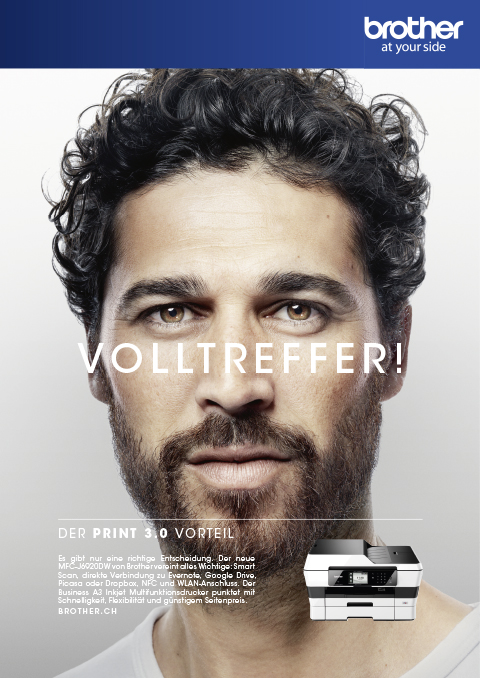
Following the "Print 3.0" campaign, Brother once again entrusted Glaswerk, an agency based in Baden, with the creation and strategy development for the market launch of its range of complementary business A3 inkjet multifunction printers.

Brother's latest all-in-one inkjet printers offer small businesses and the self-employed maximum economy in ink cartridge consumption. According to the press release, this argument is presented in the nationwide advertising campaign as a "Print 3.0 advantage" and the multifunction printer, which also scores with its attractive design, is staged as a "bull's eye". Publicity reports in special interest magazines and emotionally animated banners in high-reach online media are supplemented by search engine marketing. Advertising measures at the POS round off the early-year product campaign.


GLAWE_Medienmitteilung_M13_480xX_AG02
GLAWE_Medienmitteilung_M13_480xX_AG01

Responsible at Glaswerk: Tobias Gläser (Consulting & Conception), Melanie Müller (Junior Consulting), Sibylla Rotzler (Text), Jakob Schiratzki (Art Direction), Anja Grob (Junior Art Direction), Daniel de Souza (Web Design & Publishing). Responsible at Glaswerk Design - Agency for Design & Communication: Tobias Gläser (Management).
 

SDV Award: Agency at the airport takes time out

In 2013, the agency at the airport made it into the top ten of *Werbwoche*«s creative rankings thanks to the awards it won at the SDV Awards. This year, however, it wants to »take a step back and observe the scene from the outside” and take some time off to reflect.

René Eugster, owner and CD of the agency, told Werbewoche about the reasons:

"The fact that we were the first specialty agency to make it into the top ten with our SDV awards was very gratifying and also validating. But that's not enough for me. As a small agency, we have to budget our money and limit ourselves in the selection of creative competitions we enter. At the moment, the SDV Award is too much of an insider event for me; it has hardly any appeal outside the dialog industry. We live from the fact that the dialog industry becomes better known and that people talk about it, its possibilities and the available special know-how. And not that those who already know about it learn once again what the dialog industry is. The SDV is a relatively small association of plus/minus 120 members, but with extremely heterogeneous interests. There are printers, address brokers, mailers and creatives. It feels like if the architects were in an association together with the carpenters and those who make silicone joints as well as the curtain manufacturers and then discussed the most beautiful house.

Axpo completes the media team

Tobias Kistner is joining the External Relations team, led by Catherine Mettler, effective immediately. The 35-year-old communications manager previously worked at Sunrise for three years.

Tobias Kistner is taking over the role of media spokesperson at Axpo from Erwin Schärer, who retired at the end of 2013. Within the External Relations team, Kistner will be responsible for media relations, financial communications/investor relations and international PR. Tobias Kistner reports directly to Catherine Mettler, Head External Relations. In addition, Axpo's media team consists of Daniela Biedermann, Alexander Dalli, Tomas Honegger and Monika Müller.

Until the end of 2013, Tobias Kistner was responsible for media relations at Sunrise Communications in Zurich for three years as Deputy Head of Corporate Communications and Spokesperson. Before joining Sunrise, Tobias Kistner worked for the communications agency Farner Consulting in Zurich. Kistner is a trained communicator and completed his studies in intercultural communication at the Zurich University of Applied Sciences (ZHAW) in 2005.

get_footer();