Best of Swiss Web 2016: Shortlist announced

The Best of Swiss Web expert jury reviewed and evaluated 355 project submissions. The two-day judging process has now identified the 80 projects that have made the shortlist in at least one category.

The shortlist therefore includes all the participating projects that can legitimately hope for another award, be it as the winner in one of the eleven regular categories or even as Master of Swiss Web 2016: the best web project of 2016.

On March 11, the readers' vote by subscribers to Netzticker and the newsletter Westschweizer ICTjournal will begin. The winner of the coveted buoys will be announced at the Award Night on April 7, 2016 at the Kongresshaus Zurich. Werbewoche is once again this year's media partner of the Best of Swiss Web. The rankings of the competition are included in the creative ranking of Werbewoche - this year for the first time together with the results from the partner award Best of Swiss App.

Most Successful Agencies on the Shorlist:
 

Agency Shortlist places
Jung von Matt/Limmat 6
Hinderling Volkart 5
Notch Interactive 5
Serranetga 4
Namics 4

Shortlist Best of Swiss Web 2016
 

Project Client Contractor
#SwissSelfie
Switzerland tourism SMLY
360° Virtual Reality Music Video
Samsung Electronics Switzerland Serranetga
BLACKSOCKS.COM - 5.0: Brand experience, content commerce, personalization & efficient shopping that's fun!
BLACKSOCKS UFirst Group
BRACK.CH: Pack the Brack
BRACK.CH Kind regards
CAILLER - Where is Ruedi?
Nestlé Suisse Jung von Matt
Casino Theater Winterthur
Casino Theater Winterthur AG Gold Interactive
CH FOUNDATION - CH GO
ch foundation Jung von Matt
Concierge
Zurich Tourism Wirz
Contexta Collection
Contexta Contexta
Coop recipe platform
Coop Cooperative Unic
CSS Insurance - Autumn campaign 2015
CSS Insurance The House Agency
Datatrans Payment Pages
Datatrans three-pole
E-Collector
Gamechanger Liip
Email advent calendar for Bauknecht
Bauknecht Mayoris
E-Periodica
ETH Library Cando Image
Edelweiss. Experience
Edelweiss Air Hinderling Volkart
edusuite
Alpha language world PwC's Experience Center
Berne Declaration: Free Gold Campaign
Berne Declaration Kind regards
Flyerking online
MW Mediatrade Guava Studios
Frontiers Journal Publishing Platform
Frontiers Media PIT Solutions
Grand Tour of Switzerland
Switzerland tourism Eyekon
GRAUBÜNDEN HOLIDAYS - The Great Escape
Grisons vacations Jung von Matt
GRAUBÜNDEN HOLIDAYS - The Great Escape
Grisons vacations Jung von Matt
Greenpeace Annual Report 2014
Greenpeace Switzerland CRAFFT
Hear the World Foundation: "Hear Malawi
Hear the World Foundation Notch Interactive
Heureka - Information platform for fire protection
Building insurance Bern Sprachwerk / Intersim / Scarton Stingelin
Hilti Art Foundation
Hilti Art Foundation Brigitte Lampert/sunset and Hanna Züllig/internauta
howhot.io
BLINQ BLINQ
IKEA catalog review
Ikea Switzerland Wirz
it-dreamjobs.ch
Association Dream Job ICT.ch Zeix | Netcetera
KIM.bl - the cultural property portal Baselland
KIM.bl (Cooperation Initiative Museums Baselland) Open Interactive | pontius software | Tom - it's fair design!
Le Temps - New website
Ringier Romandie Antistatique
Loowatt CSO
Loowatt Ltd. Acrea
M14 - Online Migros Annual Report
Federation of Migros Cooperatives Namics
Make Seven Dance
Samsung Electronics Switzerland Serranetga
Medela - MyMedela
Medela Namics
MIGROS SÉLECTION
Migros Cooperative Union Station
Migros. Suisse Mania
Federation of Migros Cooperatives Hinderling Volkart | Agigen
MoneyFit - Your money under control!
PostFinance LerNetz | Gridonic | Gentle Troll
negishi.ch
Fredy Wiesner Gastronomy Guava Studios
NESCAFÉ Dolce Gusto x Webrepublic: Enormous reach for product launch
Nestlé Suisse Webrepublic
OneGov Cloud - the online counter for municipalities
Association OneGov.ch Seantis
Open Government Data Portal
Swiss Federal Archives Liip
P&G: Wella STORE
Dettling & Marmot Futurecom interactive - Y&R Group Switzerland
Paymit Donations Microsites
Conglomerate of 5 non-profit organizations getunik
PLUG&PLAY Ecommerce
giftparadise.ch gp license
Post - Storytelling with learning effect
Post CH BOLD advertising
POST CH - The Yellow Tour
Post CH Jung von Matt
PostLogistics: E-Shop live test
PostLogistics Notch Interactive | Leo Burnett
Redesign University of Bern
University of Bern Zeix | SNTL Publishing & Co KG
Relaunch of the Geberit corporate website
Geberit International Futurecom interactive, Y&R Group Switzerland
Relaunch post.ch
The Swiss Post Unic | soultank
Relaunch ZHAW - Zurich University of Applied Sciences
ZHAW Zurich University of Applied Sciences Namics
Rivella Pool Hero
Rivella JWT / Factory
Sanagate - Let the thrift sow out
Sanagate Ogilvy
santésuisse: Comparison portal Spitalfinder.ch
santésuisse Notch Interactive
Schulthess "much easier
Schulthess Machines AG dotpulse
Swiss meat & Proviande
Proviande Cooperative Netvertising
SDBB Online Test Platform OTP - Career Guidance 2.0
Swiss Service Center for Vocational Education and Training | SDBB Netcetera | cloud solutions
search.ch: "Slotmachine
search.ch Notch Interactive
Seats for Switzerland - Reunion Movies
Swiss International Air Lines Ltd. Publicis Communications Switzerland
ski.ticketcorner.ch
Ticketcorner Netcetera
Stop domestic violence
Women's Center Zurich Publicis Communications Switzerland
SUVA bike simulator
SUVA Contexta | undef
SWISS LIFE - Wall of Wishes
Swiss Life Jung von Matt
SWISS. The people behind
Swiss International Air Lines Ltd. Hinderling Volkart | LAUSCHSICHT
Tricolor. From photo to image
TRICOLOR Photoprint Ltd. Hinderling Volkart
UBS & bexio: Accounting for SMEs
UBS / bexio PwC's Experience Center
UBS CampusBreak
UBS Switzerland Serranetga
UBS Paymit - The campaign
UBS Switzerland Notch Interactive
vbzonline
Zurich transport services Collective
Valais - Cup Final
Valais/Wallis Promotion Contexta | Lineli Solutions
Valais.ch. Relaunch
Valais / Valais Promotion Hinderling Volkart
Web platform economiesuisse
economiesuisse Wirz Corporate | PwC's Experience Center
Website of the Swiss Parliament
Parliamentary Services itsystems | Namics | DTI
werdeschiri.ch
Aargau Football Association frame eleven + partners AG | collective
WINK
General Building Cooperative Zurich Panter
Your Heartbeat
Samsung Electronics Switzerland Serranetga
ZKO - Space for great feelings
Zurich Chamber Orchestra HAVAS WORLDWIDE
Zurich Natural Hazards Radar
Zurich Insurance Company Namics | GEOTEST
Zurich priceless
Kulturlegi Zurich, Caritas Zurich three-pole


New Head of Business Media at the NZZ Media Group

Monica Dell'Anna will take over as head of the Business Media division effective March 15, 2016, and will become a member of the NZZ Media Group's executive board.

She will be responsible for the growth strategy of the business division, which bundles the NZZ Media Group's conferences, information services and specialist media. Dell'Anna succeeds Andreas Arntzen in this role. She has been a member of the Group Executive Board of BKW for the past two years, where she was responsible for energy trading, product management, marketing and sales as Head of the Market Division. Prior to that, she worked for ten years in various management functions at Swisscom, most recently as Head of the Fiber Optic Business and New IT divisions. The electrical engineering graduate began her professional career as a consultant for the telecommunications industry in Switzerland and Europe. Monica Dell'Anna holds a doctorate in Telecommunications Engineering from King's College Centre for Telecommunications Research in London.

The strategically important Business Media division - the third division alongside NZZ Media and Regional Media - includes conferences such as the Swiss Economic Forum (SEF), information services such as Moneyhouse and specialist media such as "Textil-Revue". With this division, the NZZ Media Group is growing organically in the B2B business and through acquisitions, most recently with the takeover of Architonic, the leading international online community for architecture and design.

Veit Dengler, CEO of the NZZ Media Group, said in a press release: "With her many years of experience in managing B2B businesses and digital transformation processes, Monica Dell'Anna is the ideal person to drive forward the growth strategy of Business Media."

"Hear my Story": Federation of the Deaf launches new campaign

In its new campaign, created by Y7k, the Swiss Federation of the Deaf (SGB-FSS) showcases deaf people who are living life to the fullest and are proud of their language and culture.

At least 500'000 people with a hearing impairment live in Switzerland, about 10,000 of them are completely deaf. Most deaf people do not consider themselves disabled, because they can do everything - except hear. In the morning, a flashing or vibrating alarm clock wakes them up, the doorbell is connected to a flashing system, the mother calls her children via Facetime and communicates with them in sign language. Deaf people maintain their own culture, have their own language and at the same time are part of the social life in Switzerland. Their disability only shows in their interaction with their hearing fellow men.

Unbenannt-5_131
"Hear my Story" - These are six film portraits and answers about deafness: Corinne Parrat is a web designer, actress and was elected Miss Handicap in 2009.

There is a lack of understanding

Communication between deaf and hearing people is difficult. Hearing people usually lack the understanding for dealing with deaf fellow human beings. The result is an unwanted exclusion. Deaf and hearing people live parallel past each other, at the workplace, in the apartment building, in the restaurant or bus. "Hear my Story" is a campaign that aims to help hearing people develop more empathy for fellow human beings with hearing disabilities and at the same time reduce fear of contact.

Unbenannt-10_87
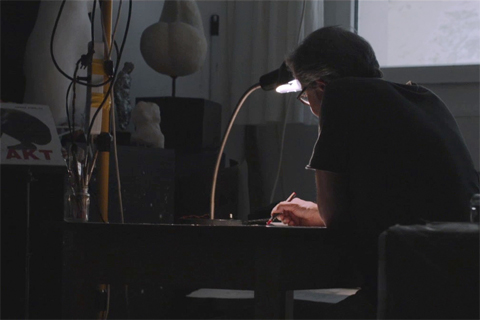
Peter Hemmi is an artist. As an activist he joined the international emancipation movement of the deaf.

Build bridges

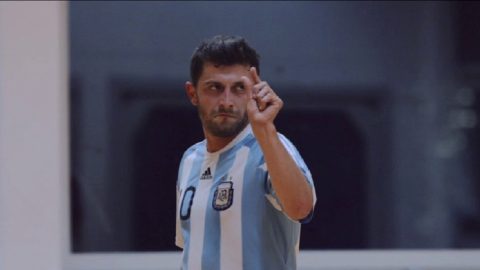
The campaign builds on six portraits about people in the deaf community. A skater, a partygoer, a sign language interpreter, an artist, a futsal player and a teacher. They were all accompanied during one day by filmmaker and director Hans Kaufmann. Through his documentary approach, the director shows in authentic images six strong personalities who are in the middle of life. On the website Hearmystory.ch accompanying texts provide deeper insight into issues such as education, integration, the cochlear implant, the right to access information, and the demand for recognition of the language and culture of deaf people.

Unbenannt-11_85
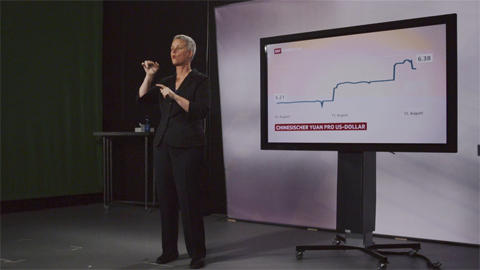
Michèle Berger is a sign language interpreter. She regularly translates the "Tagesschau" on Swiss television.

With this campaign, the Swiss Federation of the Deaf SGB-FSS wants to facilitate access to the language and culture of deaf people. Whoever listens to deaf people realizes that they live just like hearing people - just without sound. The films were made by Hans Kaufmann. The campaign was conceived by the Zurich agency Y7K, which, in addition to the thematic focus, also defined the tonality and implemented the website.

Unbenannt-12_78
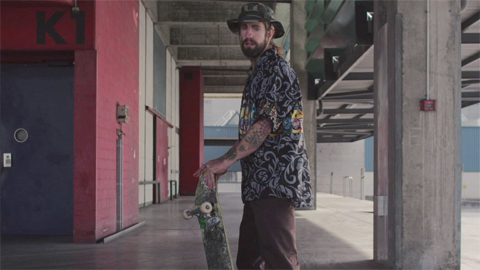
Stephan Willi is a metalworker and skater. He wears a cochlear implant that allows him to understand spoken language.

Unbenannt-13_61
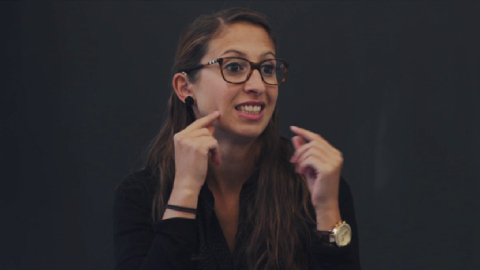
Isabelle Cicala is a teacher. She works to ensure that deaf children and adults have access to higher education.

Unbenannt-14_58
Blerim Ameti is a carpenter, CNC milling programmer and member of the Zurich Deaf and Sports Club.

Responsible at the Swiss Federation of the Deaf SGB-FSS: Roland Wagner, Martina Raschle, Conradin Zellweger. Responsible at Y7K: Ruben Feurer, Samuel Alder, Yves Sinka. Films: Hans Kaufmann.


Partner says thank you and goodbye orange

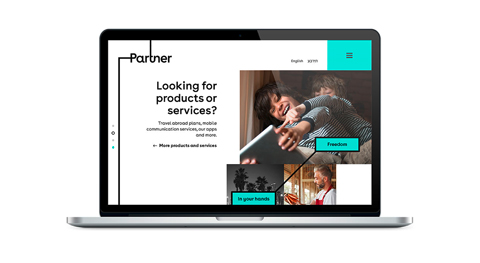
To replace the Orange brand in Israel, Meta Design Zurich, working with an international team of experts and in collaboration with the client, developed the new Partner brand: an agile brand for connected digital life.

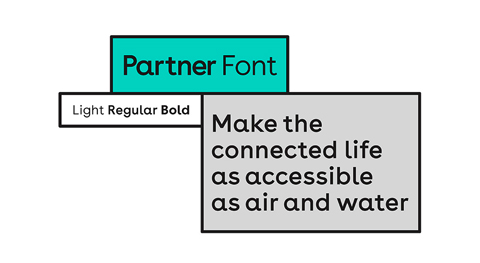
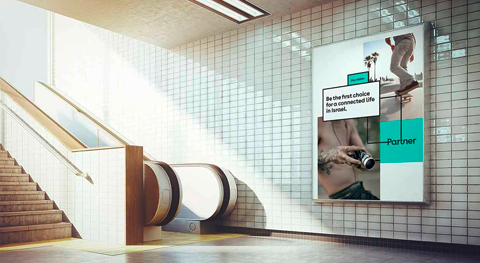
Liberalization in the Israeli telecommunications market has led to fiercer competition and a sharp drop in prices in recent years. Partner is responding to this with a new strategy and a new brand. The brand follows the company's strategy of being the first choice in the market for today's and tomorrow's connected life needs. The fusion of fixed network, mobile telephony, Internet, content and increasingly also devices (Internet of Things) serves as the starting point for the new mission: "Making the connected life as accessible as air and water." A claim that is intended to guide both customers and employees into the future.

Meta Design translates the brand strategy into a flexible identity that addresses all senses. At the core are stories from everyday life, based on individual moments and their connection through the Partner brand. The new logo is based on the specially developed Partner font. The logo is at the core of the communication, using "connectors" from the letters P and t to connect people, moments and technologies through images and messages. The highly reduced black and white design system is complemented by the accent color aqua and a new imagery.

01_Partner_Logo_160301
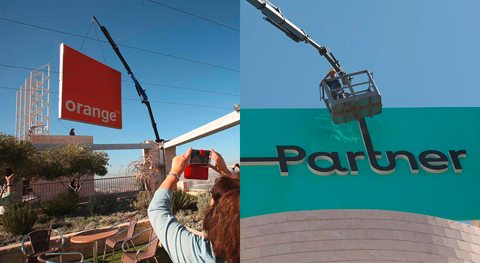
02_Partner_Press_goodbye_orange_hello_partner
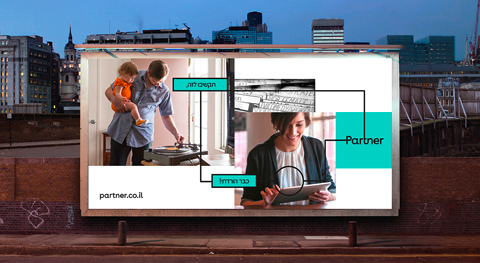
03_Parnter_Billboard_160301

This provides everyday and authentic insights into the life of Israel's multicultural and cosmopolitan population. An emotional brand story, the brand tonality and a message system complete the appearance and also ensure a high level of recognition verbally. For the launch on February 17, Meta Design implemented the brand at all touchpoints. The headquarters near Tel Aviv received a complete rebranding on the launch date. All points of sale were also converted within a week. The first wave of launch communications focused on the message: "Goodbye and thank you Orange - Hello Partner" by means of a social media campaign and billboards placed nationwide. A second emotional follow-up campaign with Israeli musician and superstar Ivry Lider and London celebrity chef Assaf Granit uses the high level of attention to anchor the brand in the public and among target groups.

06_Partner_Font_160301

Isaac Benbenisti, CEO Partner Communications: "Meta Design impressed us with its sound strategic expertise and inspiring creation. In an efficient process, we realized highly professional results in the shortest possible time. The new appearance is unique and paves our way to a successful future." Benjamin Gilgen, Managing Director Meta Design: "Accompanying an international brand like Partner at its launch is a gripping task. To develop the complete launch with all facets and to realize it in such a short time was a great challenge. We developed an agile brand with a flexible identity that equips Partner for the digital age."

04_Partner_Digital_160301
09_Partner_Poster_160301
07_Partner_Icons_160301
10_Partner_Car_160301

NZZ am Sonntag: Francesco Benini becomes Head of Domestic Affairs

Francesco Benini will succeed Pascal Hollenstein as head of the Switzerland desk and deputy editor-in-chief of the NZZ am Sonntag. He will assume his new position in mid-June.

Francesco Benini, the current Head of the Background section of the NZZ am Sonntag, will take over as Head of the Domestic section in mid-June and will also become the newspaper's Deputy Editor-in-Chief. He will succeed Pascal Hollenstein, who will move to the NZZ regional media as Head of Journalism in March. The new head of the background section at "NZZ am Sonntag" has yet to be determined.

Francesco_Benini-1

Benini was born in St. Gallen in 1970 and studied English and German in Basel and London. After various jobs as a teacher, he completed a postgraduate course at the MAZ Media Training Center in Lucerne and then began his journalistic career as an editor at the Landbote. In 2000, he moved to the local section of the Neue Zürcher Zeitung and two years later to the Switzerland section of the NZZ am Sonntag. Since 2008, he has been working for the background department, which he took over as head in 2009.

Tobias Billeter is the new Head of Communications at Microsoft Switzerland

Tobias Billeter will head up communications at Microsoft Switzerland starting March 1, 2016. He reports directly to Country General Manager Marianne Janik and succeeds Barbara Josef, who previously led the communications team for nearly eight years.

Microsoft Switzerland appoints Tobias Billeter as Head of Communications as of March 1, 2016, filling the key position in the Swiss Executive Board that has been vacant since December. In this role, he is responsible for the local implementation of the global communications strategy as well as maintaining relationships with the media and opinion leaders.

Tobias-Billeter-1

Tobias Billeter started his career as a sports and business journalist in the service of various publishing houses. After holding positions as Head of Department and Editor-in-Chief, he moved to the private bank Clariden Leu in 2007, first as media spokesman and shortly afterwards as Head of Corporate Communications. For the last six and a half years, 46-year-old Billeter has been responsible for internal and external communications at Zurich Switzerland and built up the Corporate Responsibility department as an integral part of the positioning strategy. Marianne Janik, Country General Manager of Microsoft Switzerland: "With his experience as Head of Communications of internationally active service companies, Tobias Billeter is the ideal reinforcement for the Swiss management of Microsoft Switzerland."

Tobias Billeter studied history and political science at the University of Zurich. He then completed an MAS in Business Communication and a Diploma of Advanced Studies in Renewable Energy Management at the University of St. Gallen. The British-Swiss dual citizen lives in Zurich and is the father of three children.

Barbara Josef had decided to leave Microsoft Switzerland and found her own company after almost eight years as head of communications. The economist joined Microsoft Switzerland in 2008 and was, among other things, co-founder of the Home Office Day project (now "Work Smart") - an initiative that aims to ensure that individuals as well as the environment and companies benefit from the current technological and social changes in the world of work.

Friendly greetings sends Switzerland on expedition

Under the slogan «Expedition Brack,» Freundliche Grüsse is launching a large-scale cross-media campaign for the online specialty retailer Brack.ch.

The aim of the year-round campaign is to communicate the range extensions to white goods and outdoor equipment. The campaign kicks off with a whimsical film of a pair of researchers. In an Arctic-like no man's land, they are sitting bored in their research station when suddenly an alarm goes off. The two researchers immediately set off in search of a refrigerator hulk that has fallen from the sky.

On the campaign website Expedition-Brack.ch users can go on an expedition themselves and continue the search for the lost Brack. There is a trip to the end of the world worth 10'000 Swiss francs to be won. There are also countless instant prizes to be won from Brack.ch's wide range of products.

The TV commercial was shot in Sweden by "Oscar"-nominated director Patrik Eklund. The film is shown throughout Switzerland on high-reach stations and online. In addition, posters and adverts call for shopping expeditions on Brack.ch.

Unbenannt-10_86

The spot is the first part of a trilogy. The further adventures of the explorer couple will be shown in the course of the year.

Unbenannt-11_84
Unbenannt-12_77

The refrigerator Brack is the latest version of the advertising concept launched in 2012. The Brack.ch logo acts as a placeholder for the product ranges focused on in the advertising campaigns.

Unbenannt-13_60

Responsible at Brack.ch: Markus Mahler (CEO), Chris Gärtner (Campaign Coordination), Sandrine Knechtli (Team Leader Marketing Planning), Patrick Hoerdt (Team Leader MarCom), Dominik Hackenbruch (Head of E-Commerce). Responsible at Friendly regards: Pascal Deville, Samuel Textor, Res Matthys, Nadine Mojado, David Elmiger, Max Benrath (Creation), Christian Haueter (Consulting), Erwan Eydt (Programming), Niels Vije (Agency Producer), Hobbyfilm (Film Production), Patrik Eklund (Director), Gustav Danielson (DOP), Ola Rutz (Producer), Lily Metzker/Flaeck (Key Visual).
 

"So far, NZZ Campus has been seen as an investment, now it must also pay off"

NZZ Campus appears on March 2 in a fresh design, with new sections and authors. Werbewoche talked to Editorial Director Peer Teuwsen and Editor Vanessa Sadecky about the new look.

The 74-page magazine now wants to be even closer to students - with stories about studying and starting a career. Instead of thematic issues, there is now a prominent cover story. The "Study and Work" section offers background reports, interviews and legal advice, while "Life" features articles on love, travel and unusual people. New sections such as "Student of the Hour," "The Controversial Interview," "Lecture Criticism" and "Bullshit Bingo" are designed to generate conversation in the lecture halls. The newly younger and more diverse group of authors includes up-and-coming talent, big names from the university environment, NZZ authors, and a network of correspondents at Swiss and international universities. NZZ Campus is distributed to universities in German-speaking and French-speaking Switzerland. In addition, it is sent directly to students who have subscribed to the Neue Zürcher Zeitung or the NZZ am Sonntag. The circulation is 50'000 copies. The quarterly magazine is supplemented by the website, which is updated daily. Campus.nzz.ch, a newsletter and various social media channels.

Teuwsen_.Sadecky

Editorial Director Peer Teuwsen and Vanessa Sadecky (Photo: Corinne Kramer/NZZ)

Peer Teuwsen, how great is the attraction for you, as a seasoned journalist, to take over the editorial management of a student magazine?
Peer Teuwsen: That has a very big appeal for me. I also run NZZ Geschichte, where I have the privilege of addressing an audience that tends to be older. With NZZ Campus, I now get the chance to reach younger people and, above all, to deal with younger people in the editorial and writing teams. I have enjoyed working with young journalists all my life. Some of them are already very advanced, but others I hope I can pass on some of my experience.

What makes the new NZZ Campus fundamentally better than the old one?
Vanessa Sadecky: The new layout is certainly striking: it is clearer and fresher and corresponds to the taste of the target group. We sat down with students twice to find out what they want and expect from a student magazine. In terms of content, it was important to us that the magazine becomes more relevant - not only for students, but also for professors and other lecturers.

Unbenannt-3_127

How exactly were the students involved in this process? The target group of students is very large...
Teuwsen: We formed so-called focus groups. We tried to take into account the entire range of students in their composition and to achieve as representative a coverage as possible: from very young to long-term students; students from all over Switzerland, from all major universities and from different fields of study. An HSG student probably has different expectations than, for example, a German language and literature student.

So they picked individual students and interviewed them?
Teuwsen: Exactly. We discussed with them, showed them other student publications, other magazines. We tried to find out what was liked and what was rejected. We also showed the group our layout designs and asked for their opinion.

Are there students in this large target group who are particularly important to the NZZ? Does NZZ Campus - to put it casually - want to appeal to an ethnology student just as much as to a Jus, ETH or HSG student?
Teuwsen: Definitely. But the fact that we have to serve a very broad, heterogeneous audience is also a challenge. The only thing students have in common is that they all want an academic education. We have to find topics and implementations that appeal to as many as possible and can't make a magazine just for law students, for example.

From NZZ's point of view, is the magazine primarily made because the target group of students is an attractive advertising target group, or because future academics are to be introduced to NZZ?
Teuwsen: We do the magazine primarily for two reasons: On the one hand, we can attract a younger readership early on and perhaps later transfer them to other NZZ titles. On the other hand, the NZZ also feels obliged to offer the student world a forum, a platform. We want to give students a home in which they can express themselves -many students write and are represented in the editorial team. NZZ Campus is unique. There are magazines from the individual universities, but nothing overarching that attempts to represent the entire university landscape. The fact that we have also had great success in the advertising market with this concept is naturally gratifying. With multi- and cross-media campaigns and customized solutions, we have been offering the ideal platform for reaching students in German-speaking and French-speaking Switzerland with NZZ Campus for years.

Is it also about recruiting the next generation of journalists?
Teuswen: (laughs) Yes, here he sits (points to Sadecky).
Sadecky: Exactly, I'm still studying and currently on my bachelor's degree at the ZHAW. We also have a volunteer in the editorial department who has just completed her master's degree. In addition, we have numerous freelancers who are studying and want to become journalists.

When the magazine was launched in 2006, it was important that it "come across as distinctly NZZy. Is that still the case? At first glance, the new layout does not resemble the NZZ...
Sadecky: I think the whole NZZ publications have changed a lot in the last ten years, including the Neue Zürcher Zeitung with last year's redesign. NZZ Campus was designed by the same art director as NZZ am Sonntag, which won an award for its layout.

But for example, things like Bullshit Bingo don't necessarily seem "NZZ-like"....
Sadecky: Of course, NZZ Campus also claims to be daring. The journalistic values in particular should be "NZZ-like": We want to tell relevant, well-researched stories. The fact that we also entertain students with entertaining columns between the stress of learning is not a contradiction.

Unbenannt-4_144

Is there also a danger with sections like Bullshit Bingo that the whole thing might come across as chumming up if you want to specifically address young people with it?
Sadecky: There is always that danger. But Bullshit Bingo is just a good example of something that was suggested and desired in the focus group, that we in the editorial team also enjoyed - a nice unorthodox way to get an insight into a field of study.

And something that has been established on social media for years....
Teuwsen: It certainly hasn't established itself in the NZZ yet (laughs). It's an experiment, an experimental field. If it triggers a shitstorm, we'll have to rethink the whole thing again, of course (laughs).

What does NZZ Campus Online offer?
Sadecky: Online, the blogs are the most important element. We have five bloggers who are hired each semester. In addition, there are many print articles online and there is a lot of news and useful information for everyday student life - which is of course also a good platform for our advertising customers. The NZZ Campus online presence is rounded off with the Facebook and Twitter pages, which are successful with our target group. In addition, there is the NZZ Campus Newsletter, through which we are in contact with 14'000 subscribers.

How do you keep finding new, good bloggers?
Sadecky: Many students consider it a privilege to write for NZZ Campus, which is why we get plenty of applications. Our editorial team makes sure that the mix fits, that the most exciting topics are covered and takes the best and most creative young talents.

And how do print and online interact in terms of content?
Sadecky: The website is not an online edition of the magazine, we bring the most relevant things online that are readily shared and create conversation. To take a recent example: Just now, our 19-year-old student intern Khaleda Dawudi, who fled to Switzerland from Afghanistan as a 4-year-old girl, published her life story online with us. The article has been shared thousands of times.
Teuwsen: Online, we also have the opportunity to react to current events. After all, the magazine is published four times a year. The blogs have long been part of the NZZ campus world and are popular with students. In addition, we can see here who has the potential to perhaps make it into the magazine or the NZZ - a kind of laboratory.

The original concept of the three thematic areas of study, the world of work and student life remains?
Teuwsen: Yes, but we now have clear separator pages where the individual areas begin. Another finding from the focus groups: The magazine should be clearer. Apparently, the younger generation wants clarity and a clear layout. Another difference is that we no longer focus on specific topics, but rather on a cover story - for example, a very detailed one in the first issue.

trenner

What do students expect from a magazine like NZZ Campus?
Teuwsen: They want relevance; to get value from the magazine. But they also want to be entertained. Getting this mix right is the art. Relevance that is also well told. It's very important to me that the stories are well written. That people enjoy reading them. I'm curious about the feedback, but I think the level is relatively high.

In September, NZZ Campus celebrates its 10th anniversary. Do you think the print edition will still be around in another 10 years?
Sadecky: I think so. Personally, I wouldn't be so sure about a newspaper, but with a magazine like NZZ Campus, I'm positive about the future. There will always be students, and we're confident that we'll be able to keep our finger on the pulse of what's going on over the next ten years.
Teuwsen: It will probably be really difficult for daily newspapers. At least to the extent and at the price that they are today, they will probably not remain with us. With NZZ Campus, on the other hand, I believe in a future as a print product. What I also think is cool - and new in contrast to the past - is that the thing also has to pay off. Every product in the house has to be self-supporting. Up to now, NZZ Campus has always been seen as an investment in future readership; now we have to succeed in both. For me personally, this is an interesting incentive.

Interesting in a positive sense?
Teuwsen: Yes, really. For me as a journalist, it must also be a requirement that what I write and publish has a chance on the market. I don't want to write for a publication that no one reads, at most a small group finds "still nice", but otherwise writes at a loss. With NZZ Campus, there is no such danger. Over the past ten years, we have established direct contact with students, and now, with the relaunch, we have moved even closer to their lifeworld.

Interview: Thomas Häusermann
 

Clothes, travel, media - what the Swiss store for online

Six out of ten Swiss people regularly shop at online stores. Online shoppers most frequently purchase items in the fashion, clothing, and sporting goods categories, but they spend the most money on travel and flights.

For the first time, Net-Metrix is publishing these results and other current developments on the topic of online shopping on Tuesday as part of its Net-Metrix-Base 2015-2 baseline study.

The product category fashion, clothing (including shoes) and sporting goods is clearly in first place in the online shopping hit list: 60 percent of online shoppers buy goods from stores such as Zalando, Bonprix, La Redoute and others. 1.4 million Swiss spent between CHF 100 and CHF 500 on these items over a three-month period. A small but nevertheless considerable minority of around 100'000 online shoppers even invested over one thousand Swiss francs in clothes and shoes.

Half of online shoppers booked a trip or flight on the web in the same period; 62 percent of them spent over CHF 500. This product category thus records the highest spending. Around 2 million Internet users purchased books, films or music via the digital channel. 66 percent of them paid between CHF 1 and 100 for media in a quarter.

Unbenannt-2_126

Men buy home electronics, women buy clothes

More than nine out of ten online shoppers (92.3 %) are also heavy users of the Internet and therefore surf the net daily or even several times a day. Most online shoppers are in the 30 to 39 age group, where four out of five users shop on the Internet. Contrary to all preconceptions, there are about as many men as women among online shoppers (around 2 million each). But if you take a closer look at the product categories, one or two clichés are confirmed: significantly more women store for clothes and shoes on the Internet than men - 62.5 percent to 37.5 percent. In the product categories of home electronics, household appliances and accessories, and programs (software), games and apps, it's the other way around: men are clearly ahead with a ratio of 7 to 3.
 

Serranetga: change in top management

With Matthias Adolf, Serranetga has hired a CEO who represents a new generation of communications professionals. He combines creative and digital thinking.

Unbenannt-7_131

Matthias Adolf has been actively involved in shaping the digital transformation in this country over the past few years, both on the agency and client side. He held senior positions at Assai/Wirz and Namics, was jointly responsible for building up the Digital Unit at Jung von Matt/Limmat, and most recently worked on the client side at Search.ch as Head of Marketing and member of the Executive Board. In his career, he has been involved in numerous well-known and award-winning campaigns. In his position as the new CEO, he is responsible for around forty employees and well-known clients such as Samsung, UBS and Mobiliar.

The previous managing director Maurizio Rugghia is leaving Serranetga at his own request. He has been instrumental in Serranetga's development into a creative agency with digital DNA.

Bakom study recommends more leeway for public media on the Internet

Public media organizations, which are committed to public service, should be allowed to offer new digital services. This is the recommendation of a study by the University of Freiburg commissioned by the Federal Office of Communications (Bakom).

A digital presence is the only way to ensure that the public service does not fail to meet the needs of citizens. The study is based on a data comparison of 18 Anglo-Saxon and European media systems. For the future definition of public service in Switzerland, it should therefore be important to maintain an independent and non-commercial organization. The content-related obligations should only be defined in very general terms. The public service should be controlled primarily through funding and accountability.

Mixed financing has proven its worth

The mixed financing of the public service that is common in Switzerland is widespread in Europe. Even if it would be desirable in principle to dispense with advertising, financing SRG solely from public funds is probably unrealistic, the study continues. This would either lead to a massive reduction in services or a sharp increase in fees. Experience in Ireland has shown that restrictions on advertising do not benefit domestic private broadcasters, but rather that broadcasting advertising windows benefit from them. Furthermore, the study shows that the device fee is an obsolete model due to the technical convergence of reception devices.

Household levy prevails

The broadcasting tax and the household levy have emerged as promising options for the future. On June 14, 2015, the Swiss people narrowly approved the device-based household levy in a referendum. Other countries are likely to follow the example set by Finland, Germany and Switzerland. The study argues that the determination of the level of public funding should be more depoliticized. The country comparison shows that there are various ways to make this decision more independent. For example, the levy could be linked to the cost of living. A committee of experts could also be involved in the decision-making process. Digitization and the growing importance of the Internet for media use have intensified competition between the public media and newspaper publishers. But only together can publishers, online publications, regional broadcasters and the SRG ensure a diverse media landscape that is appropriate for direct democracy and federal Switzerland. (SDA)

Passengertv now with Sales Director for French-speaking Switzerland

Natascha Moccetti is moving from Axel Springer Switzerland to Passengertv, where she will take on the newly created role of Sales Director for Romandie.

As of March 1, 2016, Livesystems is strengthening Swiss Passengertv TV with a newly created management position specifically for Western Switzerland: Sales Director will be Natascha Moccetti, 33, previously Area Sales Manager Audience Media Western Switzerland at Axel Springer Switzerland. According to the press release, Moccetti has an excellent network, is bilingual and lives near Biel, where she entered the marketing industry six years ago as a media consultant at Tele Bielingue and Radio Canal 3.

Natascha-Moccetti

Passengertv has grown strongly in French-speaking Switzerland in recent years and has therefore opened a sales location in Lausanne, among other places. Increasingly, advertisers who want to place ads on screens inside trains and buses in French-speaking Switzerland are being served from here. Passengertv's programming consists of constantly updated news, entertainment and route information. Passengertv is present in western Switzerland in Neuchâtel, Nyon, Fribourg, the Jura and Lower Valais, in regional transport around Montreux and Vevey, in the tourist area of the Riviera and Lavaux, as well as on the Vaud S-Bahn of the SBB and on Postbuses of Postbus Switzerland.
 

get_footer();