Brands in times of economic crisis
Which brands are consumers longing for in the economic crisis? How are their consumption habits changing? A mixed qualitative-quantitative marketing research study by Concept Zurich investigated these questions. The two retailers Migros and Coop emerged as the potential winners of the crisis.


When the strong knight in iron armor walks through flames to pull us out of the mess and show us the way, and angelic figures wrap their comforting soft wings around us, giving us a feeling of security, we usually imagine we are in a fairy tale. These two archetypal opposites are the result of a storytelling exercise for a crisis blog: Crisis-experienced participants were invited to share stories about their personal crises. The aim of this approach was, on the one hand, to uncover the emotional needs of people in crisis. On the other hand, the aim was to understand how these concerns are transferred to the reality of the economic crisis and what influence they can have on emotional brand management.
People who have experienced crises - ranging from identity and marital crises to job loss and bankruptcy - are relatively relaxed about the consequences of the economic crisis. This is because they have learned in their lives that crises are also opportunities. Opportunities for change. They also hope that the crisis will bring substantial renewal. The clarifying thunderstorm of the economic crisis should bring a change in values: away from the culture of greed and towards a return to values such as humanity and sustainability.
Consumer behavior in the economic crisis
But how will consumer behavior change during the economic crisis? This was recently investigated in an international study using a similar approach in countries that have already been hit harder by the crisis than Switzerland. In England, France and Germany, consumer culture has already changed noticeably. The days of carefree shopping as an expression of a hedonistic attitude to life are definitely over. Shopping is once again becoming a conscious act. Spontaneous shopping sprees are subject to self-censorship. Going out, spa and hairdresser visits have become fierce opponents in the personal planned economy of consumers. The reality of shopping in the countries concerned has become a daily struggle to calculate. The aim of consumers is to indulge in as much of their old lifestyle as possible while still being able to put money aside. This is primarily achieved through strategies of replacement or compensation. Luxuries are dispensed with, small everyday comforts are rationed and washing-up liquid, for example, is diluted with water to extend its useful life. A new culture of DIY seems to be developing. Going out less and inviting friends home more often. Examples like these show the new consumer culture that is likely to reach Switzerland soon, depending on how the economic crisis progresses. However, according to the international study, "conscious shopping" does not just mean being cost-conscious. On the other side of the scale, sustainable products are becoming an everyday luxury that can be indulged in by those who can.
What does this mean for the brand world?
And which brands are the potential crisis winners? 500 Swiss people were asked which brands make them feel good in times of economic crisis. Participants were able to choose three brands from over 300 different product categories in the food, near-food and non-food sectors that make them feel particularly good. The three preferred brands were then evaluated using 32 validated mood boards, which depict different emotional positioning dimensions.
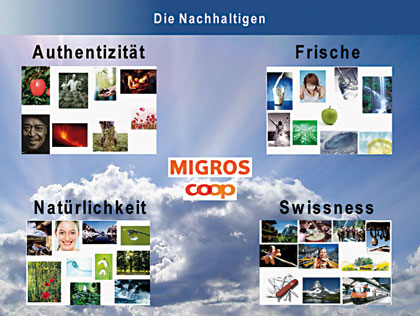
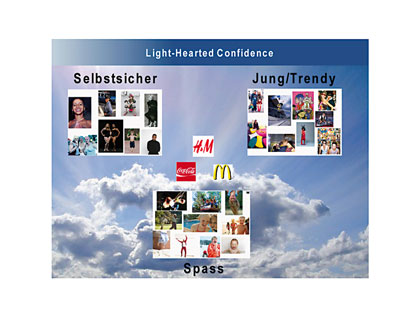
Migros was chosen by 61% of the participants, making it the clear winner, followed by Coop with 28%. M-Budget follows in third place, ahead of Aldi and Denner. Of the international brands, H&M, Coca-Cola and Nivea made it into the top ten. The dominance of retail brands in this ranking is not particularly surprising: where you can save money, you feel at home during the crisis. While the discounters Aldi and Denner are able to distinguish themselves primarily through consumers' cost awareness, they do not have a clear profile in terms of emotional positioning. Migros and Coop are different: both retailers position themselves through dimensions such as authenticity, familiarity, Swissness and naturalness - the emotional equivalent of a consistent sustainability strategy on both sides. Why is Migros so clearly preferred over Coop? This is probably due to the fact that the brand has succeeded in positioning itself well in terms of price and at the same time clearly distinguishing itself on an emotional level.
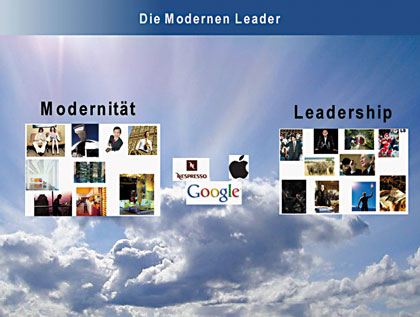
If we analyze the emotional positioning profiles of the other strong brands in more detail, a comparison with the archetypal typology mentioned at the beginning is obvious. The emotional profiles of the successful brands either resemble the strong knight, who conveys success and signals security and departure through his leadership strength. Or they appear more angelic and are characterized by positioning dimensions such as security and familiarity.
Migros and Coop manage to appeal to both poles. Their sustainability strategies convey leadership, while their Swissness positioning creates a feeling of familiarity and security among consumers.
The change in values longed for by the crisis blog participants is therefore confirmed by the results of the quantitative part of the Swiss study. At least as far as consumers' emotional brand perception is concerned, values such as sustainability and authenticity appear to be on the rise.
Alain Messerli