
Election posters: Picking up the vote with "head salad" and empty phrases
To be effective, election posters should polarize. Surprisingly, however, the vast majority are monotonous, boring, and uninspiring. By Claude Bürki


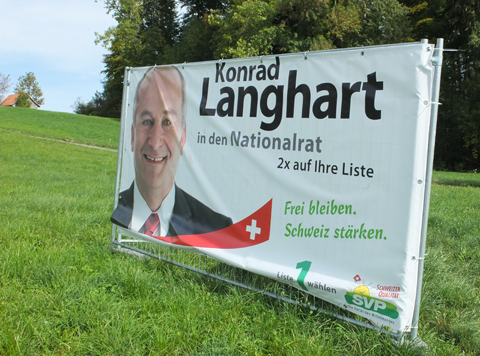
Nevertheless, the election poster is and remains the means of choice; it virtually imposes itself on the person driving or walking past. Big heads and empty phrases dominate. Is this the way to win over the electorate?
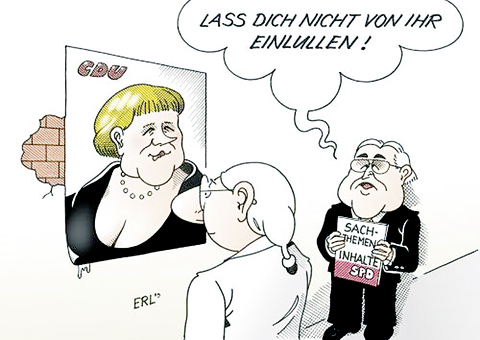
Even if they don't please, they still catch the eye. In this type of media, beauty is not primarily in the eye of the beholder. It is other criteria that count. The creators ask themselves questions such as: What catches the eye? What is the eye-catcher of the poster? What emotions are to be aroused? Which people or objects are depicted - opponents, victims, affiliates, enemy images or heroic figures? Are symbols used? Which colors (party colors?) dominate? How long is the text? What type of text is used - information, argument, slogan, appeal? What is the text/image ratio? And: What political and social attitudes does the poster illustrate? What is the intention? What fears, hopes are to be addressed or aroused, what overall impression is to be achieved? Aggressive, dramatizing, dynamic, arguing, caricaturing?
Poster design is demanding, especially under the maxim that wants to be fulfilled: "reduce to the max". In the past, political protagonists of all stripes smiled or threatened mainly from Litfasssäulen, the pillar-like poster sites that are no longer often seen in Switzerland. It was different in the thirties, especially in Germany. Adolf Nazi blotted these pillars all over with his propaganda messages. They were an important aggregate in Goebbel's arsenal of agitation. And unfortunately, they worked. Unfortunately, very much so.

In the age of social media
Although the advertising media and the communication channels available have changed considerably, the election poster continues to play its significant role in the parties' campaigns. This year, for example, potential winners and losers smiled and smiled at passers-by or motorists at the cantonal and national level. Heretical question: Is this advertising still in keeping with the times? In the age of social media?
The new channels have gained in importance, no doubt about it: Facebook, Twitter & Co. allow a more selective target group approach. However, experts are certain that these channels alone will not win a pot of gold, let alone an election campaign. However, in the right combination with other media, they can have an impact, especially with younger voters. And, importantly and correctly, social media can be used to spread personal election recommendations - recommendations from acquaintances and friends in personal exchanges are just as effective, if not more effective, than the posters on the side of the road and on the cemetery wall.
But because many voters have nothing to do with electronic media, the posters remain red-hot. Not least because these posters can now be produced quickly and cost-effectively in small and medium runs using modern printing technologies (digital printing, inkjet) and reprinted "on demand" when the situation demands it. Situation? Vandals! In fact, all parties, regardless of color, have had to replace many of their posted posters this year, defaced, torched or simply removed by vandals. Even a complaint "against unknown" does not help. Nor is poster abstinence the solution, because, according to a spokesman for the SP, posters are still the most efficient way to reach voters.
Topics or heads?
Media journalist and local politician Ueli Custer is ambivalent about answering this question: "It would be highly interesting to find out what exactly works. A suitable body should be commissioned to investigate this question in a study - what message do voters take with them, what attracts them, what repels them? For example, in one particular year we did nothing at all in terms of advertising - and the candidate won the seat. Another year, again, we did a lot of advertising - and the candidate came up empty. In order to attract attention, it is certainly important to provoke, to polarize. It also always raises the question: how do we advertise, with issues or heads?"
Custer emphasizes that the SVP has the most experience in this regard. The posters of this party are often mediatized. The advertising impact (whether negative or positive) is thus greatly increased. The credo of the agency commissioned with the project: "Campaigns that don't elicit a reaction from the target group are a waste of money. Custer still rates the poster as an economic medium in the election campaign, especially at "wild" poster sites. The others are hardly affordable anymore, he says. Social media and messages on the Internet, on the other hand, are "obscure" for him, are above all the channels of the young parties.
Authenticity as a success factor
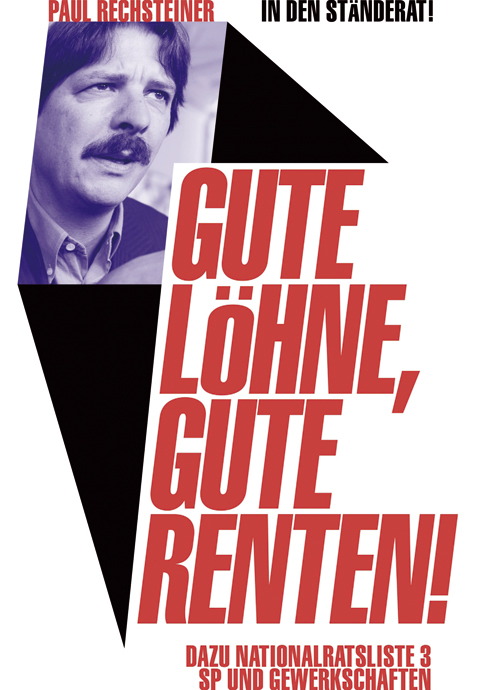
In the St. Gallen cultural magazine "Saiten", Ralph Hug described the development of an election poster for Paul Rechsteiner (campaign of 2011 for the seat in the Council of States). "The election was considered a sensation at the time. Was Rechsteiner elected because of the unusual poster? Certainly not. But the poster expressed, in terms of design, the alternative that his candidacy was to represent politically. How did this poster come about? Rechsteiner's team set some goals at the beginning. The most important was that the poster had to fit the candidate's profile. It shouldn't look gimmicky, but should radiate authenticity." The designer Jonas Voegeli, who created the poster, broke the rules and focused on the typography. In doing so, he created a contrast to the person-heavy mainstream graphics.
Dazzling puzzle piece in the media mix
After a sober examination of the advertising impact of election posters, the heretical question arises as to whether they are of any use at all? They are undoubtedly designed to bring voters closer to the candidates. They set striking accents. In the truest sense of the word, they give politics a face. However, sprawling messages that allow a comprehensive opinion to be formed are simply an impossibility.
However, a central, weighty, profane benefit cannot be denied: Election posters remind us every time we drive or walk past them that elections are coming up. That's what they do, redundantly and memorably!
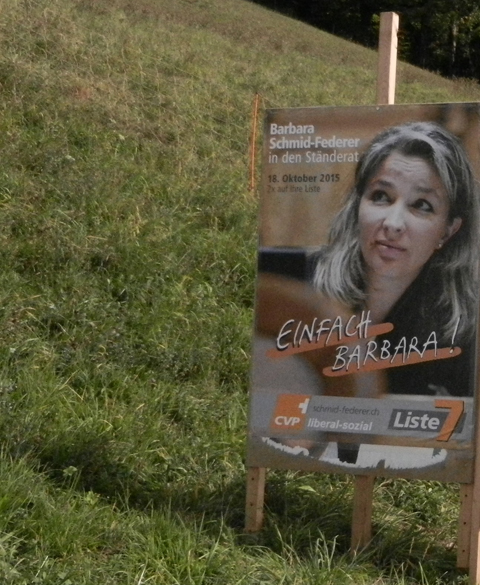
The conception of the content of an election poster is and remains a great challenge. Good election posters are more than selfies in large format, underpinned with toothless slogans and silly puns. Election posters, although not the supreme discipline in election campaigns - like media relations! -, are often merely numerous instead of witty. They are always a dazzling puzzle piece in the media mix when courting the favor of voters. The annoying wave of the fence post at the side of the road - it still works, as it always has. Even if we are already tired of the lettuce and the toothless slogans after the first glance. Apparently, however, not everyone is. One Twitterer wrote, "Election posters are like butterflies. They're beautiful, but they only live for a few days. And after one election weekend, these manifestos of democracy will disappear from the landscape again." Comforting, isn't it?
Claude Bürki is an editorial contributor to various trade journals and co-editor of the Swiss online packaging newsletter "pack's! Previously, he worked for many years as an advertising and PR specialist in well-known agencies and global companies,including Burson-Marsteller and Wirz.


