Cheese and emotions
A new study shows that people with different emotional decision-making styles also have different cheese preferences. These findings can be used for target audience segmentation.


For the most part, people do not make rational decisions. Even when they have the same information, they often make different decisions. According to neuroscientific research, decisions are largely guided by the limbic system, the emotional center. According to neuroscientists, we make up to 99 percent of our decisions unconsciously - with the limbic system deciding what we want or which facts we ultimately consider relevant. Nevertheless, neuromarketing makes purchasing decisions predictable - by investigating how our emotional decision-making system works. And it doesn't work the same for everyone. According to the Limbicode method, the way in which someone makes a decision depends largely on how they weight certain values and motives based on their personality. Limbicode is based on neurobiological findings, which were fundamentally researched by Prof. Dr. Dr. Gerhard Roth and applied in neuromarketing by Dr. Hans-Georg Häusel. The Limbicode method itself was developed by the Institute for Limbic Communication. It forms the basis of this study, which Marketagent conducted in collaboration with the Bern University of Applied Sciences' School of Agricultural, Forest and Food Sciences and the Institute for Limbic Communication.
Three decisive main motives
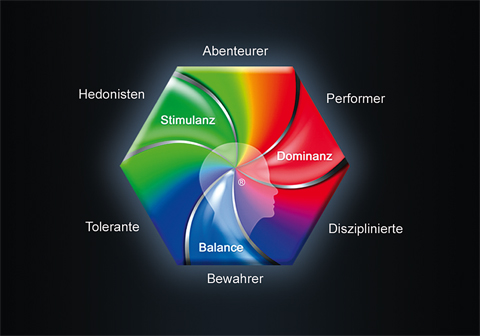
Ulrike Brämswig, Professor of Marketing and Food Business at Bern University of Applied Sciences, first presented the limbic typology on which her cheese research is based at the Zunfthaus zur Schmiden on Thursday morning. The scientist distinguishes between the three main motives "balance", "dominance" and "stimulation", which strongly influence human decision-making behavior. As they are different for each person, different personality and decision types can be derived from them. The balance type is defined by a pronounced need for security and constancy. The stimulation type, on the other hand, seeks new stimuli and variety. And the dominance type is oriented towards power and status. In addition to these three limbic types, the model also identifies three intermediate types: Tolerant, Adventurer and Disciplined. You can find out your own limbic type at www.iflk.ch, the website of the Institute for Limbic Communication.
Effects on cheese consumption
The second part of the presentation is particularly noteworthy. According to the results of the study, this limbic typology can also be used to determine taste, consumption and purchasing preferences for food. The researchers asked 1500 people from German-speaking and French-speaking Switzerland about their cheese consumption habits and looked for characteristics of the individual limbic types. According to Cornelia Eck, Senior Research Consultant at Marketagent, the topic of cheese was chosen because four out of five Swiss people consume it on a weekly basis and cheese is a matter close to the heart with a high emotional value in this country. Eck presented the most striking results to the interested guests on Thursday morning: Adventurous people tend to prefer their cheese to be more refined, while disciplined people like it mild. Performers generally buy cheese more often than other limbic types - and they are hybrid cheese consumers; they buy their cheese both in discount stores and in delicatessens. This is because they are price-conscious shoppers on the one hand, but also want to express their status with their choice of cheese on special occasions.
Addressing preservers
According to Brämswig, limbic segmentation increases target group accuracy. The better a marketing measure is aligned with the limbic profile of a target group, the more effective it is. Unfortunately, marketing measures usually appeal to adventurers, who make up just under 15 percent of the Swiss population. The largest group by far in this country are the preservationists. The current study is particularly interesting for retailers with a range of cheeses, says Marketagent Managing Director Ursula Kaspar. The proven correlation between decision types and consumer preferences suggests that they should first identify the limbic types that particularly like a cheese product in order to target the implementation of marketing measures at them. sis