«Eigentlich» Column: Why People Accept Different Prices for Seemingly Identical Items
Sometimes we don’t need new facts, but just a fresh perspective on existing ones. What previously seemed self-evident suddenly begins to raise questions. Take price, for example. Most prices seem self-evident to us—until the moment we look at a price from a different perspective.



The Other Perspective
A man is standing in front of the shelf at a drugstore. He actually just wanted to quickly pick up a razor for his wife. As he looks at the various products and brands, his gaze lingers on the prices. The razor for his wife costs significantly more than the one he’s been using himself for years. He takes another look. Similar size. Similar features. Similar packaging. Only the price is different. And the color: pink.
For the first time, he asks himself a question that had never crossed his mind before: Why is there actually this price difference? It’s interesting that he’s noticing this now. Not because anything about the product or the brand has changed—he didn’t even know that before—but because his perspective has changed.
When prices seem reasonable
Similar observations can be found at the hair salon, with anti-aging beauty products, and in many other areas of everyday life. The recent study „The Pink Tax: Why Do Women Pay More?“ by K. Barnes and J. Brounstein (https://papers.ssrn.com/sol3/papers.cfm?abstract_id=4269217&utm_source=chatgpt.com) shows that, on average, women pay about 5% more for comparable goods. The interesting question here, however, is not whether price differences are justified.
The more interesting question is: Why do we accept price differences for «comparable products»? From a pricing perspective, different prices are not unusual in and of themselves. People have different needs, expectations, and willingness to pay. Companies try to understand these differences and set their prices accordingly.
However, that’s only half the story. Even the best cost analysis doesn’t explain why a price is accepted. Most consumers are unfamiliar with cost structures and margins. Nevertheless, they often have a surprisingly keen sense of whether a price is «right.».
Clearly, we’re guided by something else: experiences. Expectations. Habits. And meanings. A razor isn’t judged solely by its function. A visit to the hairdresser isn’t judged solely by the time spent there. And an anti-aging product isn’t judged solely by its ingredients. Products and services always stand for something: quality. Specialization. Trust. Image. This creates something that’s crucial for price acceptance: plausibility.
Plausibility is more than just a number
Perhaps this is precisely one of the most important insights in pricing. Prices aren’t just something to be calculated; they must be understandable—and appear reasonable. After all, perceived price reasonableness leads to perceived price fairness—and thus a willingness to pay.
Mathematics can explain how a price is determined. Psychology helps us understand why people are willing to accept it. The price itself is merely the visible number. What matters—what really matters—is the meaning people attach to that number.
Incidentally, the study mentioned above concluded that women are not less price-sensitive, but rather that they simply purchase products with different quality characteristics—and thus higher production costs—more frequently; accordingly, these prices are also plausible.
Actually …
… companies set the price. However, it is only legitimized by consumers when they deem it reasonable.
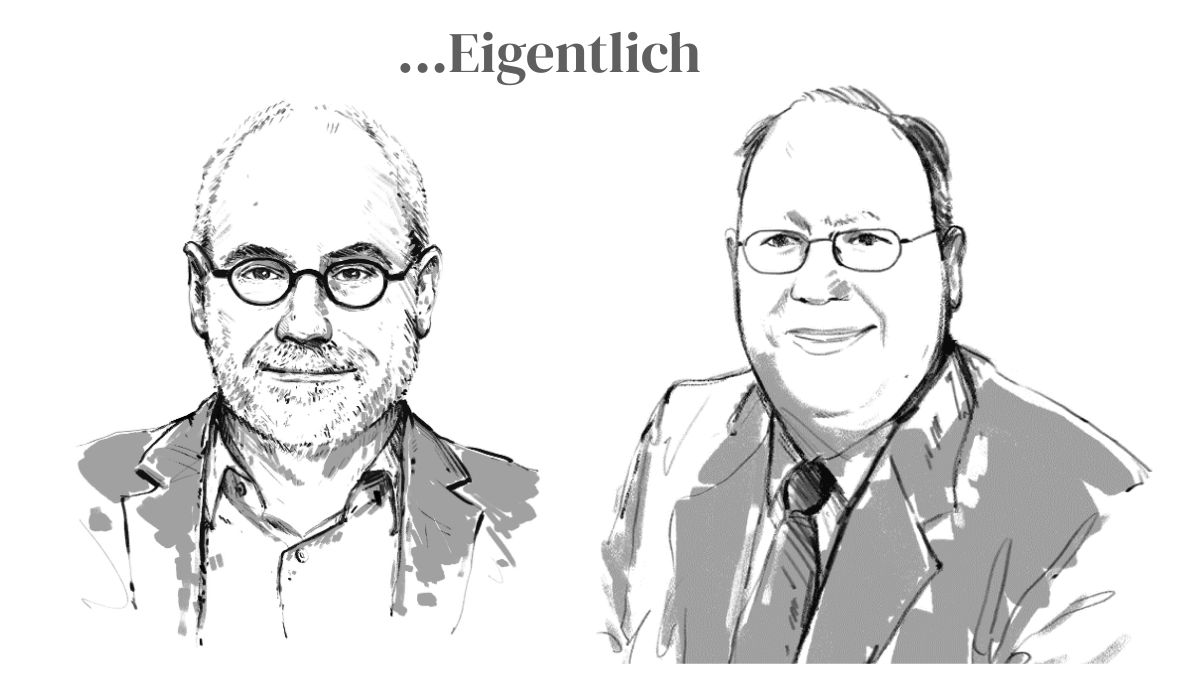
Philipp Fessler Klaus Ammon and I have a combined total of more than 50 years of experience in consumer research and marketing research. During this time, we have seen many pricing methods emerge—and some disappear again. What has remained is the conviction that good pricing research never ends with numbers. After all, prices have not only a mathematical impact but also an emotional one. What matters, therefore, is not only what people can afford to pay, but also what feels right, fair, or valuable to them. Management Tools has been working precisely at this intersection of data, perception, and behavior for many years.Philipp Fessler Klaus Ammon and I have a combined total of more than 50 years of experience in consumer research and marketing research. During this time, we have seen many pricing methods emerge—and some disappear again. What has remained is the conviction that good pricing research never ends with numbers. After all, prices have not only a mathematical impact but also an emotional one. What matters, therefore, is not only what people can afford to pay, but also what feels right, fair, or valuable to them. Management Tools has been working precisely at this intersection of data, perception, and behavior for many years.