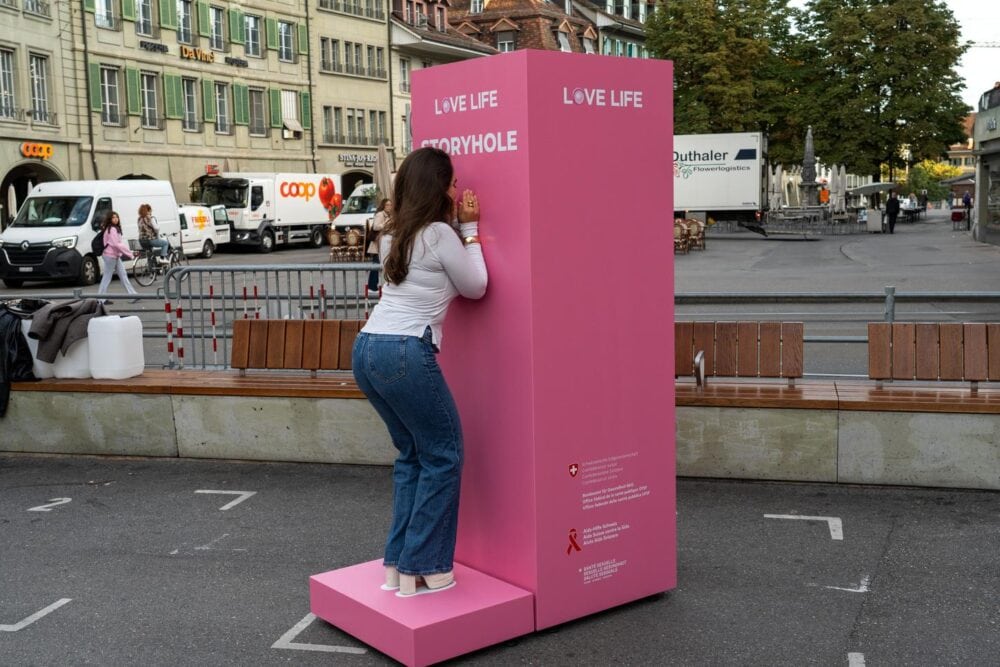
"Let's go" to the new "Love Life" campaign by Rod
Although the condom has a good image, it is not always used consistently. "Let's go" is therefore the motto of Rod Kommunikation's new "Love Life" campaign for protection against HIV and other sexually transmitted infections (STI). It prominently showcases the condom.


The condom is popular and has a good image - and more common than any other contraceptive method in Switzerland. This is shown by the survey conducted by the Sotomo research center, which for the first time investigated the attitude of the population in Switzerland towards condoms as part of the "Love Life" campaign.
People in Switzerland know that they can protect themselves from HIV/STI by using a condom. If you ask the population what they associate with "sex with a condom", the respondents name "protection" first (38 percent) and "sex without a condom" is most strongly associated with "risk" (45 percent).
Sex with condom has become more natural
But does the good image of the condom also correspond to behavior during sex? The respondents state that they use the condom more consistently today for new and occasional sexual contacts than they did for their first sexual contacts. Their concern about HIV and STI is also greater today than it was then.
Perceived "pleasure restriction" tempts to risky behavior
And how do respondents experience the use of condoms? 81 percent say that sex with a condom feels safer. 58 percent of respondents describe sex with a condom as less intense, and for the same number, putting on the condom is an annoying interruption; 52 percent even feel that the condom restricts pleasure.
However, people who state that sex feels safer with a condom do not use it more consistently than others. On the other hand, those who perceive the condom as limiting the sexual experience clearly use it less consistently. If respondents had casual sex in the past 12 months, almost half (47 percent) say they always used a condom. Fifteen percent sometimes did not use one, and 12 percent did not use a condom during casual sex (the remaining 25 percent said, "I don't know").
Condom as message carrier of the new campaign
The declining HIV diagnosis reports, the positive image of the population towards the "Love Life" campaign and the relatively positive attitude of the population towards condoms pose challenges for HIV/STI prevention. This is because success can only be sustained if the sexually active population is regularly made aware of the importance of safer sex. The condom is a reliable, side-effect-free and cost-effective means of doing this.
This year's campaign motto "Let's go" ambiguously expresses what "Love Life" is all about: the joy of sex should be linked to the natural use of a condom. And in the spirit of "Love Life," the message is not "Stop Danger" but "Go for Safer Sex.
The four campaign subjects, which are used on posters, online and in social media, show the moment when safe sex begins, and this in different life situations. The well-known "Love Life" logo, implemented as a condom pack, is for once not the sender of the message on the advertising materials, but becomes a message and a guide to action itself: as a condom pack that is opened at the right moment.
In addition to the new campaign subjects, the campaign website Lovelife.ch was revised. And the safer sex check has been updated and simplified.
However, the safer sex rules have not changed. They are still the same:
- Vaginal and anal sex with condom
- And because everyone loves it differently: Do your personal safer sex check on Lovelife.com now.
Nationwide campaigns against AIDS have existed since 1987, some of which caused harsh reactions because they were considered too vulgar or provocative. Among the best-known are probably the 1996 campaign with the slogan "Ohne Dings kein Bums" ("No Thing, No Bang") or the posters from 2014 with the title "Love Life - und bereue nichts" ("Love Life - and Have No Regrets"). (SDA/swi)