
Has Starbucks passed its zenith?
After a week of reporting on Inbound 2019 in Boston, our correspondent Christoph Oggenfuss is making a quick trip to New York and dedicating this article to coffee culture in the U.S.


The two current identities of Starbucks
Starbucks' achievements over the last 40 years in transforming the USA from a coffee-culture desert into a developed country are undisputed. Unmistakable on highly visible corner locations of buildings in urban centers, one almost feels followed by the green logo. The Starbucks growth story, with around 15,000 coffee houses in 50 countries today, is also huge.
Starbucks - Simply a "coffee McDonalds"?
This headline sounds provocative - at least for avowed Starbucks believers. Of course the quality of the products on offer is good - no question. But why do you have to pay an above-average price for good quality? Because of the ambience in the often no longer so well-kept locations, or because of the free wifi? "Certainly not", must be the answer, because these additional services are also offered by the many new - small - competitors. And when I look behind the counter, I get the feeling of being at McDonald's: everything is clinically clean, processes are well organized, efficiency has taken hold and even the staff are sometimes robotic.
Not much is left of the original vision of founder Howard Schultz - Starbucks, the third place between home and the office. And as a listed company, Starbucks is condemned to growth - whether 15,000 coffees is not enough is not even the question. It has to keep going at the drop of a hat. This is not good for the original quality image.
Outdated business model
With many small and charming espresso bars and small roasteries, a dense carpet of "third places" according to Howard Schultz's definition has emerged, which are significantly more attractive than Starbucks in terms of coffee quality, ambience and price.
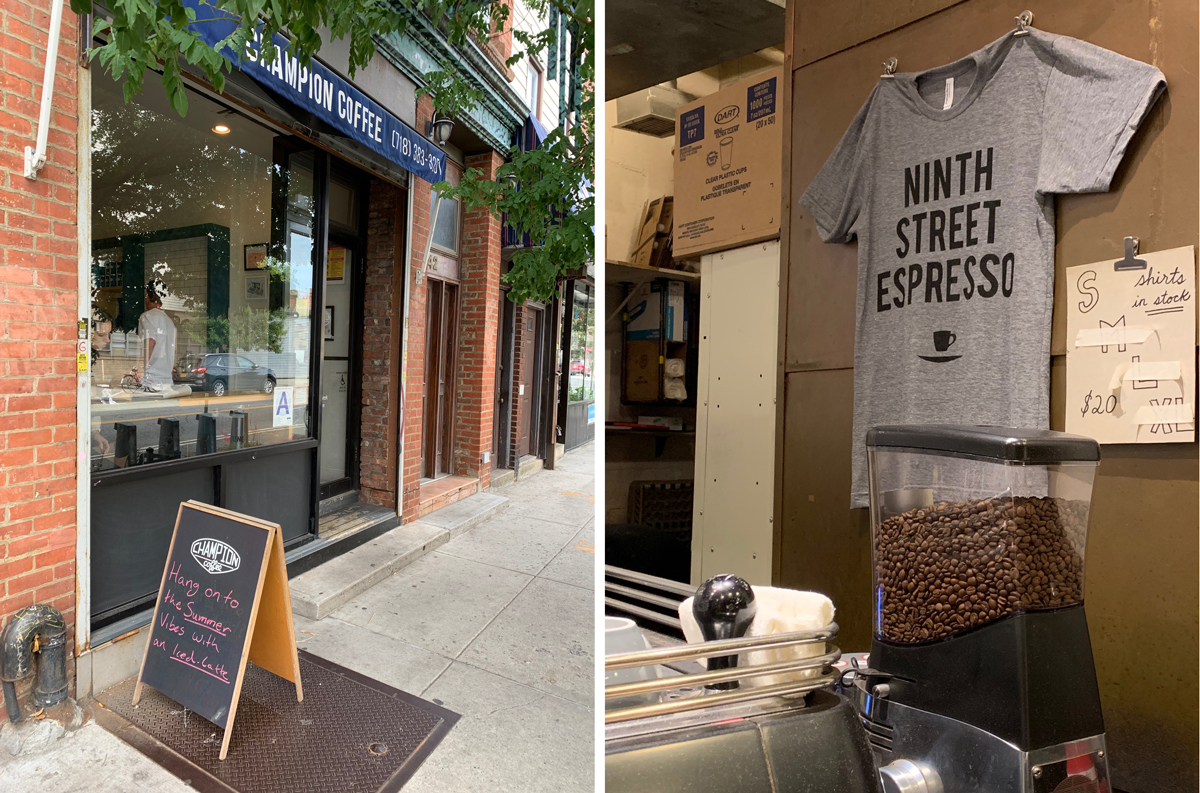
Champion Coffee in Brooklyn (left) and coffee bar in Chelsea-Market Manhattan (right) - real alternatives to Starbucks
Starbucks is in a dilemma: prices would actually have to be lowered in order to be competitive again, and sales would then have to increase significantly as a result. However, this is hardly achievable in a saturated market and is also considered unlikely by shareholders. Has Starbucks stuck with its existing business model for too long?
"Starbucks Reserve" to the rescue
A few years ago, the premium location Starbucks Reserve was piloted in Seattle.
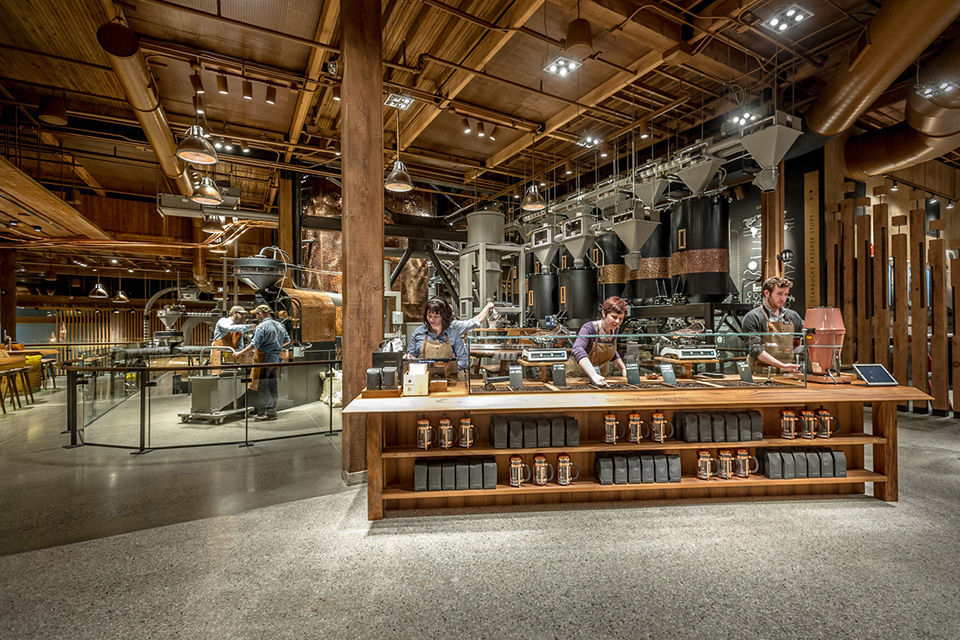
Starbucks Reserve Seattle - the new premium line from Starbucks
A high-end location where coffee culture is celebrated and the customer experience is enhanced - a remarkable approach that has now been expanded to around six locations worldwide. This also puts Starbucks in a dilemma: the price range is limited and the expansion of these locations is very cost-intensive.
I visited a new Starbucks Reserve location in Palm Springs this spring: coffee was good - but nothing more and the service was lousy. This does not bode well for this legendary company.
* Christoph Oggenfuss is CE-Owner of Markiting Zurich


