Marketing natives discuss successful social media strategy
The Marketing Natives are getting together again this year. With new guests and a new concept, they aim to revitalize their event series. They kicked things off with social media and the question of how a successful strategy is developed.


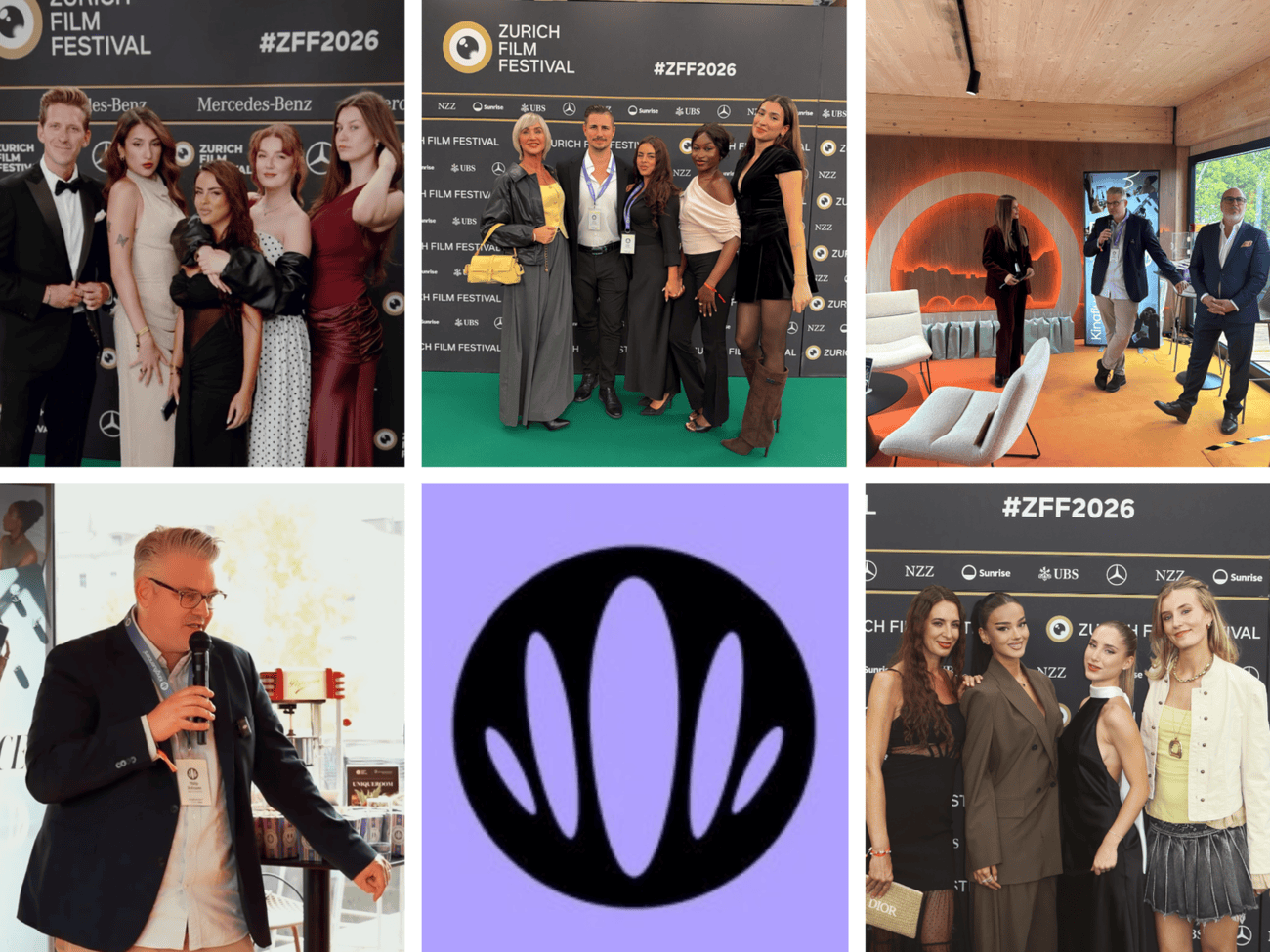
Team Marketing Natives: Elisa Da Costa, Priska Renold, Michael Bänziger, Maria-Irene Balidis and Ralph Zimmermann (from left)
"Frontline speakers are a dime a dozen," explains Elisa Da Costa, event organizer at Marketing Natives. Hundreds of such events are held in this industry in particular. To stand out and remain attractive to the younger generation, the team developed a new concept. It was to be more interactive and create even more benefits.
Closer to the audience
"Our idea was to provide answers to the audience," Da Costa said. Specific problems are to be addressed, which the speakers then answer. In this way, the focus is on the visitor as an individual and he can contribute himself and his ideas. The locations are also chosen according to this scheme. "The meetings take place at a different location each time. In this way, we bring the guests closer to Zurich. In addition, the rooms are smaller to create a cozy atmosphere," explains the young communicator. The team calls the new concept "Pitch & Talk." First, the participants' problems are solved, then there is a round of talks with the speakers, during which questions can be asked at the same time.
The Marketing Natvies event series kicks off with a ubiquitous topic: social media. "Every day we are confronted with the various channels, which are changing rapidly. We then asked ourselves how we can develop such a strategy that lasts," says Da Costa, citing the motives. Two experts provide answers: Maria Wetzel, social media manager at Switzerland Tourism, and Silvan Schuppisser, campaign manager at Picstars.
Social media is about people
During the pitch, visitors write their problems on a card, which at the same time qualifies them to participate in the draw for two tickets to the Swiss Brand Congress. The speakers draw a card one after the other and try to address the problem by discussing it with that person right away.
For example, one participant wanted to know how a real estate marketer could position itself on social media. Silvan Schuppisser gave the answer: "Just showing the properties is boring. It would be better to talk to the people who already live happily in an apartment. They should have their say and show that they have found their dream property thanks to your help. Along the way, you could take up topics and launch a series Urban, Garten or Attika, for example." Maria Wetzel solved another problem. She was faced with the question of how to illustrate an IT company. "Since it's a difficult topic to grasp, the focus here should be on the emotional. Address employees who talk about their work in short videos or introduce them on Facebook." The responses to the rest of the problems were similar. Common to all: people. Whether it's a service or a product, the individual should be the focus. That's why influencer marketing works so well, as Silvan Schuppisser emphasizes.
This is how the "fake influencers" are recognized
In the Talk, the young campaign manager explains that working with influencers is becoming increasingly complex. "It's important to nurture the relationships. Because it stands and falls with the right people. These should fit the brand, share its values and thus be able to identify with it." People skills are also needed, because today there are many on social media who try to recruit as many followers as possible in order to make money, which is the wrong approach. "At Picstars, we don't primarily look at how many followers someone has, but rather what values they represent and how they fit in with one of our customers," explains Schuppisser. So we have to make a targeted selection between the "real" and the "fake" influencers.
Social media is no longer a trend
In addition to people, however, other skills are required to have a successful social media strategy. "A company should not show up on social media to be cool. Market-based thinking is also required here," says Maria Wetzel. She therefore recommends attending appropriate further training courses. Especially in this fast-moving field, she says, you never stop learning. Photoshop, for example, could become a valuable skill, because it saves graphic designers and thus money. But if a professional video is required, it might be easier to hire a production company. You always have to look at a company's capacity and weigh it on a case-by-case basis, he said.
Both speakers agreed that social media has long since ceased to be a trend and will continue to be highly relevant in the future. You just have to keep your eyes open all the time.
Short interview
The topic of influencer marketing is more controversial than ever. Werbewoche.ch took Silvan Schuppisser aside at the event and asked him four questions on the topic.
Werbewoche.ch: Have influencers become indispensable for social media strategy?
Silvan Schuppisser: I think you have to look at influencers as an opportunity within the overall marketing strategy. There are many areas where influencers can score with their authentic content.
At what point do you need an influencer?
When planning, a company asks itself which community should be targeted and which story should be told on social media. At this point, the question also arises as to whether influencers should be used as ambassadors.
Is there a risk that this will make a company look ridiculous?
No, if the influencers are selected professionally and well-considered, this risk is low. Cooperation with a specialized agency can help in the selection process. We inform the customer and help to find the right influencer for the brand, who also provides professional content.
What is professional content?
The content creator should be authentic and at the same time convey the brand's message. In addition, I believe that the content creator should adhere to the agreements made with the client or the agency.