
Promarca relies on trust


BRANDS Brand trust is key and continues to grow in importance. This was demonstrated on Brand Day by Promarca in a new study and the choice of the most trusted brand in Switzerland: Lindt chocolate.
Promarca, the Swiss association of the branded goods industry, focuses on brand trust. And rightly so, as a European study published for the first time in Switzerland on Brand Day on June 16 in Bern shows. The study examined trust in nine European countries and 30 product categories. It is the largest study of its kind.Three-part studyConsumer trust in a brand is the key determinant of brand success. But just because trust is essential for brands, it does not mean that it is understood or even used effectively.brand associations across Europe therefore commissioned a major three-part study to close this knowledge gap. The study covers how trust is built, how it affects sales markets and company performance, and what social value it adds. "Trust is a precious commodity," says Anastasia Li, Director of Promarca. "Gain consumer trust and the brand gains strength. Your products will be recommended more often, please more people, and be more successful. What's important is not just performance, but what values are behind the brand."Twice as many customers and recommendationsThe research included (1) analysis of existing data, (2) a consumer survey, and (3) an economic analysis. The key findings of each area are:(1) To inspire trust, companies must demonstrate that they meet customer expectations and deliver on their promise. The more the brand's values match the consumer's, the higher the brand trust. Trust is expected and required;(2) Among the top-selling branded products, the most trusted brand attracts twice as many customers as the less trusted brands. They are recommended more often (twice as much) and are more successful. Being seen as an innovator and contemporary, offering consistently good quality, and being admired are effective ways to gain trust;(3) Consumer trust in brands creates social value in several areas. It reduces shoppers' search efforts, promotes product diversity, supports innovation, creates jobs, and favors exports. Analysis of existing data and consumer surveys support and strengthen the economic theory of brands.Brand Trust ModelOn Brand Day, study director Prof. Dr. Jörg Funder spoke about Consumer Brand Trust - a resource-oriented management approach to trust-based brand management in FMCG categories. He advocates a change in marketing with brand trust as the starting point.To be able to work with trust, Funder presented the Brand Trust Model. It distinguishes between a competence side and an emotional side, each with six drivers. First, their meaning must be found out for the respective brand and the cultural area in which the brand trust is to be cultivated. Depending on the cultural area, these values differ significantly, as the research for the studies has shown. This is why local and regional marketing strategies are needed.
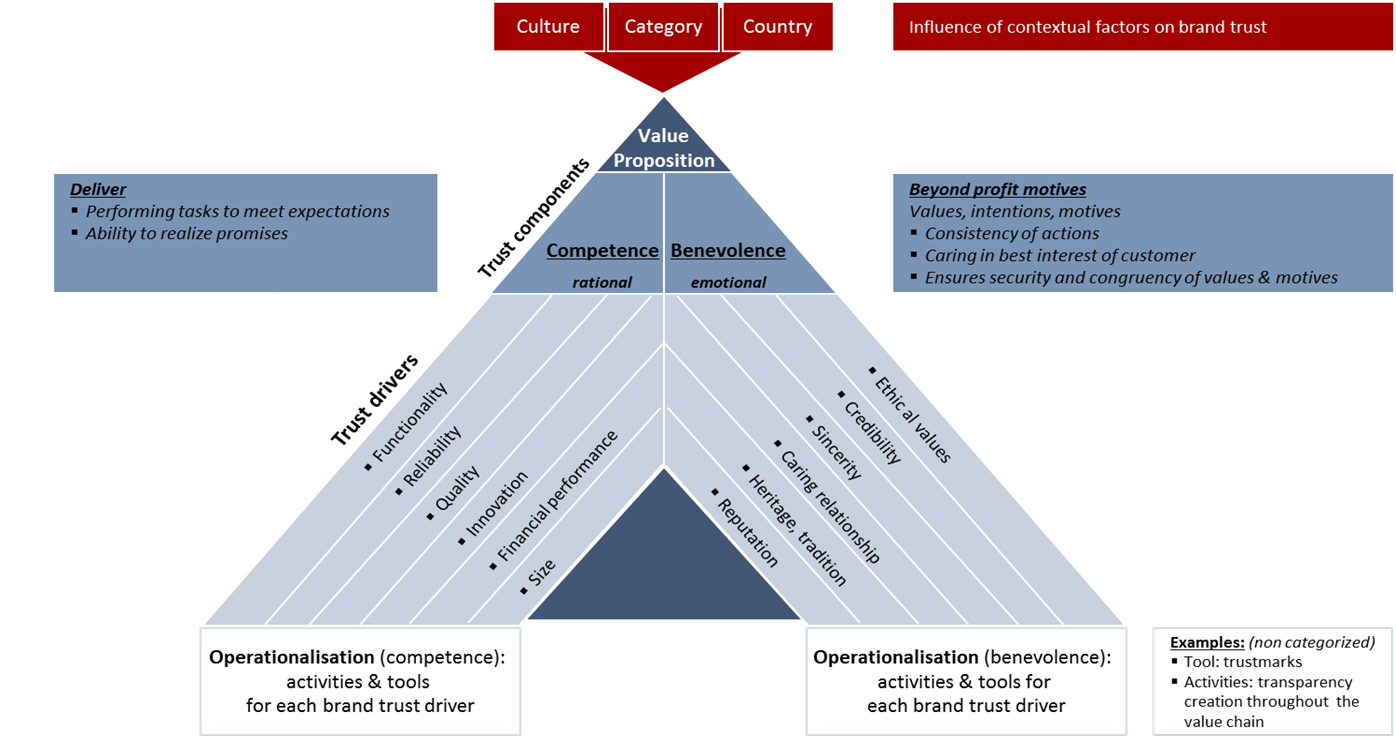
Brand Trust Model just as important as the rational element "competence" with drivers like quality, functionality or innovation is the emotional element "benevolence" with drivers like credibility, tradition or a good reputation.More information1. a summary of the three reports is available as PDF on the Promarca website.2 The analysis of existing data was done by More Gain Solutions and the IIHD Institute in Worms. A PDF with the summary in German can be found here.3 The consumer survey was conducted by Europanel. The nine markets surveyed were Denmark, France, Germany, Italy, the Netherlands, Norway, Spain, Sweden and the United Kingdom. The PDF for this.4 The economic analysis was carried out by Europe Economics performed.Author: Ruedi Ulmann


