Employee Benefits Study: Why Perks Are a Deciding Factor in Changing Jobs
A study on employee benefits by Publicis Media shows that a wide range of additional benefits is no longer just a “nice-to-have” for employees; rather, it directly influences their choice of employer—and their decision to leave.


Benefits as an integral part of the employer's promise
For many employees, employee benefits have long been more than just an added perk. From flexible work schedules to health and wellness programs and financial benefits, they have now become an integral part of the employer’s promise. At the same time, many benefits are now taken for granted and increasingly viewed as a natural part of modern work. This is the conclusion reached by the employee benefits study «Publicis More: Benefits with Impact» by Publicis Media.
According to the survey, 57 percent of respondents find employers who offer a wide range of employee benefits more attractive. 48 percent of 18- to 75-year-olds would even switch employers if another company offered significantly better benefits at the same salary. Among the generation just entering the workforce, that figure rises to nearly 60 percent. Forty-five percent agree that a good benefits package can help offset a lower base salary.
Opinions on the current offerings are mixed
The study also shows that employee benefits serve different purposes. More than half of employees are satisfied with the benefits offered by their current employer. Thirty percent rate the benefits package as neutral, while 18 percent are dissatisfied. For employers, there is thus potential in a mix that combines reliable standards with offerings tailored to different needs and life stages. Certain benefits are already perceived as part of the basic package offered by an attractive employer. These include, for example, overtime compensation, flexible work hours, professional development, a company pension plan, and a parking space.
Usage also varies by function. For everyday benefits, the study shows an average usage rate of 92 percent. For protection benefits, the rate is 86 percent; for development benefits, 82 percent; and for care benefits, 73 percent. These figures refer to the unweighted average of the benefits shown among respondents who selected at least one benefit.
Time management and working from home remain key
When it comes to flexible work arrangements, additional days off or special leave top the list with 66 percent approval. Flexible working hours receive 64 percent approval, and a 35-hour workweek with full pay compensation receives 63 percent. Generation Y, in particular, prioritizes time autonomy: 68 percent consider flex time to be important, and 66 percent view the 35-hour workweek with full pay as important.
Working from home is increasingly seen as the norm, but it remains a factor in employers' decisions. 47 percent say that sufficient opportunities to work from home influence their choice of employer. 43 percent indicate that a reduction in the number of days they can work from home could prompt them to switch employers. Among Gen Z, the corresponding figures are 57 percent and 54 percent.
Generational differences shape expectations
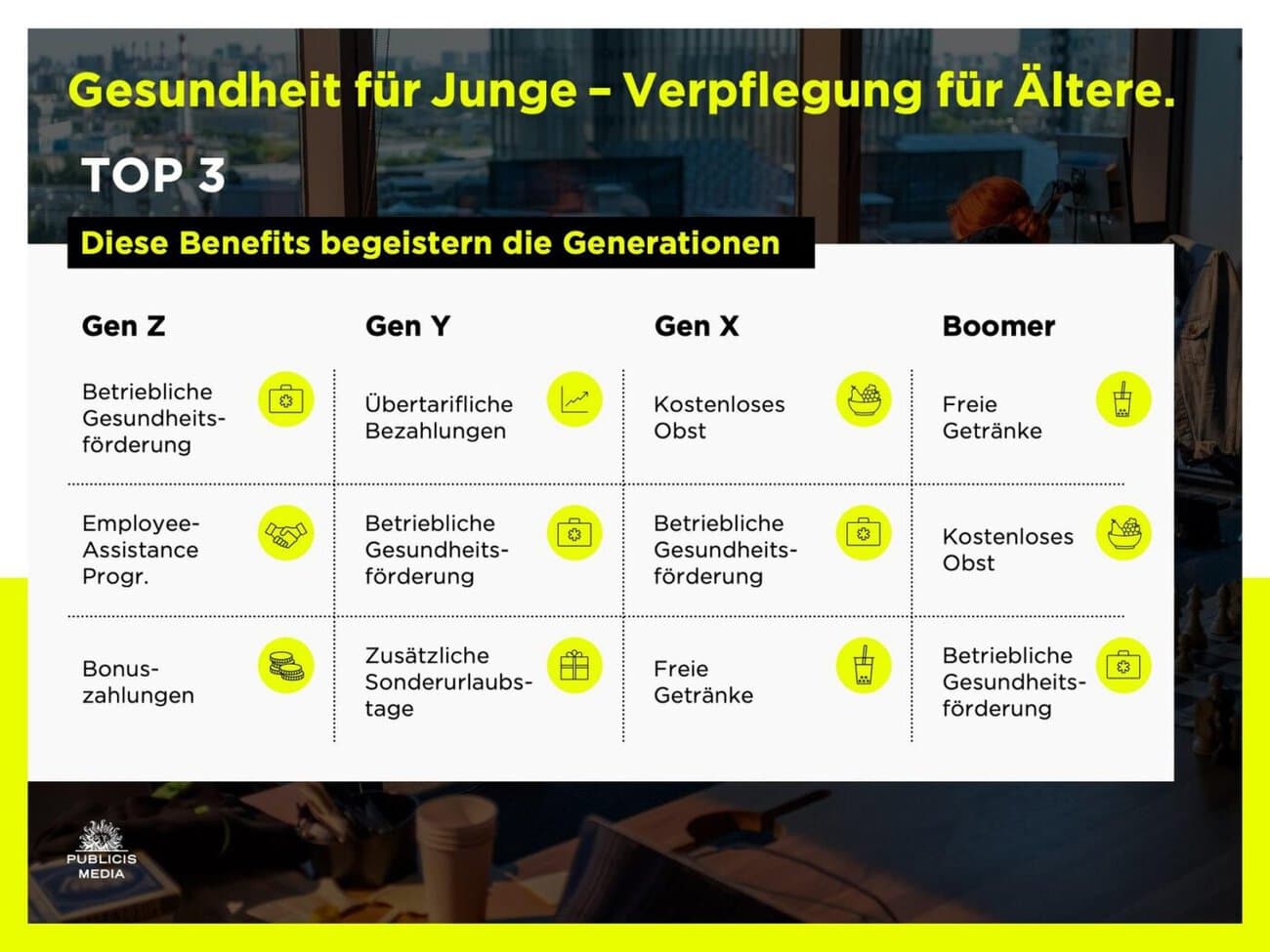
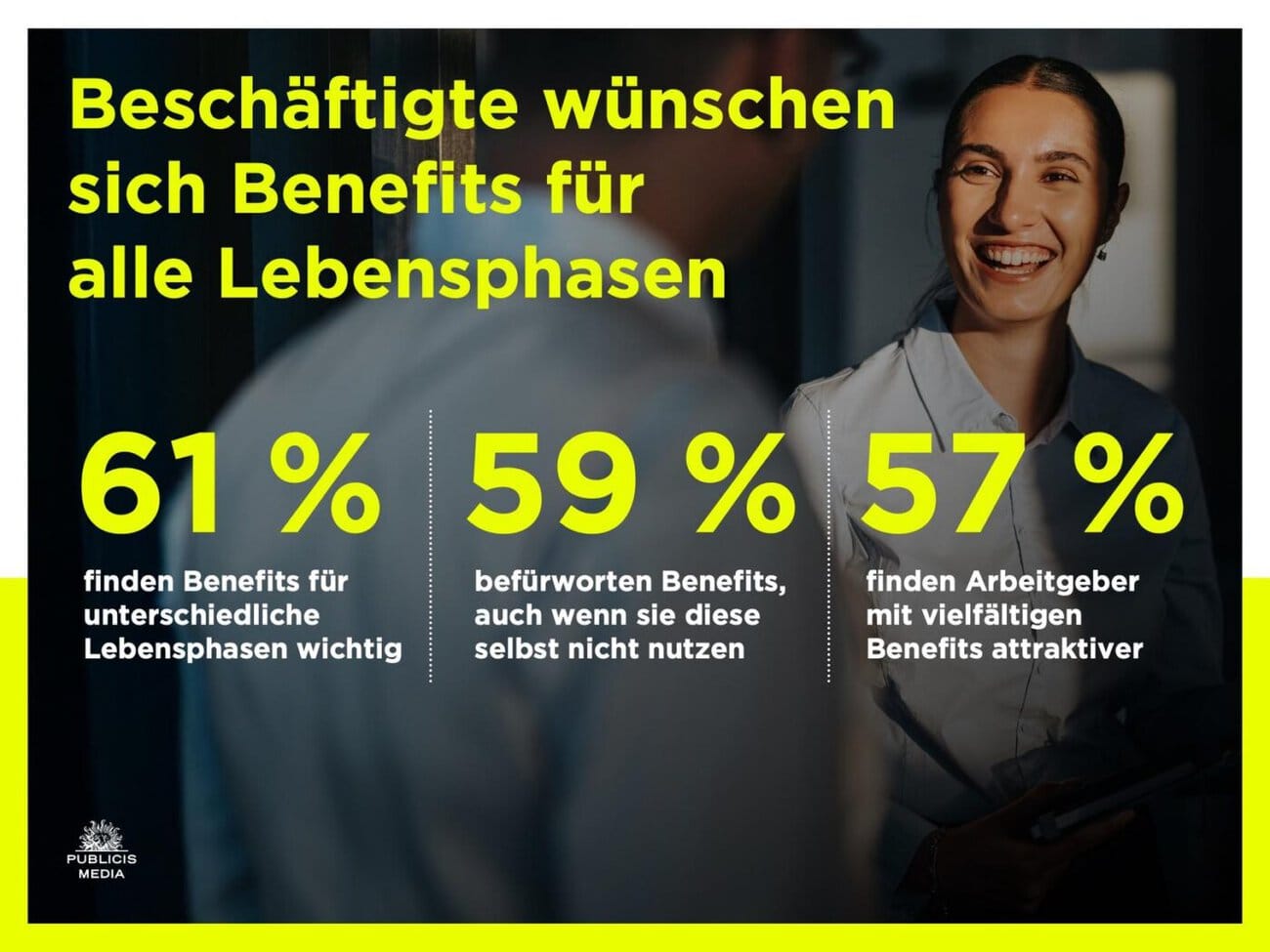
Expectations also vary across generations. For Gen Z, bonus payments, additional special leave days, and support during serious illnesses—each at 42 percent—are particularly often decisive factors in choosing an employer. Boomers most frequently cite overtime compensation at 29 percent, flexible work hours at 28 percent, and bonus payments at 27 percent. At the same time, 61 percent consider benefits for different life stages to be important, 59 percent support such offerings even if they don’t use them themselves, and 57 percent find employers with a wide range of benefits more attractive.
«The results show that an effective benefits package must combine several functions: Standards create reliability, while offerings tailored to different life stages convey additional appreciation and increase the employer’s appeal to employees. For employers, it is crucial to tailor the mix to the needs of their employees and to communicate it effectively,» said Birgit Pabst, Chief Talent Officer at Publicis Media.
For the employee benefits study «Publicis More: Benefits That Make a Difference,» the Publicis Media Data Studio conducted a representative online survey of 2,716 German-speaking individuals aged 18 to 75 in Germany. The study examined Gen Z (ages 18 to 28), Gen Y (ages 29 to 44), Gen X (ages 45 to 59), and Boomers (ages 60 to 75).
For more information about Publicis Media: https://www.publicismedia.com