
Proportional representation, persons and positions
The column by Peter-Lukas Meier, media manager and publisher at Rothus Verlag, from Werbewoche 10/17 from June 2, 2017.


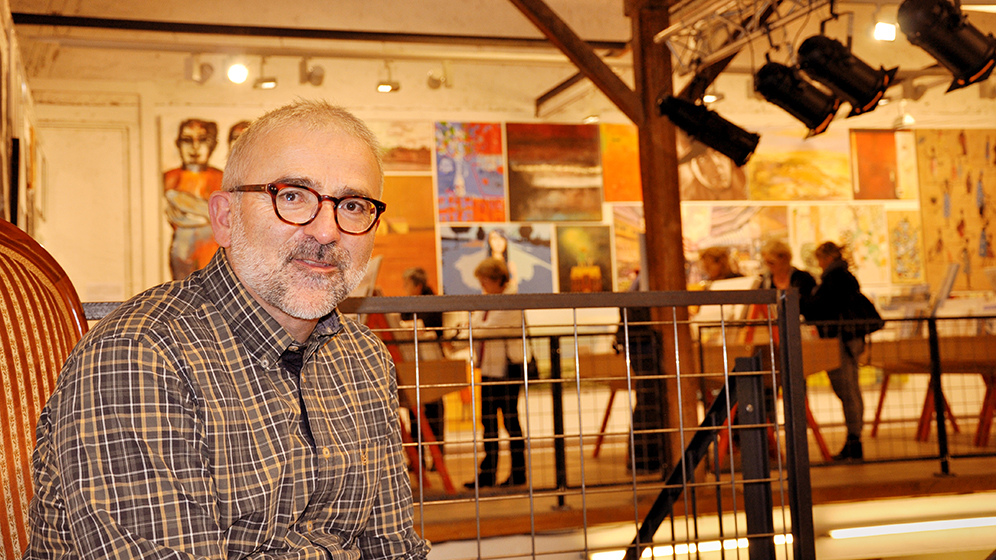
It could have happened in any canton. After more than half a century with at least two councillors, the leading FDP in the canton of Solothurn lost its second seat on the cantonal government this spring. This should not have happened, according to party supporters, who talk of conspiracies and a lack of cohesion in the conservative camp.
It is worth taking a closer look at the case and the political marketing, as there are several reasons that lead to the conclusion that the election debacle could have been avoided.
Of course, every party wants to be represented in government in proportion to its share of the electorate. That seems fair. But party strength should never be taken as the measure of all things in a personal election, which is what a government council election is. Especially not if the candidates have to go into a run-off. Compulsory voting and party affiliation are passé. Executive elections are always head-to-head elections. Suddenly, professional competence, political positions and appearance play much more important roles than when you have to position yourself as a party.
Letters to the editor and testimonials are tried and tested means of supporting candidates. However, they play into the hands of opposing candidates if they appear untrustworthy - "prescribed" by their own party leadership. Especially when they try to make up for obvious weaknesses with words and empty phrases. The babbling only underlines the fact that it is precisely in this area that the competitors clearly have a bigger rucksack. It is more efficient to concentrate exclusively on the strengths of your candidate.
Just being strong is not enough
If parties rely on their electoral strength in personal elections, they misjudge what happens in a personal election. If you are looking for coalitions with other parties, the person and their orientation are decisive. It is actually clear that, despite all the friendship between the parties, a coalition can only come about if the proposed candidate is also electable for the coalition party.
For example, if you put forward a person who is too far to the left or too far to the right, you should not be surprised if they are denied support from the center. And the whining about party strength, which should be respected, causes a pitying and (after the election) gloating smile everywhere.
Strength tends to lull people into a false sense of security. Suddenly, strength alone is no longer enough to gain the upper hand; instead, consensus, partnership and cooperation count. Anyone who does not live these qualities before the election and relies solely on strength should not be surprised if they get a comeback in the run-off.
Charisma wins
A charismatic, strong personality in a party with a strong electorate can win any election. Unfortunately, not all of our politicians have charisma, and when elections with headwinds are on the agenda, it is worth thinking about who to send into the race. Naturally, a party that has built up a decidedly right-wing image over the years wants to be represented by such a candidate. However, it should be someone with a high common denominator across party lines and not someone who has already clearly lost a run-off election.
The shooting star from the center-left, who was also included in the party's internal selection, lost the FDP's internal selection by one vote. The female candidate lost,
- because it does not belong to the right-wing fringe of the FDP,
- because it is successful and popular across party lines,
- because she only had a young career as a politician and
- because it promised a breath of fresh air.
The candidate, who was not of their own breeding, disturbed the right-wing FDP circles and their claim to power. They concentrated on the right-wing spectrum and the candidate they had built up for it. The fact that she recently went down with flags flying in an election to the Council of States was attributed to all sorts of causes, but never to the candidate herself, her track record, let alone her political positions - after all, she always had a majority within the party and the party itself was the strongest force in the canton.
So many alarm signals were criminally disregarded, and when it became clear that the opposing candidate was not a scaremonger, but was electable for most of the middle-class and also for many FdP members, it was too late. The Green candidate Brigit Wyss massively sidelined the middle-class Marianne Meister and with her the tradition of the Free Democrats being represented with two seats on the Solothurn cantonal government council for decades.
The new Green government councillor deserved to win the election. She owes her victory not least to the arrogant strategists of her opponents.
Peter-Lukas Meier is 57 years old, a federally certified media manager and publisher at Rothus Verlag in Solothurn. Rothus is a communications and editorial agency with 14 employees in editorial, graphics and publishing and has been responsible for 25 years as book publisher and editor of the "Wandermagazin Schweiz". The organization and marketing of the Swiss Art Supermarket is another mainstay of the Solothurn-based company.


