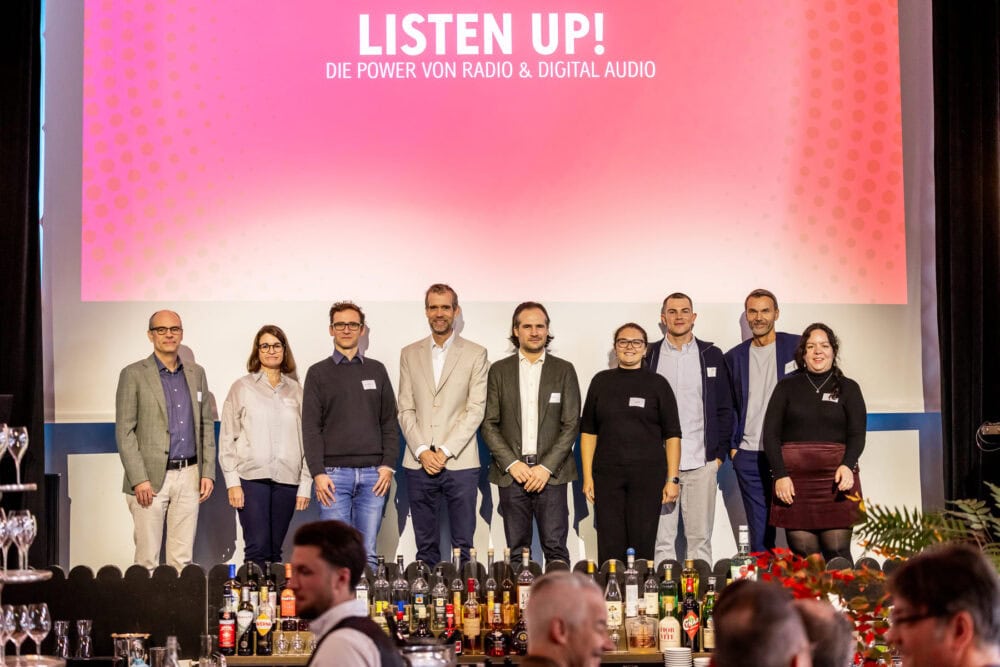
Insights into the Admeira workshop
At Admeira, a leading TV advertising agency alongside Goldbach Media that markets, among others, the SRG channels with the widest reach, the team is working full steam ahead on NextGen TV solutions: The television advertising of the future is set to be interactive and tailored to specific target audiences, says Philipp Mason, Head of NextGen TV at Admeira, in an interview with Werbewoche.


Werbewoche: Philipp Mason, do you see yourself as the development head of a start-up?
Philip Mason: We work in small teams and develop in an agile manner, which is business side and technical. The credo with us is that we have good teamwork and we interact. If you characterize a start-up development manager as that, then I can answer yes.
What is your vision for the development of innovative TV advertising formats?
Baking small rolls, delivering them quickly and gaining experience together with our customers. This is not a vision, but it describes our dynamic development process based on innovation. The basis is the agile, modern development method of small steps. We are constantly adding new features and benefits. The consumer experience must be ceaselessly improved. The current test campaigns are now providing the first indications.
What fascinates you personally most about this development?
The challenge is to combine the best advertising opportunities from the two worlds of TV and online in good products, with the emphasis on: the best! We have to selectively pick out what also brings real benefits.
What all is in your NextGen TV quiver?
The most important thing is the interactive spot with the OK button. That's what we're focusing on. What else we are pursuing is target group-specific advertising: DAI - Dynamic Ad Insertion. There is no shortage of ideas. On the contrary; but currently these two ideas are in the foreground for implementation.
How does interactive TV advertising work?
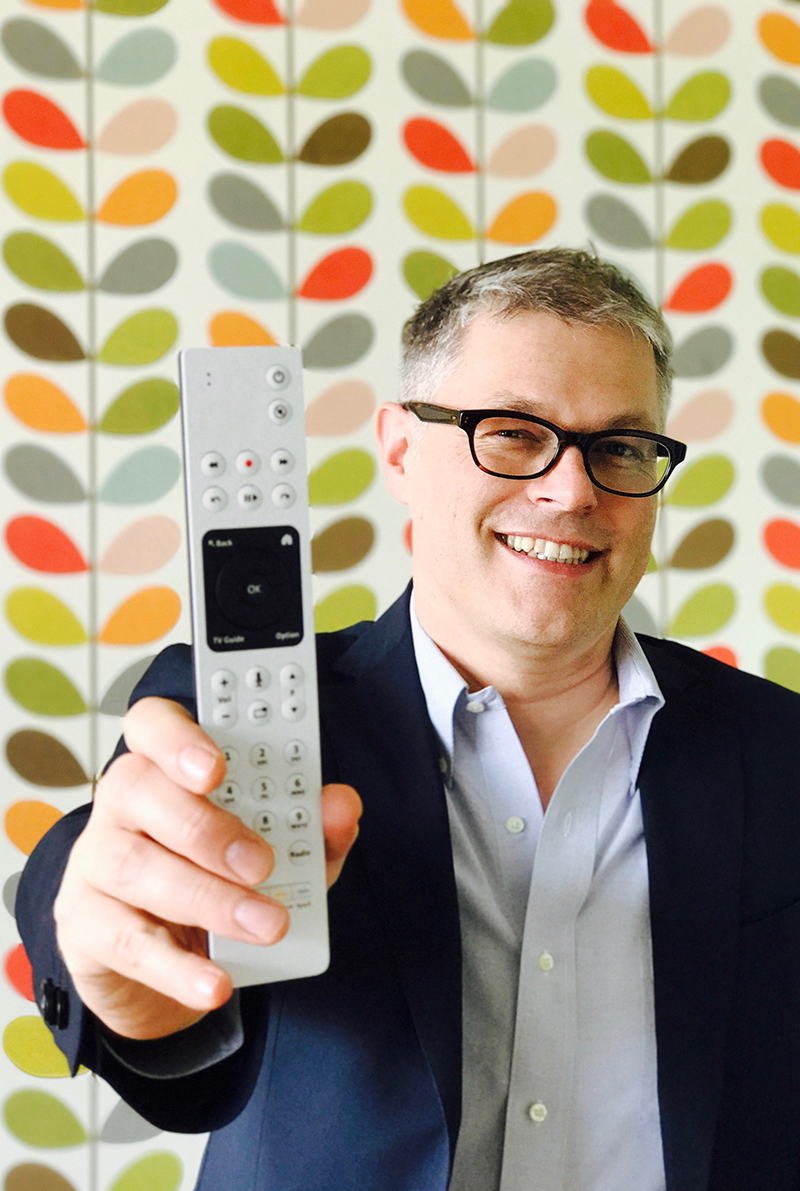
The OK button appears on the screen as an overlay with a request to pick up the remote control and press the OK button. The overlay has a URL that connects to the landing page. This is a CE HTML page, a stripped-down website specifically for TVs. While the page fills the screen, a smaller section shows the live signal of the TV program. On the page, the consumer can navigate and read texts, watch videos, fill in forms and much more.
What are the interaction options?
It is up to the advertisers to decide which interactive functions and incentives should be added to the classic TV spot. A new field of creativity is emerging here.
What is the technology behind it?
The basic prerequisite for interactive television is HbbTV. HbbTV is a transmission technology, and it stands for Hybrid Broadcast Broadband Television. It is the fusion of television and the Internet, because the new technology links digital television with the Internet. Similar to teletext, additional information about the respective program is displayed. This benefit is now also being applied to TV advertising, in that the classic TV spot can be enriched with further information and interactive options.
Can direct purchases also be made?
Not yet in this beta phase. Here we are implementing things like free trial rides. We are not yet dealing with the real transaction case. However, we are aware that there is a demand for this. First, we want to further develop the current test cases to make them marketable. Then we will tackle the supreme discipline.
Which consumer needs are in the foreground?
This depends heavily on the goals that the advertising customer wants to achieve with the consumer. Here, the interaction between the advertising customer and Admeira is important. That is the goal of these cases, to develop experiences together with the test customers that resonate with the consumer.
What is your most important concern?
The added value for the consumer. We share our observations of the campaigns with our advertisers with the aim of keeping the level of the concepts high from the start. This is very important to us. The focus is on added value for the consumer. He must be able to experience added value. This can be interactivity, something entertaining or additional information. If this is not the case, sooner or later no one will press the OK button. And that's what we want to prevent, of course. The magic words are "relevance" and "limiting ourselves to the essentials".
What new challenges do you see ahead for spot makers?
If you want to see the interactive TV ad with the OK button as an extension and enrichment, it's best if the story starts in the spot and continues in the landing page. The design of this seamless and comprehensible transition seems to me to be quite important. This is where really good storytelling is needed. And the whole thing has to be simple. Despite all the temptations in terms of creativity and interaction, we must not confuse the user. Otherwise we will have lost them. Despite online functions, we are first and foremost on the TV. We have a remote control in our hands that we have to navigate with, we are rather passive, and these factors have to be taken into account.
Is there an optimal length for this type of spot?
We are only in the development phase. It is therefore much too early to name a specific spot length. But of course, the spots must not be too short. After all, the user must have time to first recognize the OK button and then pick up the remote control.
For which advertising objectives is interactive TV advertising suitable?
We are working on three use cases with partly standardized landing pages for the goals of awareness, loyalty and dialog. Of course, a campaign can aim for multiple goals. A common goal is to increase brand awareness. Here, the transition from the spot to the landing page must be seamless for the viewer in terms of content and form. For this, the current tests and hopefully later the many other cases will continuously provide us with hints for improvement. In the second case, we are working on a standard template for the goal of brand loyalty. I'm thinking of a thank-you campaign. Customers can sign up and get a gift sent home. In the third and, in my view, most important case, we are addressing dialog goals. The question I ask myself is what we can transfer from the online world to the TV world. For us, NextGen TV means combining the best of both worlds. This includes, for example, the possibility of entering into a dialog with the end user, which means much more than just the click-through rate, for example. You should offer added value and the questions to the consumer are: Do you want to order something? Do you need advice? Should we contact you? You, dear user, define when is the best time for you to contact us. The possibility exists, of course, up to the transaction.
What are the most important measured values?
The TV spot is measured normally via Mediapulse. Then we measure how many click on the OK button and thus reach the landing page. On the page, we have measurements that we can collect from all websites. Another important indicator is the dwell time. But lead generation is also possible, for example when the consumer subscribes to an e-magazine. The consumer can be asked to enter any information. The possibility for the consumer to add his stored profile data by click (autofill) facilitates the procedure and is important for the user experience. We will only be able to determine which performance indicators are useful and meaningful in which form once the beta phase is complete.
Is TV advertising now becoming a performance channel?
I don't think so, and think that would be wrong. We can generate leads while reporting click-through rates and conversion rates; but to focus exclusively on that would be a mistake. Then there would only be contests, sampling, test drives and so on. But interactive TV advertising has much more to offer: You can easily provide additional information about the product on a landing page. In the case of a car, for example, I could show details for car connoisseurs that I would never have the time for in a normal TV spot. We must not forget that we are on the TV screen.
What do you see as the biggest challenge now at the start?
The viewer sits back in front of the TV set and wants to watch something in peace. They should not be disturbed and taken out of their comfort zone. The viewer must be gently introduced to this new dimension of experience. That's why the transaction case with the conclusion of a purchase is not yet an issue. We would take consumers by surprise or, in the worst case, even scare them away. The biggest concern at the start is to teach them that, if they are interested, they can intervene in the spot using the remote control. People have to understand how this works and realize that they are getting a relevant additional benefit.
Where does Admeira stand in terms of target group-specific advertising?
We recently ran a test campaign in the alpha phase with Swisscom in the lead. As part of this technical test, the commercials were broadcast via Swisscom TV on the private channel TF1 in four different regions in western Switzerland. Content: the BMW garage Facchinetti invited to an open day at four different locations. In each case, viewers saw only the address of the garage that was geographically closest to them. A real Swiss premiere. TF1 because SRG currently lacks the legal authorization for targeted advertising and because TF1 delivers good coverage in French-speaking Switzerland. As Admeira, we want to move forward. Sky in the U.K. has already done something similar, and otherwise we have a pioneering role here in Europe.
What do you see as the typical strengths of TV and online?
With TV, it's the attention and the fact that a lot of people can be reached in a short time. In addition, TV offers the possibility of arousing emotions via storytelling. The credibility of the medium is also a strength. With online, I see the strengths in the many measurement and interaction possibilities.
What should you envy about other providers?
No one should envy us. We try to enrich the Swiss advertising market with the innovative possibilities available to us. Our services are open to all advertising clients, agencies and other providers of advertising inventory. The technical prerequisites for interactive spots are a TV station that uses HbbTV and a network operator that transmits HbbTV.
Interview: Beat Hürlimann