
"Homo discens"
Digitalization and its effects are currently keeping countless people and entire industries on their toes. Many are convinced that humanity has never before been confronted with such fundamental changes. But they forget: Impressions are deceptive and people can deal with it, even if they don't love change.


Digitalization is causing uncertainty in numerous industries and among many people. Times today are extremely volatile, the fourth industrial revolution is throwing everything out of kilter, soon only robots will be in demand - such spectres are everywhere. Humans are creatures of habit and do not like major change processes - even though they are constantly exposed to them and will not be able to escape them in the future. Was it ever to the detriment of humanity? With hindsight, nobody condemns the great changes: walking upright, the harnessing of fire, the invention of language or the wheel; all these innovations have driven the development of mankind.
The Austrian writer Ingeborg Bachmann noted: "History is always teaching, but it never finds students." Instead of allowing ourselves to be led by a vague fear, it is worth looking back. Uncertain times and change, disruption and crises have existed before - and not in short supply. You don't have to look back centuries in the history books to look back - around 135 years is enough.
The use of electricity from the 1880s onwards had no less of an impact on people's lives back then than digitalization has today. Electricity enabled unprecedented mobility through electric streetcars, and a little later motorized airplanes and cars were added to the mix; electric lines led to telephony and thus to a revolutionary new way of communicating - distances in space and time were radically shortened, literally pulverized. Today, we can no longer imagine what this meant for people back then.
With electricity, appliances such as electric heaters and washing machines found their way into homes, relieving housewives of many a time-consuming household chore - and electricity, of course, brought light. In Switzerland, it should also be noted, St. Moritz played a pioneering role - the first electric light shone in what is now the Grisons spa town. Hotel pioneer Johannes Badrutt built Switzerland's first electricity system above his Kulm and used it to light up the hotel dining room - a sensation at the time.
The introduction of electricity changed a lot in the period between 1885 and 1925, including radically. From today's perspective, it is almost incomprehensible that people were initially very skeptical and hostile towards the "devil's stuff of electricity". Today, we use these achievements - mobility, homes equipped with all kinds of electrical appliances, means of communication en masse - as a matter of course, without questioning them in principle or even fearing them. But back then, just like today, entire branches of business came under pressure, were pushed into niches or even died out. Digitalization - like fire, the wheel or electricity - will have a lasting impact on and change our lives. It is quite possible that in 100 years' time, we too will be ridiculed for our worries and fears about the fourth industrial revolution.
Keeping pace with digitalization may still be exhausting at the moment. No change without a crisis - this is also part of a change process. What is right today may be outdated tomorrow. Forgetting what we have learned is therefore a very important characteristic in today's world, according to specialist books on change processes. Saying goodbye to what is outdated and obstructive is a good thing. As far as the media industry is concerned, the newspaper business model has had its day and must be forgotten. But the consolation is that people love stories, want to be informed and entertained; this will remain. We still have to learn how to create a functioning business model from this.
And let's not forget one thing: like electricity, digitalization is also initiated and controlled by humans. And if the history of mankind has proven anything, it is that we are a "homo discens", a learning human being. And the ability to adapt is, fortunately, one of our basic skills.
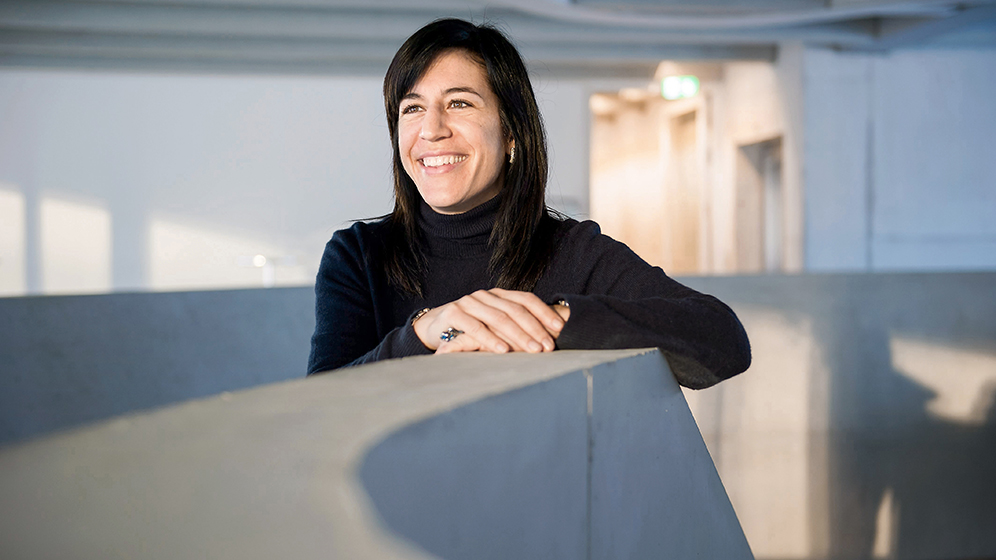
Martina Fehr has been Editor-in-Chief of the newspaper Südostschweiz since September 2015 and has been responsible for the management of the Südostschweiz media family since October 2016. The 42-year-old from Graubünden joined the media company Somedia around 20 years ago. Southeast Switzerland is one of the largest Swiss daily newspapers with 159,000 readers. It is the newspaper with the widest reach from the Engadin to Lake Zurich. The publisher of Südostschweiz is Hanspeter Lebrument with the Chur-based publishing house Somedia.
This "Medienmeinung" column was previously published in Werbewoche 15/2017.


