Epiphany 2023: Focus on protection from international tech platforms
At the traditional Epiphany Conference, the new president of the Publishers’ Association, Andrea Masüger, emphasized the importance of the media and called on the government and policymakers to ensure better framework conditions. To protect against international tech platforms, she said, a robust ancillary copyright law—such as that in the EU—is needed, and to ensure basic media services, indirect press subsidies must be expanded.


 More than 200 representatives from media companies, politics, the authorities and business accepted the invitation to the media industry's joint start to the year, the traditional Epiphany Conference. In his first New Year's address as the new president of the publishers, Andrea Masüger underlined the central importance of the private media for the supply of information to the Swiss population and the democratic processes in the country: "The more local reporting on politics, the higher the voter turnout and the general interest in politics." The private media companies are doing everything they can to be able to ensure basic media provision, but are coming under increasing pressure. "That's why the state and politicians have to ensure that the framework conditions are improved," says Masüger.
ancillary copyright and indirect press subsidies
For the Swiss Media Association, a performance protection law is urgently needed. This is because international tech platforms such as Google and Meta are now taking over journalistic content and earning money from it without paying Swiss media companies and editorial offices. This is why the current copyright law needs to be adapted, specifically a performance protection right, as is already known in the EU, many European countries and overseas. The Federal Council also sees the need for such remuneration and will present a corresponding bill in the coming weeks. On the other hand, the expansion of indirect press subsidies is a central concern for the VSM, so that basic media coverage in the regions can continue to be ensured in the future. Andrea Masüger emphasized that the two measures complement each other: "The ancillary copyright protects the Swiss media center from the international tech platforms, while the media promotion supports the regional media in the basic supply of the population."
FDP President: Clear Vote in Favor of a Performance Protection Right
Only a free, independent media landscape guarantees a functioning democracy, said FDP party president Thierry Burkart, the keynote speaker at the Epiphany conference. There is a need for media that inform about relevant topics and also classify them in a pluralistic way. For this central task and performance of journalists, the media, for their part, would have to be able to generate a profit in order to be able to invest in journalism in the long term as well. In this context, it is clear to Thierry Burkart that the intellectual property of media professionals must be protected and journalistic content cannot be taken over by tech platforms without remuneration. "Even a department store that plays music in the background must pay a levy for use of the music," Burkart said. "The ancillary copyright is necessary," said Thierry Burkart, who also spoke in favor of the established indirect press subsidy during his speech. Direct press subsidies, on the other hand, are rejected by the FDP president because, in his opinion, this could threaten state influence and thus the credibility of the media could suffer.
Dr. Martin Andree: GAMAM have eliminated fair competition
Dr. Martin Andree from the University of Cologne takes a look not only at the ancillary copyright, but also at the entire business practices of the platforms and the state of the digital world. The media scientist paints a bleak picture: "The free Internet and fair competition have been systematically eliminated by GAMAM." The tech platforms would have abused their monopoly position and, among other things, exploited the takeover of content without remuneration. The almost unbelievable dominance of a few players on the Internet is a devastating development - but society is not alarmed enough, he says. Andree sees possible solutions, for example, in open standards, banning the monetization of punishable content, or limiting market share.
War journalist Pelda: More courage and training are needed
CH-Media reporter Kurt Pelda, who became known as a war journalist and traveled directly from Ukraine to the Epiphany conference, answers moderator Bigi's question in no uncertain terms: "Yes, the media professionals on the ground are also needed to confirm the information. Otherwise, the Russian government's decades of propaganda will meet with even less resistance. The media houses must increasingly find the courage to send their people to the trouble spots. By gaining experience in less intense war zones - but also by investing in the training of war journalists - the so central subgenre of journalism can be preserved and strengthened. For he himself would not be able to go on forever: After all, you have to be fit to do this job.
AI high on the agenda
Moderator Hugo Bigi not only led through the entire program, but also moderated a panel discussion with Ladina Heimgartner (CEO Blick Group and Head of Global Media at Ringier AG) and Ursula Nötzli (Chief Communications & Sustainability Officer TX Group) from the VSM Presidium, as well as Christian Bärenfaller, CEO of Pomona Media AG and Mark Eisenegger, Head of fög at the University of Zurich on the current challenges facing the media. The discussants repeatedly identified the use of artificial intelligence as an important trend with opportunities and threats for the media world as well. "We have to deal with it and take advantage of the opportunities," says Heimgartner. Eisenegger, too, believes that AI can help "to convey journalistic content in a targeted manner."
Nötzli also knows how to exploit opportunities online. The social media-first strategy that Tamedia is partially pursuing with young people is working: "Young people still consume media - but differently. Bärenfaller comes to a surprising conclusion: Pomona, publisher of the Valais Messenger, among others, often introduces young people to her brand via the radio station: "Brand loyalty works via different channels. There is agreement: The media industry is facing major challenges, but also has solutions at the ready.
Industry success OneLog and Wabel's appeal
Also at today's Epiphany meeting, CEO Ringier Marc Walder announced that CH Media and NZZ are joining the One Log login alliance as shareholders. This will significantly strengthen the login solution for the Swiss media. Around 40 media titles are already on board - making the Swiss media industry an international pioneer, according to Walder.
Stefan Wabel, Managing Director of the VSM, also used his break-in speech to send a clear message: Switzerland must now follow the global trend and remunerate the editorial content with which Google & Co. generate high revenues. In doing so, he took the same line as Burkart, Masüger and the panel participants: The draft law on ancillary copyright, which will soon be published for consultation, is awaited with great hope.
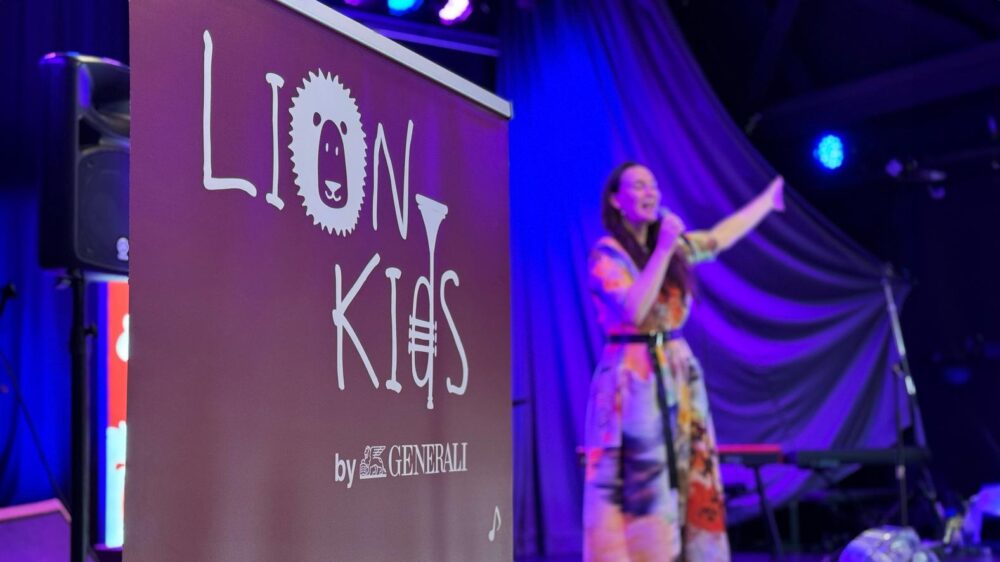
The Epiphany Conference is held at the beginning of each year by the Publishers Association of Swiss media and celebrates its 24th edition in 2023. After two years in which the meeting took place virtually, was the traditional start to the year for the Swiss media industry 2023 will again be held live in Zurich. A little more than 200 personalities from media, Politics or the economy were able to discuss topics that are of importance for the industry are of central importance. The Epiphany meeting was moderated by by Dr. Hugo Bigi.