
The newspaper rescuers: Belgians reorganize Dutch newspapers
The Netherlands is a nation of newspapers. But the Internet and the recession are raging like a hurricane. Flemish publishers are steering Dutch newspapers into the digital age.


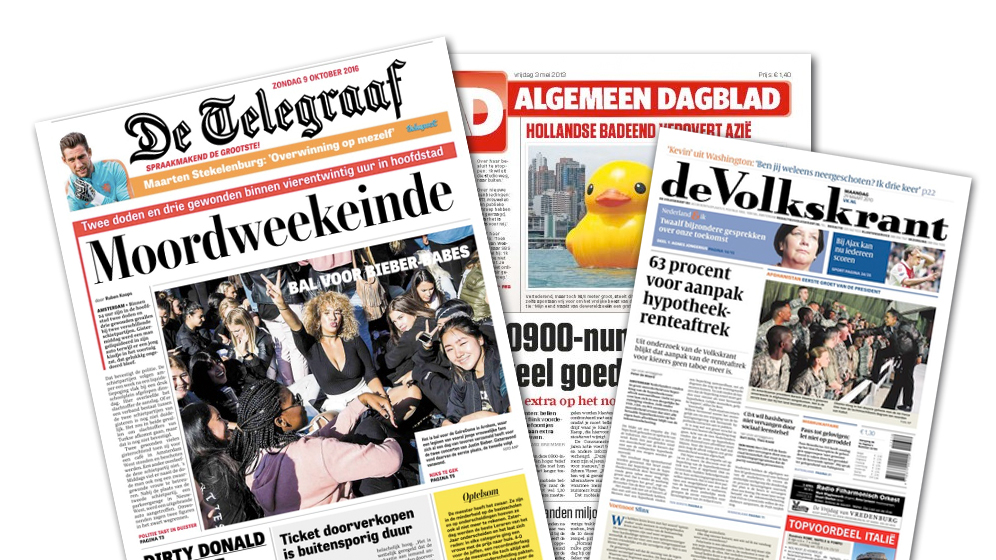
The Dutch like to poke fun at their Belgian neighbors from time to time. But when it comes to the media, the Dutch have long since stopped laughing condescendingly. That’s because nearly the entire Dutch newspaper market is now in the hands of the Belgian publishers Mediahuis and De Persgroep. Just this past June, Mediahuis acquired the Telegraaf Media Groep (TMG). The Flemish, who already own the national newspaper NRC Handelsblad and several regional newspapers, had prevailed after a bitter battle against Dutch media billionaire and «Big Brother» creator John de Mol. The acquisition of TMG, which includes the struggling tabloid De Telegraaf As its flagship project, it is «Mediahuis’s toughest challenge to date,» said CEO Gert Ysebaert.
In free fall
With a circulation of approximately 380,000 copies, De Telegraaf the highest-circulation newspaper in the Netherlands. But while other newspapers are slowly emerging from the crisis, this tabloid is in free fall. Since 2000, it has lost more than half of its circulation. In 2016, it lost eight percent, nearly twice as much as the average for other newspapers. Since the late 1990s, the Internet revolution has been raging like a storm through the Dutch newspaper industry. De Telegraaf is the hardest hit. After all, readers can get news, entertainment, and sports for free on the Internet.
The publishing group was slow to respond. A telling example of this is that De Telegraaf as the state’s last national newspaper to switch to the handy tabloid format as recently as 2014. «The newspaper must take center stage again and become a strong brand,» the new editor-in-chief now says.
Cost Savings in Management
Flemish publishers are known as passionate newspapermakers, but also as tough negotiators. They cut costs in management but invest in editorial departments. «Newspapers that stand out are now doing significantly better,» the editor-in-chief of NRC Handelsblad, Peter Vandermeersch. His liberal newspaper is also part of Mediahuis.
The much larger Flemish company Persgroep is also successful. It has been active in the Dutch market since 2009 and has acquired, for example, regional newspapers, the Algemeen Dagblad as well as the national newspapers Trouw and De Volkskrant. Although their circulation is still declining, the sharp drop has been slowed.
The major left-liberal daily newspaper De Volkskrant For example, from 1998 to 2008, it lost more than a quarter of its circulation. In 2016 alone, sales of print newspapers fell by three percent. However, this was offset by a 23 percent increase in digital subscribers. Volkskrant-Editor-in-Chief Philippe Remarque is optimistic about the future: «It is precisely because of the flood of information that the need for good journalism is growing.» According to Remarque, readers want «analysis and interpretation.»
Background Information, Commentary, Analysis
Many Dutch newspapers are already taking this approach. They offer background information, commentary, and in-depth analysis right on their front pages. However, readers primarily find breaking news on their newspaper’s website or smartphone app.
The Netherlands is still a country of newspapers: four national daily newspapers with a combined print circulation of about 2.5 million copies—an impressive figure for a relatively small country with 17 million inhabitants. In addition, there are regional and local newspapers as well as a free newspaper. Ninety-five percent of citizens also regularly get their news from traditional media such as radio, TV, and newspapers. These findings were revealed in a new study by the SCP Social and Cultural Research Institute in July.
But the shift to online media has already taken place. Eleven percent—mostly young people—get their news exclusively from free news apps.
Pay for items
But there are also initiatives that encourage readers to pay for journalism. For example, the online newsstand Blendle is making waves internationally. Users can choose from the full selection of Dutch and many international publications and read articles for as little as 15 cents each. «We haven’t found the golden solution in the online age yet,» says Volkskrant-Editor-in-Chief Remarque. But interest in good journalism isn't waning. «Newspapers will always be around.» (Annette Birschel, DPA/SDA)


