
Native advertising beats traditional display advertising, according to an Oath study
Implicit response tests with native advertising compared to traditional display ads show deeper brand affinity, which increases in premium environments and on mobile devices.


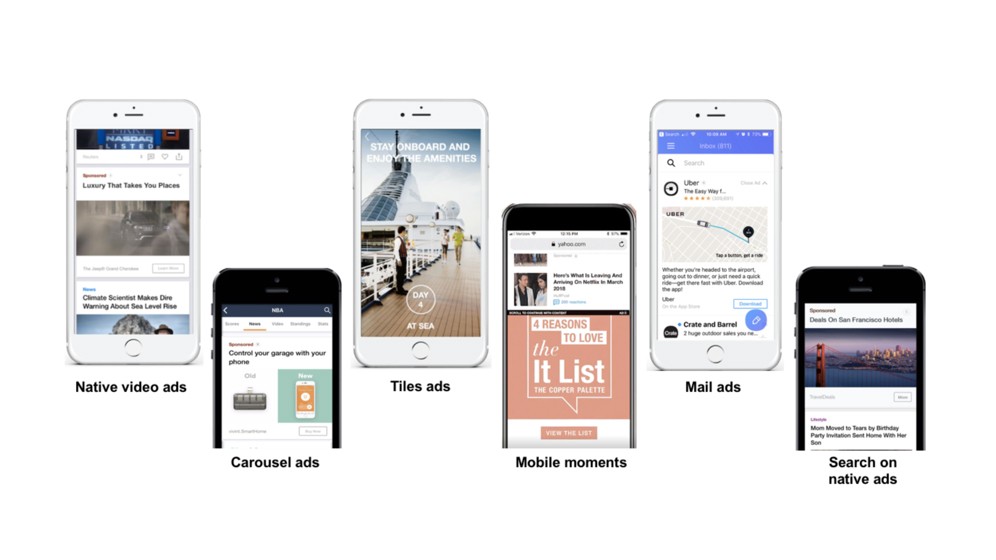
Native advertising causes a higher brand affinity among German consumers compared to traditional display advertising. This is the result of a study by Oath. According to the study, 62 percent of respondents would be more likely to recommend brands they have seen in native ads and 39 percent would be more likely to consider buying from those brands.
Consumers from Germany, France and the UK participated in the study. Behavioral and implicit association tests were used to examine how consumers interact with Native Ads on cell phones and desktops, in both premium and non-premium publisher environments. The survey also found that the trust associated with premium publisher environments helped improve brand affinity through Native advertising, resulting in a 34 percent increase in positive brand associations.
The study results at a glance:
Advantages beyond the click
- Native advertising triggers a greater positive subconscious response, resulting in a 34 percent increase in positive brand associations compared to traditional display advertising.
- This positive subconscious response is greatest on mobile devices, with a 49 percent increase over traditional display advertising.
- Subconscious impact helps Native Ads build brand love. The brand love created can be tested across six key factors, including consumer respect, trust-building and shared values.
Digital advertising must evolve
- Traditional ads are being perceived as increasingly annoying: According to OVK surveys, around 20 percent of Germans use ad blockers. The current Oath study found that among 18- to 24-year-olds, the figure is as high as 54 percent.
Native advertising is particularly convincing on mobile devices
- Native advertising provides a great online experience. 39 percent of consumers are more likely to feel that content looks more natural on mobile devices.
- Native ads engage particularly well on mobile devices, increasing overall mobile site engagement by 95 percent.
It depends on the position
- Displayed native ads offer better exposure and brand impact compared to native ads at the bottom of the web page: they achieved more than double the average dwell time and a 27 percent increase in brand awareness.
"Native advertising has established itself as a successful format in the industry worldwide and is increasingly replacing more and more display formats. At Oath, we regularly optimize our page design to create a better user experience for our users while implementing advertising messages in the content that have high content relevance," says Markus Frank, Managing Director DACH at Oath. "Newer formats are just as effective a tool for brand building as they are for conversion rates. Dwell time measurements and brand uplift studies are just some of the ways Oath evaluates consumers' emotional engagement with native ads. At the same time, they are also a perfect environment for interactive experiences like AR."
About the study
Oath worked with Sparkler to conduct various surveys in Germany, the UK and France with over 6000 participants to determine the value of Native Ads. A series of behavioral and implicit association tests were conducted, with over 60 hours of interactions with digital ads across website prototypes, recording over 500,000 subconscious responses. Implicit association tests measure respondents' implicit reactions to images and words displayed on the screen.


