More architecture for The Ideal Home
Since November, the home magazine Das Ideale Heim has been appearing in a new look and with a slightly different editorial concept. The architectural aspect is once again more in the foreground.


The content includes portraits of architecturally interesting private buildings, including the architects responsible, tips and news on furnishings and design, and a market overview. Characteristically for a home magazine, advertisers are given a strong presence throughout the magazine. Not only on advertising space, but also in special sections in which design and furnishing objects are presented, as well as in the service section in which suppliers and service providers recommend themselves. Each issue has a thematic focus such as light, condensed building, environmentally conscious planning, color, roof or facade. The annual special issues on topics such as kitchens, bathrooms and gardens are also included in the magazine.
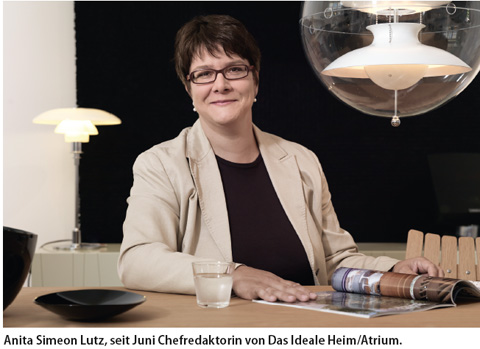
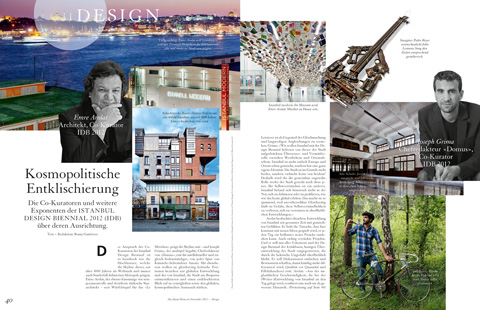
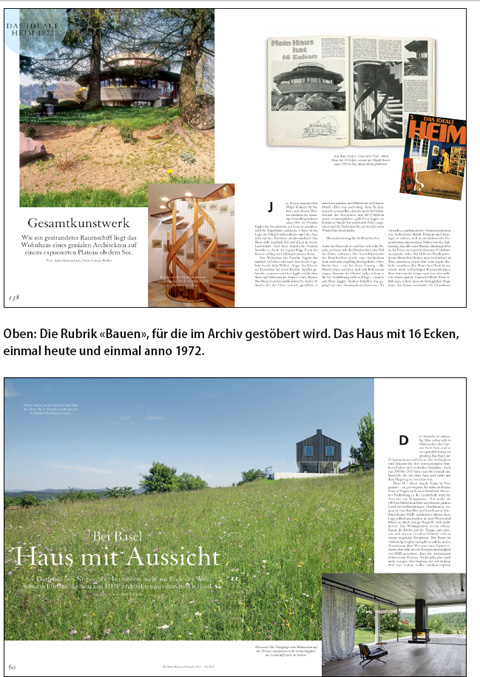
Visually, Das Ideale Heim is more modern and lighter, with many cutouts, interlocking images and more white space. Compared to the previous look, the new one is less rigid, which was the reason for replacing the layout that was only four years old. "The previous layout offered too little flexibility," Simeon explains. "The structures were rigid, with the size of the images and the space of the text predetermined, for example. " The new concept allows the page makers more design freedom. For example, new sections can be created easily if necessary. In the course of the relaunch, the structure of the paper was also changed. Whereas the editorial content was previously collected in the front section, followed by the service section, the journalistic articles are now spread across the magazine. The idea behind this is to ensure that the suspense curve does not drop off after the first part, but that the magazine is interesting for the reader as a whole. "When you flip through the magazine, there's always a peak that follows. Everywhere it has spots where the reader gets stuck," says Simeon, explaining the concept.
Give more weight to the text
Orientation is not necessarily easy due to these innovations and the less clear line of the layout. However, the magazine is mainly designed for the eye. "We're not kidding ourselves. Our magazine is primarily looked at and only secondarily read. Nevertheless, if the reader is interested, he should get background knowledge and not just picture descriptions." The editor-in-chief wants to give more weight to the text. The Ideal Home should become more "journalistic," is the goal. "We want to buy in fewer stories, and instead do more on-site research and production ourselves." Five editors, who share 400 job percentages, are available for this purpose. Das Ideale Heim also wants to celebrate the company's 85-year history. A fact, with which the magazine appearing in an edition of 27 200 copies stands out from the two main competitors space and living (1977 based, edition: 28700) as well as the living revue (1988 based, edition: 20000). In the new issue, this joker is played out, for example, in the "Bauen " section, for which the editors rummage through the archives and track down what happened to the houses portrayed at the time. "We can learn a lot from the old issues. What worked in the past? What didn't? And would it work today?" Incidentally, the copies from earlier times also served as a source of inspiration for the new layout, which was created at the Interkool graphics office in Hamburg. However, Archithema Verlag is aware that it is not enough to simply look back. The current online presence is in need of an overhaul. By next summer, an interactive website with a blog and reports produced especially for online use should be up and running.
Not a trade magazine - but not a "furnishing booklet" either
The architecture prize "Das beste Einfamilienhaus" (The best single-family house) will continue to be offered, with a jury of experts and a jury of readers each selecting a successful building every two years. A matter of reputation and image. "The architecture prize puts us in a respectable corner and secures contacts with experts," explains Simeon. Last but not least, the magazine has to fight time and again against being ridiculed by architects as a "furnishing magazine." Although Das Ideale Heim is not a trade magazine for the architects' guild, it does establish a link between architects, builders and residents by having an editorial team consisting of experts prepare good examples for lay people and provide them with background knowledge. "The architect has to take us seriously. At the latest when the client comes to the architect's office with the magazine."
In order to reach as broad a target group as possible, the magazine focuses not only on construction, but also increasingly on living and furnishing. "Switzerland is the land of tenants. If we want to expand our readership, we have to appeal to them." However, predominantly high-income tenants. Because the design and construction properties portrayed are not exactly inexpensive. "A residential magazine has to cover dreaming and sometimes reach for the stars," Simeon says. "But everyone is allowed to be inspired, even those who don't have the budget."
Isabel Imper