
Marketing or ethics? Chanel announces renunciation of fur and leather of exotic animals
Chanel is turning its back on several raw materials produced through cruel practices. «A sensation in the fashion industry,» exclaims the animal welfare organization Vier Pfoten. «Purely marketing decisions disguised as ethics,» scoffs the fur industry.


The French fashion group Chanel now also wants to do without fur and leather from exotic animals. They will only use skin from animals that come from the food industry as waste products, said the president of Chanel's fashion division, Bruno Pavlovsky, to the Handelsblatt in New York in a report published on Wednesday.
Fur will no longer feature at all in the collections from May. A surprise, as Chanel head designer Karl Lagerfeld was considered a fur advocate for many years.
In recent years, however, many fashion brands have been doing away with fur. Labels such as Hugo Boss, Tommy Hilfiger, Calvin Klein, Tom Ford, Stella McCartney, Vivienne Westwood, Comme des Garçons and Versace decided to take this step years ago. In 2016, star designer Giorgio Armani said that the technological progress made in recent years meant that there were now suitable alternatives that made the use of cruel practices on animals unnecessary.
Gucci also stopped using fur last summer. The animal rights organization Peta (People for the Ethical Treatment of Animals) also honoured companies such as Burberry and fashion designers such as Michael Kors and Diane von Fürstenberg at its Fashion Awards a few weeks ago for joining the "Fur Free Alliance" movement, a coalition of animal protection organizations against fashion with fur.
Gaultier and Fendi also do without
Only recently, even Jean Paul Gaultier announced that he wanted to give up fur. The Frenchman has long been considered an advocate of fur and has therefore been the target of Peta campaigns. In 2010, for example, activists smashed the windows of one of his Paris stores and shouted "Gaultier, assassin".
Chanel designer Karl Lagerfeld, who also works for Fendi, is also known for his fondness of fur. He once said that he found the fur debate "childish" and that, after all, "these beasts would kill people if they could". A major Fendi show in Paris three years ago attracted a lot of hatred because it showed fur in all its forms - as a hooded coat, short jacket, cape or dress. Before the show in a Parisian theater, an anti-fur woman with a blood-red body caused a sensation.
More than ever, the French Federation of Fur Trade Companies (Fédération française des métiers de la fourrure) is mocking the "hypocrisy" of the fashion industry, which is merely following the vegan and animal welfare trend. Under the guise of "ethics", companies are making purely "marketing decisions", said spokesman Pierre-Philippe Frieh, according to the newspaper Le Monde.
The conditions for breeding and slaughtering in Europe are "very strict" and a far cry from what happens on Chinese farms, for example. Despite the vegan trend, the fur market is booming, mainly due to demand in Asia and the Middle East. Anyone who wanted to ban the breeding of animals for fur could also ban wool, silk, eggs or guide dogs, said Frieh.
"Anyone who wants to ban the breeding of animals for fur can also (...) ban guide dogs."
Pierre-Philippe Frieh
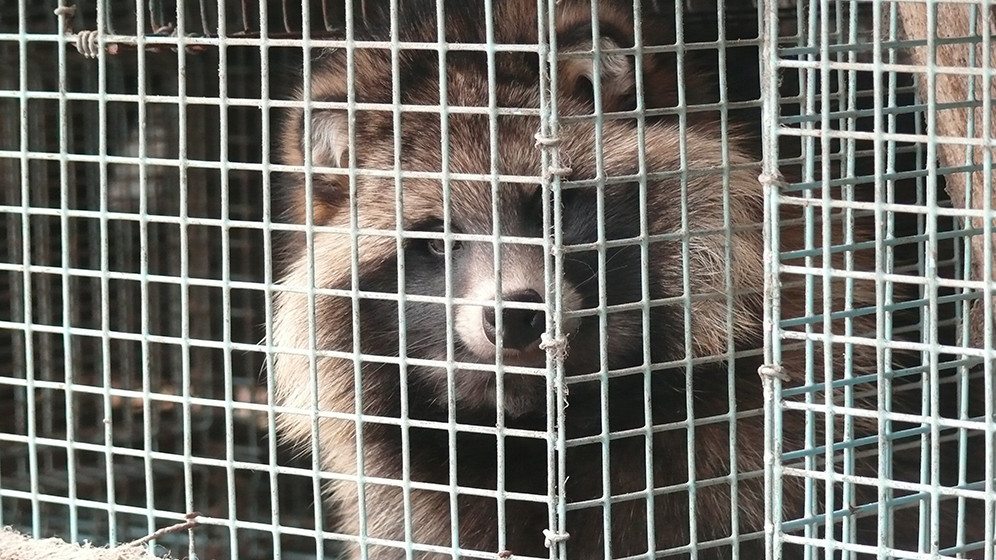
Animal welfare organizations agree that fur production in no country is even remotely species-appropriate or "very strictly" controlled. "Whether in China, Russia or Scandinavia: keeping wild animals, foxes, mink, sables, raccoons or raccoon dogs on an industrial scale cannot be species-appropriate. Millions of animals live a short, painful life in cramped conditions and often die a long, agonizing death, writes such as the Swiss Animal Protection STS. And the Zurich Animal Protection denotes species-appropriate fur production as "pure propanda". In fact, farm animals are kept "under cruel conditions in cages that are far too small".
Biotech leather as a way out
At Chanel, the reason given for the planned decision not to use leather from animals such as crocodiles, lizards, snakes and stingrays is that it is too difficult to ensure its origin. "More and more customers also want to know where the materials come from and how the animals are kept. It's all about traceability," said Chanel fashion division head Pavlovsky. This is the only way to ensure that the leather meets the company's ethical standards. He also sees the possibility of switching to biotech leather in the future. "But that won't happen in the near future."
Even if the major fashion labels' fur phase-out is supposed to be driven by marketing and not ethics, if a representative study by Vier Pfoten is to be believed, they are hitting the nerve of the times. According to the study, around 85 percent of Swiss respondents consider the keeping and killing of animals for fur to be unacceptable. Around 83 percent of respondents prefer animal welfare-friendly stores that do not sell real fur.
The animal welfare organization celebrates the move as a "milestone": "Chanel is really taking a huge step here. More and more luxury fashion houses are getting out of the fur business. The fact that exotic skins are also being phased out, especially crocodile leather, is a reason to celebrate from an animal welfare perspective," Thomas Pietsch, wildlife expert at Vier Pfoten, was quoted as saying in a press release on Wednesday (hae/SDA/pd).


