
"People don't talk positively enough about radio"


SPARTENRADIO Hans-Ueli Zürcher from "The Cover Media" talks in an interview about negative messages for the genre, about special interest stations, successful and less successful radios - and raves about the medium as a "great advertising medium".
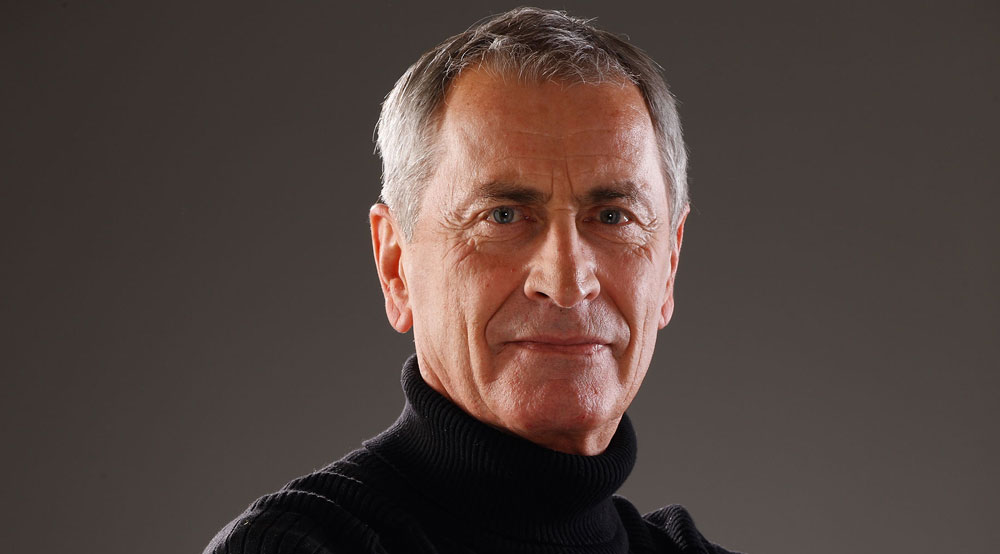
Hans-Ueli Zürcher, owner of The Cover MediaMK The last thing the general public noticed on the subject of private radio was the dispute over Radio 105 between Roger Schawinski (Radio 1) and Dani Büchi (Radio Energy). What did this case mean for the genre of radio?HANS-UELI ZÜRCHER Such messages are negative for the genre as a whole. In my opinion, there is not enough positive talk about radio, because radio is absolutely great as an advertising medium. What happened in Zurich could also happen elsewhere. Many radio operators behave like royal princes in some of their locations. Schawinski and Büchi each pursued their own interests, but not in the spirit of the genre of radio.MK 105 was a kind of special interest radio for a younger target group - are special interest radio stations having a harder time in the market?CURRENCY In Switzerland, it's basically a problem to operate a special-interest radio station, because the country is too small. For Radio 105, the situation in Zurich, where a second radio station, Radio Energy, actually addresses the same target group, was very problematic.I don't know where Radio 105's problems lay in sales and marketing, but the listener figures that the station achieved in the end weren't that bad. Together with Radio 1, Schawinski now comes very close to the two dominant radio stations in Zurich, Radio 24 and Radio Energy, in terms of listener numbers. This raises the question of whether addressing two absolutely different target groups can be successful. Ultimately, it's again a question of the price per thousand contacts, and here Radio 1 and 105 can be an alternative.MK What kind of radios are successful in Switzerland?CURRENCY Radios with an audience of around and over 100,000 people, a certain monopoly situation and a market share of more than one percent are not in a bad position. A radio like BeO, on the other hand, has a large listenership and covers a large area - but it is an economically less interesting area. Despite fee support, such stations unfortunately have a hard time.MK According to a Publicom study, the economic situation of private radio stations has improved since the RTVA came into force, and advertising revenues have risen. But a good half of the broadcasters are not achieving sufficient profitability.CURRENCY These are the weaker radio stations, and for some of them, the economic situation is unfortunately reflected in the quality of the programming. Quality radio is expensive: Here in Basel, Christian Heeb wanted to make a highly professional radio station with Radio Basel and came up with a budget of four million francs. But a station like this takes in about 2 - 2.5 million francs in the initial phase - so it simply wasn't enough.Then you end up with what Radio Energy practices: You produce radio as cheaply as possible and maybe add two other stations, like Energy does in Basel and Bern. Personally, I would prefer to have stations of higher quality that don't just play mainstream titles. But the operators of the radio stations say: That can't be financed.MK Advertising revenues at private radio stations have risen, according to the Publicom study.CURRENCY There is a slight upward trend in the advertising market. I'm surprised that the trend isn't stronger, because radio is highly successful as an advertising medium: those advertisers who advertise using radio do so again and again. Inexplicably, there just aren't very many new advertisers coming on board.MK Why is that?CURRENCY On the one hand, it's due to the size of the broadcast areas and the large number of radios: Anyone who wants to run a national radio campaign in Switzerland has to deal with around 40 stations. Then the rate structure also plays a role. Some of the Swiss stations are too expensive, but some are very cheap - each radio operator makes its own individual tariff. We would need a uniform, comprehensible tariff system.MK What can radio do in the advertising market that others can't?CURRENCY First, radio creates cinema in the mind, can convey emotions. Second, it is still the most widely used medium. And third, radio can be used passively. Studies show that radio advertising is perceived subconsciously, even if I'm just listening to the radio on the side. If you want to appeal to drivers, there's nothing better than radio. What's more, as an accompanying medium to billboard and TV advertising, it's optimal, and also cheaper compared to other advertising media.MK What can radios, marketers and the industry do better to reach more customers?CURRENCY Better collaboration. For example, there used to be a Switzerland pool with all the radio stations and various modules. Today, there is no such thing. In our opinion, the problem lies in the fact that radio as a medium in Switzerland does not represent a unit that presents itself uniformly to the outside world.
About the person
Hans-Ueli Zürcher is, together with Nicole Willinger, owner of The Cover Media (TCM) in Basel. The company started in 1996 as a marketer and producer of radio advertising. This is still the core business today. Other offerings were added. Today, TCM consists of the umbrella organization The Cover Media AG, responsible for planning and booking radio advertising, plus TCM Productions (production of spots and audiovisual products), The POS Media (service center for electronic advertising at the point-of-sale) and TCM Service (representation of radio stations from Germany and France).INTERVIEW: BETTINA BUSSER



