
Customer-driven marketing now begins the post cookie ara
With the revision of the EU’s General Data Protection Regulation, data-driven marketing is on the verge of becoming a thing of the past. Customer-driven marketing is the buzzword of the moment. Dimitrios Haratsis and Alexander Haymann of Elaboratum explain what steps need to be taken in light of this change.


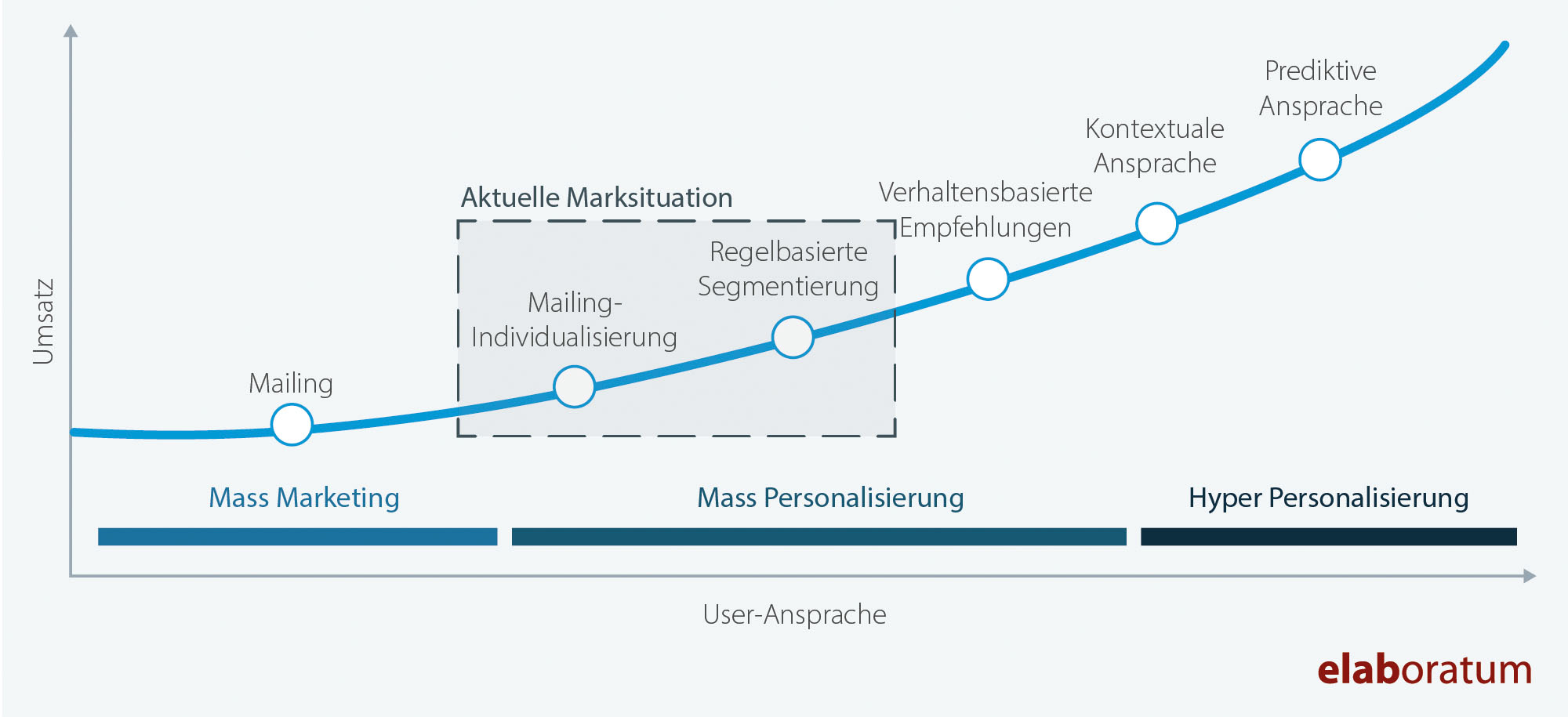
For a long time, the setting of cookies determined data-driven marketing - even in Switzerland. However, with the adaptation of data protection in the EU, the post-cookie era is dawning - at least with regard to third-party cookies. Even if Switzerland lags behind the EU in terms of legislation, the blocking of third-party cookies by browsers will also be clearly noticeable as a technical change in Switzerland - this change will have serious consequences for advertisers and data-driven marketing in its current form.
Regaining data sovereignty
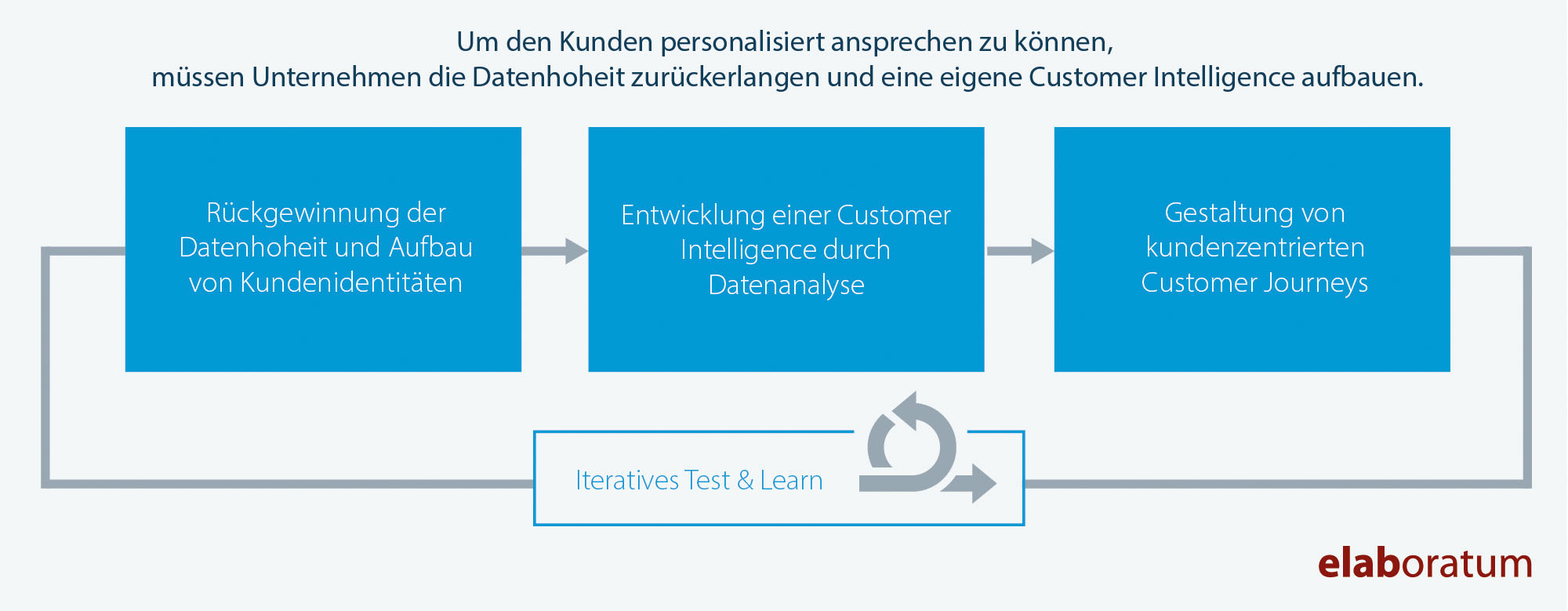
Until now, tracking third-party data has provided valuable insights into user behavior. In future, this will no longer be possible, or only to a very limited extent: Because without cookies there is no identity, without identity there is no data for targeting, without targeting there is no demand. All of this inevitably has a negative impact on sales. As data sovereignty and user targeting were previously the responsibility of marketers and the corresponding technology providers, it is now up to advertising companies to regain data sovereignty. Their own first-party data must be actively used and analyzed. It is also important to break down the silos in the user approach. And across all user contact points: on-site and off-site. The focus is on the customer and not on the respective campaign, as has been the practice to date.
Focus on first-party data
First-party data allows more knowledge about users and a clear understanding of what users want. With this knowledge, companies can place relevant and segment-specific messages and offers. Customers are no longer addressed in an inflationary manner, feel that their intentions are understood and perceive marketing as an impulse rather than a nuisance. The result: more sales and increased customer loyalty. Once your own touchpoints for addressing users and customers have been established, marketing expenditure is reduced thanks to the more efficient customer approach. This can then be invested elsewhere, for example in the continuous expansion of your own "data architecture". After all, the basis for customer-driven marketing is a scalable data infrastructure that is tailored to the individual parts.
Focus on the customer
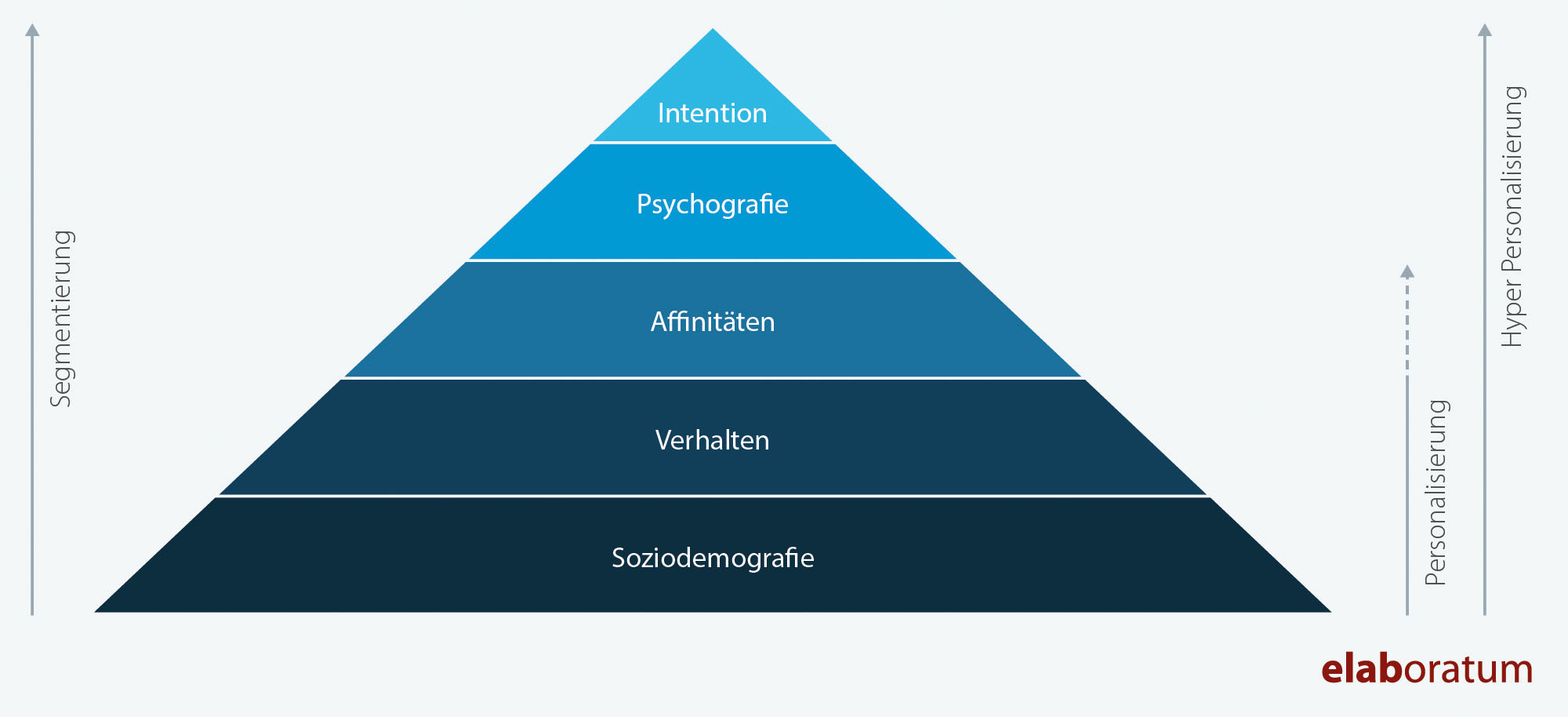
The result of this revolution in marketing is customer-driven marketing that truly focuses on the customer instead of third-party data. With the creation of new user identities, new user-centered customer journeys are emerging. These take into account new user dimensions, such as psychography and intention, and focus more strongly on contextualization (channel and device interaction). The silo and episodic user approach is followed by a continuous and channel-coordinated approach. Marketing orchestration instead of marketing automation is the new maxim for a more efficient use of marketing budgets and thus an optimization of ROI.
* Dimitrios Haratsis is an advisor in customer-driven marketing at Elaboratum and an expert in the field of data-driven marketing and marketing technology.
* Alexander Haymann is a Senior Consultant at Elaboratum suisse. The expert in cross-channel marketing has more than ten years of experience in online business. His focus is on financial services.
More on this topic can be found in the Whitepaper "Bye bye data-driven marketing - long live customer-driven marketing!". In it, Dimitrios Haratsis and Elaboratum present customer-driven marketing with the disciplines of data management, customer intelligence development and customer journey design in detail.


