
Dynamic pricing - it's cheaper when it snows


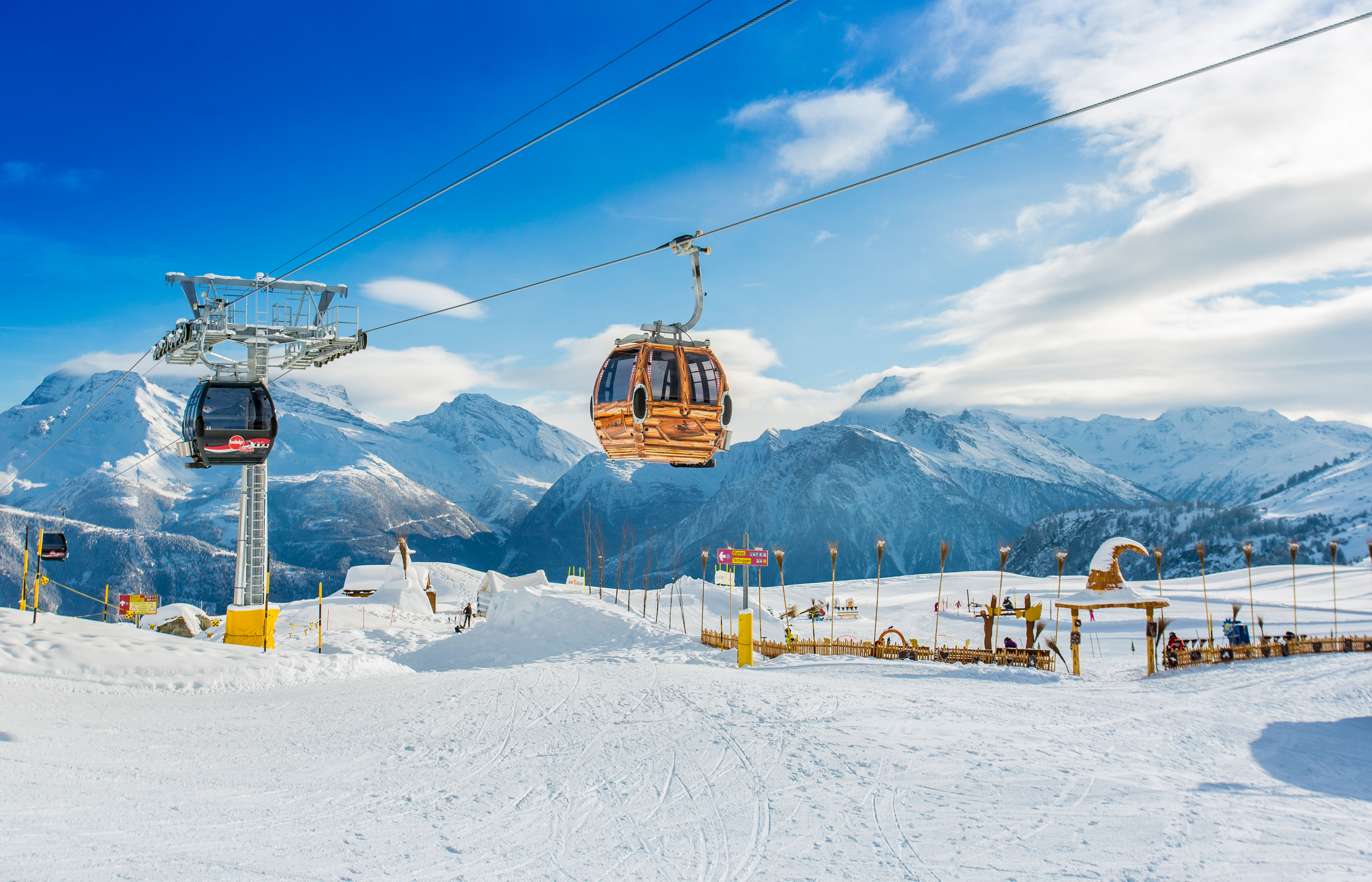 As it turned out, this not only brought more winter sports enthusiasts to the respective winter sports region, but also generated considerable additional sales. "Our research has shown that weather-dependent ticketing creates effective purchasing incentives and makes a positive contribution to sales. Compared to a fixed standard price, the varying willingness of customers to pay in different weather conditions is taken into account," explains project manager Prof. Dr. Dietmar Kremmel from the Institute of Corporate Management IFU-FHS.
More additional income than lost through discounts
A key research question was the economic impact of meteo-dynamic pricing, i.e. whether the weather-dependent price reduction pays off. A turnover of CHF 330,000 was achieved in both winter sports resorts with 3,500 bookings. Revenue from customers who would have come even without the offer of a reduced-price weather-dependent day pass amounted to CHF 170,000 and they benefited from a total price advantage of CHF 64,000. This corresponds to an average discount of 27% on the price of a regular day pass, while additional revenue from customers who spent the winter sports day solely on the basis of the weather-dependent day pass amounted to CHF 160,000. The additional revenue therefore far exceeded the discount costs. "After deducting the revenue lost due to the discount, the two ski resorts were still able to generate over a quarter of a million in revenue with the weather-dependent day pass. And this turnover was primarily generated on days that are normally considered to be low-turnover days due to poorer weather conditions," says Kremmel.
New people attracted to the ski area
On average, just over 50 % of customers in both areas were attracted by the offer of a weather-dependent day pass. These approximately 1,800 additional customers purchased around 5,000 tickets of the total of around 10,000 day passes sold, which were booked via the tipo ticketing booking platform. a survey showed that the innovation of the weather-dependent day pass attracted numerous customers to the respective ski area for the first time. In the Belalp winter sports region, this figure was almost 20 %, while in Pizol, with an even higher proportion of day visitors, the figure was almost 35 %. Accordingly, Jacqueline Fux from Belalpbahnen notes that it was possible to make regular guests an interesting offer and to convince new guests to visit the winter sports region.Klaus Nussbaumer, CEO of Pizolbahnen, adds: "While there are many other areas that need to be cultivated and managed, weather-dependent price management makes an important positive contribution to overall sales. The impact and benefits are there."
High customer satisfaction and recommendation
The survey after the ski day clearly shows that customers in both winter sports regions are very satisfied with the weather-dependent day pass. Booking a weather-dependent day pass is seen as a major advantage that is only associated with a moderate risk, as the majority of customers book at relatively short notice on the ski day itself or 1-2 days beforehand, meaning that the weather forecast is relatively accurate and a weather-dependent price advantage is realized immediately upon booking. "For the majority of customers, there were therefore no major deviations from the SRF-Meteo forecast, or if there were, this had hardly any impact on the high level of customer satisfaction," noted Dietmar Kremmel. As the study also shows, the intention to recommend and the repurchase rate among purchasers of the weather-dependent day pass in particular are very high.
Weather-dependent day ticket to be continued
The concept of meteo-dynamic pricing and its weather-dependent day pass will be continued by the tipo ticketing booking platform even after the research project with the FHS St.Gallen has ended. In addition to the existing partners Belalp and Pizol, further ski resorts are also to be acquired. "The convincing results have encouraged us to continue relying on meteo-dynamic ticketing. Based on the findings of the research project and the well-functioning solution, we believe we are well on the way to convincing other mountain railroads of the benefits," says Rahel Ryf, member of the management team at tipo ticketing.

Pioneering project in Europe
Dynamic price management is common practice in the hotel industry, with tour operators and flight providers, with the Swiss Federal Railways and in online retail. Companies continuously adjust their sales prices to current market demand based on various factors. This is usually based on the time of booking, but also on external factors or customer data. In this way, companies can use dynamic price management to incentivize purchases and reward strategically planning customers. For the first time, the price of day tickets was adjusted exclusively on the basis of expected weather conditions in a research project with the University of Applied Sciences St.Gallen (FHS).In collaboration with the ticketing specialist tipo ticketing GmbH and SRF Meteo as data provider, a meteo-dynamic (weather-dependent) price management system specially tailored to the needs of winter sports enthusiasts was developed together with Belalp Bahnen in Upper Valais and Pizolbahnen in Sarganserland. "Meteo-dynamically priced tickets create a new, very attractive offer that meets the changing willingness of customers to pay in different weather conditions," explains Prof. Dr. Dietmar Kremmel, head of the research project at the FHS St.Gallen. The FHS examined the economic effects of weather-dependent price management over the course of two seasons. As part of this research project supported by the Swiss Commission for Technology and Innovation (now Innosuisse), the two mountain railroads were the first winter sports resorts in Europe to use weather-dependent, dynamic price management. This has created a unique new offer that creates an incentive for a winter sports day even in poor weather conditions and helps to generate additional revenue and increase capacity utilization. you get here



