
Marketing begins long before marketing
Die Schweizer Tourismusbranche steht vor grossen Herausforderungen: Der starke Franken und die schlechte Konsumstimmung sorgen für das Fernbleiben der ausländischen Gäste. Und auch strukturell, namentlich in der Destinationsbildung gibt es noch einige Hausaufgaben zu lösen.


It's that time of year again: the winter sports resorts are beating the advertising drums for their offers. In Switzerland Tourism's TV commercial, "weatherman" Martin Horat promises a snowy winter. However, there is not much sign of this yet. Many regions can only dream of pictures like the one above. Switzerland is experiencing the driest November since measurements began 130 years ago. However, global warming is just one of the challenges facing the local tourism industry. In addition to globalization, as a result of which offers are becoming increasingly interchangeable, the fourth strongest export sector of the Swiss economy is currently suffering above all from the strong franc and the generally poor consumer sentiment. Accordingly, BAKBASEL expects overnight stays to fall by a total of 2.6% for the current winter season. Foreign demand will fall by around 4.2 percent and the domestic market by 0.4 percent. Switzerland Tourism is responding to this development by stepping up its marketing activities for the current season (see interview).
If you take a closer look at the Swiss tourism landscape, the enormous density of brands used for tourism is particularly striking. Every region, every destination and every municipality has its own logo, its own slogan and its own website. According to Urs Wagenseil, Head of Tourism at the Institute of Tourism at Lucerne University of Applied Sciences and Arts, this doesn't make much sense. Joining forces is necessary in order to remain competitive. The so-called destination formation has been underway for some time. A necessary, but also very emotional process, as Wagenseil emphasizes. "You have to move away from the idea that a geographical name is also a brand," says the expert. For many people, no longer being able to use their own place name on a brochure or on the internet is a kind of loss of identity. This is easier to understand if you remember the origins of tourism: "100 to 150 years ago, the radius of the guest was very small. Accordingly, every village, every valley community developed its own tourism product. That's why today we have several hundred geographical names that are used like tourist brands." This strategy worked until around the beginning of the 1990s. Then tourism came under severe pressure due to globalization.
Re-analyze the competitive situation
According to Wagenseil, it is therefore important to take a fresh look at the competitive situation. In many cases, the existing guest pie in a valley is divided up between the various villages. Anyone who wants a bigger share will only achieve this at the expense of someone else. Wagenseil is convinced that this is a bad strategy. "The idea behind the merger should be to increase the size of the cake in the first place. Then the competitors will no longer be the neighboring village, but at least the next valley, the next canton or even the next country." There is a clear benefit for the individual destinations: The marketing budget is increased with a proportional reduction in costs for the partners involved. "By forming a destination, an organization often also achieves the size required for the specialization of employees and thus a sustainably profitable professionalization," explains Daniela Bär. Joining forces also facilitates the work of Switzerland Tourism, i.e. the global marketing of Switzerland as a vacation, travel and conference destination. "By bringing together tourism service providers, a uniform brand can be established with a clearly recognizable profile and clearly assignable values." The offer and service chains for the respective guest segments could thus be coordinated and individually designed in the marketing mix. Not least, Bär continues, because of the increased independence from historically grown political borders.
The successful marketing of a destination, once it has been established, begins long before the marketing. Urs Wagenseil: "It starts with the definition of the development goal. What does the destination want in the medium to long term?" A tourism strategy, including strategic business areas, must then be defined together with the destination's stakeholders. And: "Operational marketing in the destination sector is extremely complex. Accordingly, it needs competent people. However, destination marketing can only be successful if I can also provide adequate resources." A good controlling system is also essential. It is not enough to simply evaluate the development of overnight stays.
The destinations also receive marketing support from Switzerland Tourism. As part of the "Enjoy Switzerland" project, those responsible are coached in terms of developing offers and staging experiences. In addition, the regions and destinations within the campaign and market partnerships have the opportunity to participate in joint marketing activities at home and abroad at attractive conditions. Daniela Bär: "Switzerland Tourism's broad international network enables a wide range of cooperation opportunities in the areas of promotion, e-marketing, media work and collaboration with tour operators."
Modest perception in politics
Wagenseil sees structural changes in the direction of larger, more powerful units, an increase in expertise in management, strategy, marketing and finance as well as a massively optimized positioning and the development of a clear brand policy as the greatest challenges in destination marketing. For the tourism expert, destinations that have successfully overcome these hurdles include the entire canton of Lucerne, Engadin St. Moritz, Gstaad Saanenland and Montreux Vevey. "The canton of Uri could also be a very good case. It also has a large number of small tourist offices that are being reorganized as part of a new strategy," says Urs Wagenseil. However, there are still many regions and towns that have not yet completed this restructuring and consolidation process. But there is not only structural potential for improvement in Switzerland as a tourist destination. Daniela Bär sees this in the range of offers, among other things: the summer season needs to be developed further. In addition, quality in the mid-range hotel sector must be consistently improved. According to Urs Wagenseil, one weakness of Switzerland as a product as a whole is the modest perception of the importance of tourism in the economy, among the population and at a political level. "The tourism industry is not a homogeneous mass, which is why there is no lobby like in other sectors of the economy." Nevertheless, the parliament granted Switzerland Tourism 10 percent more budget for the period 2012 to 2015 than four years ago. And it is helping the marketing company with a one-off subsidy of CHF 12 million. Simone Fankhauser
"We have a franc problem, not a product problem"
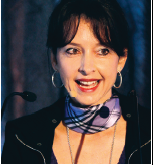
WW: The strong franc and the uncertain global economy continue to pose a challenge. For the coming winter season, BAKBASEL is forecasting a 4.2 percent decline in foreign demand and a 0.4 percent drop in domestic demand. How is Switzerland Tourism (ST) responding to this problem?
Daniela Bär: We are intensifying our activities and investing significantly more resources in winter marketing. With the funds from the current impulse program, measures are planned for the Swiss market that should have a direct impact on booking figures. For example, a special winter brochure with a high mood component and attractive offers from our winter partners. We will be distributing this publication at the beginning of 2012 via high-profile titles. A strong franc calls for strong offers. And there are plenty of them in Switzerland: we have collected ideas and offers for the price-conscious at MySwitzerland.com/preiswerteschweiz.
ST has created its own competence center for social media marketing. What advantages does this channel offer for marketing Switzerland?
The most widespread and credible marketing tool in tourism is and remains personal recommendation. Social media are ideal for passing on personal experiences, far beyond the possibilities of the word-of-mouth method. Good personal experiences gain wings. Stimulating this is the fine art of social media marketing. The ST competence center for social media has been in operation since 2012, because the digital communication flow via social networks has become an integral part of our marketing mix. With interactive apps, for example, personalized and emotionally oriented, you can create deep customer loyalty.
What are ST's most important communication channels?
The strongest channels through which our guests find out about Switzerland as a tourist destination are both online and offline: the MySwitzerland.com website, the ST brochures for the main and product campaigns, worldwide media work and our presence at trade fairs. These channels are all effective in their own way - depending on the market of origin and the guest segment.
Have there been any shifts within the marketing mix in the recent past?
Yes, we have moved away from "thick" print brochures and are investing more in the development of digital formats, such as iPad brochures.
ST must market Switzerland as a vacation destination at home and abroad. Is the Swiss product right?
Yes, the Swiss tourism product is right overall. We primarily have a franc problem, not a product problem. However, this does not mean that we can be content to stand still. Working on quality is a never-ending process - this is particularly true for Switzerland: as it can only position itself through the experience value and not the price, we are required to always offer our guests the maximum in terms of performance. This aspiration must always accompany us.
Where do you see the greatest challenges for the future in marketing this product?
The biggest challenge lies in the continued successful positioning of the Swiss summer. This is because competition from vacation destinations on the Mediterranean is much stronger than in winter. The second challenge we see is the consistent increase in quality in the mid-range hotel sector. There is still potential for improvement here - and this is not an opportunity, but a necessity.
Interview: Simone Fankhauser


