AMD Early Detection Campaign: Grid Patterns as a Warning Sign
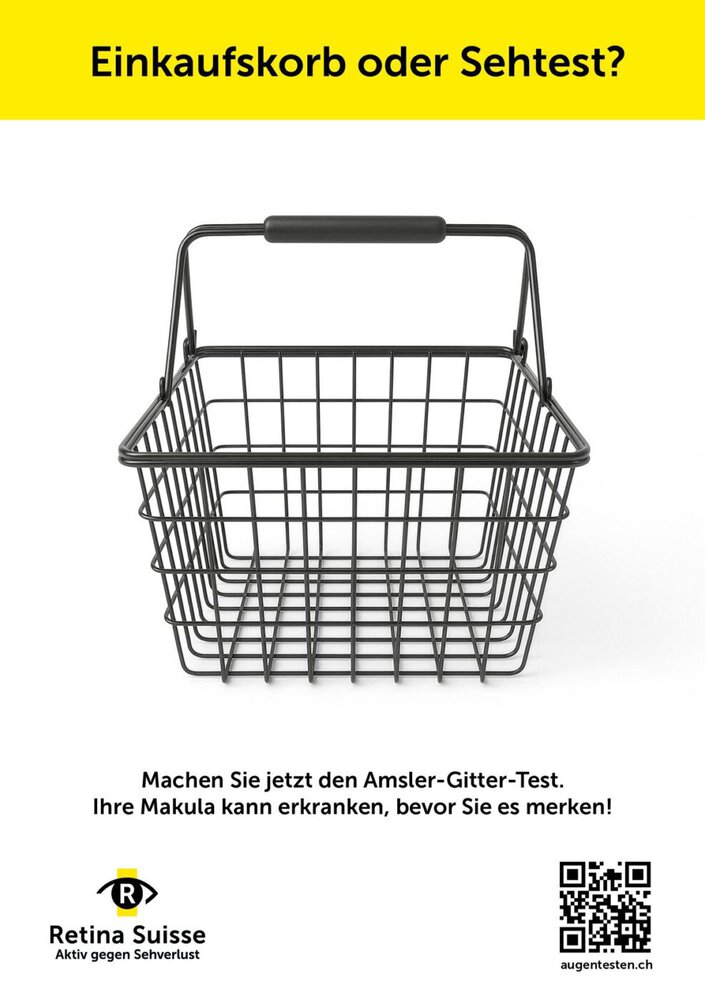
Life Science Communication is launching a campaign on behalf of Retina Suisse to promote early detection of age-related macular degeneration. Everyday grid patterns, such as those found on tennis rackets or shopping baskets, are intended to raise awareness among people aged 50 and older about the Amsler grid vision test.


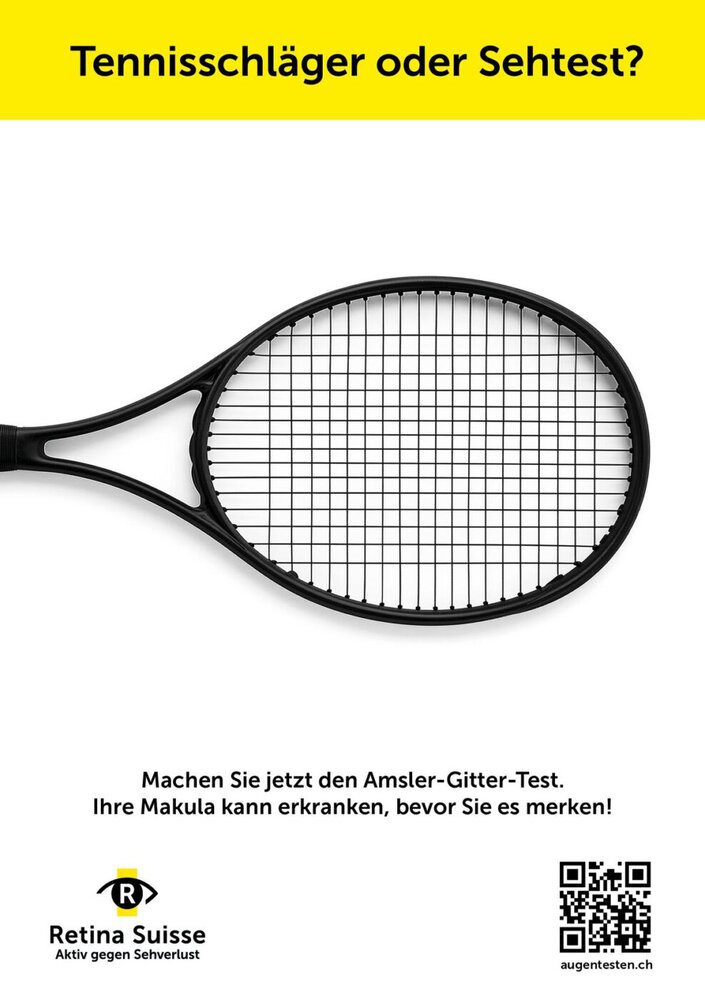
Age-related macular degeneration (AMD) is considered the leading cause of vision loss in older adults. Because the disease is often diagnosed at a late stage, Life Science Communication developed the “Early Detection of AMD” campaign on behalf of Retina Suisse. It is aimed at people aged 50 and older and seeks to raise awareness of the signs of the disease.
There are two forms of age-related macular degeneration: dry AMD and wet AMD, with the dry form being more common. The wet form progresses rapidly and requires immediate treatment. Without treatment, it leads within a short time to severe, permanent loss of central vision and may even result in blindness.
Early Detection as the Key Message
Signs of AMD include decreased visual acuity that cannot be corrected with reading glasses, night blindness, poor contrast sensitivity, or distorted vision. Anyone who notices changes in their vision should see an ophthalmologist as soon as possible. This is the key message of Retina Suisse’s new early detection campaign.
Lattice Patterns as Eye-Catchers
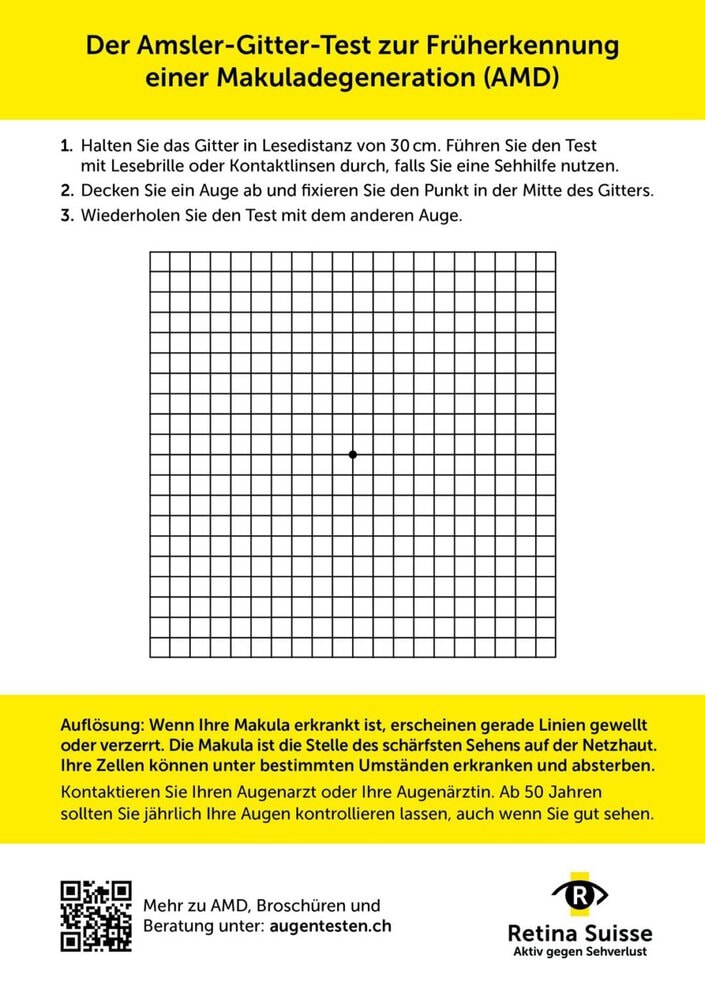
To raise awareness of AMD among people aged 50 and older, Life Science Communication developed a campaign on behalf of Retina Suisse that features unexpected visuals. Grid patterns from everyday life—such as a shopping basket or a tennis racket—lead into the Amsler grid vision test. This simple vision test provides clues about possible AMD. The message is that people aged 50 and older should have an annual checkup with an ophthalmologist.
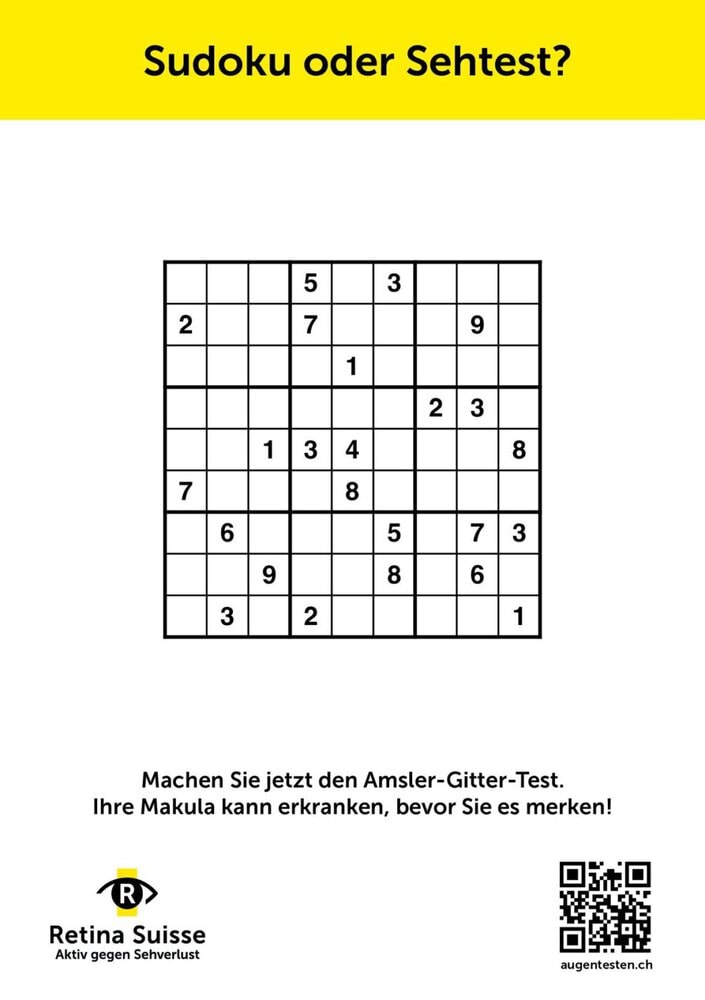
The campaign is launching in German-speaking Switzerland and is set to be rolled out gradually throughout Switzerland over the course of several years. The campaign materials will appear on digital screens at numerous train stations, on hanging signs in public transportation buses, in advertisements in general-interest and trade media, on postcards in ophthalmologists’ waiting rooms, as well as in posts and podcasts on various social media channels. The campaign website www.augentesten.ch contains all campaign information and downloads, including additional brochures.
Experience with prevention campaigns
In developing the campaign, Life Science Communication drew on its many years of experience with prevention campaigns and patient-centered communication. In addition to clients in the pharmaceutical, biotech, and medtech industries, the agency also works with numerous nonprofit organizations and patient advocacy groups.
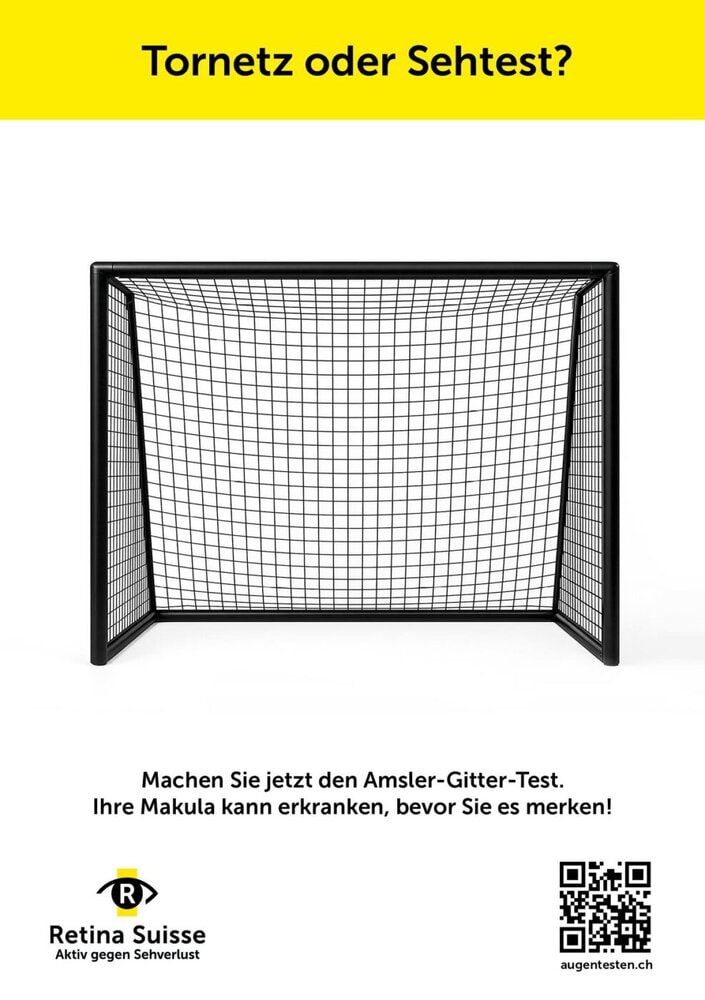
For more information about the campaign, visit the campaign website www.augentesten.ch.
Contact person at Retina Suisse: Susanne Trudel, Client. Strategy, Concept, Implementation: Mark Bächer and Sarah Hartinger, Life Science Communication. Design and Visual Design: Gabriel Alber, Life Science Communication