Leadership in the digital age - twelve theses by author Barbara Liebermeister
Digitalization or not, managers will continue to lead people - not machines and algorithms - in the future. Managers should keep reminding themselves of this. Then they will also succeed in leading in the digital age.


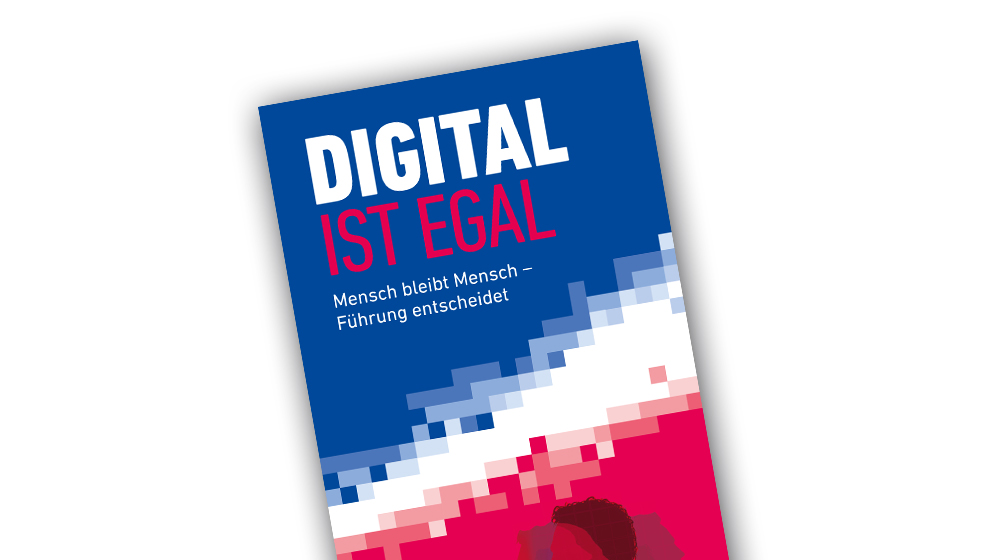
Barbara Liebermeister, who published the book "Digital ist egal: Mensch bleibt Mensch - Führung entscheidet" in March, formulates twelve theses on this topic.
Thesis 1: Personality cannot be digitized!
People remain people, even the most innovative information and communication technologies cannot change that. This is why increasing digitalization even requires more social skills and empathy in companies - because employees increasingly lack the desired stability and the necessary orientation in the Vuva world, which is characterized by permanent change and low predictability.
Thesis 2: People can only be led by people!
Skype, iPhone and the like often simplify our lives - but no computer program in the world can replace agile leaders who provide impetus, ideas and motivation for the people around them.
Thesis 3: Managers - better people experts than technical experts!
Managers increasingly rarely have a knowledge advantage over their employees. They have to rely on their expertise (and loyalty). Instead, it is becoming a core task of management to integrate specialists or employees with specialist knowledge into teams and to promote their individual strengths.
Thesis 4: Creativity is not programmable!
Creativity is a prerequisite for innovation and one of the key skills that sets us humans apart from machines. "Developing team spirit", "resolving conflicts" and "creating identification with the job" - only agile leaders can help with these tasks, not zeros and ones.
Thesis 5: The principle of command and obedience has had its day!
Modern managers are not know-it-alls - and instructions such as "Do this or that and we'll be successful" are no longer effective these days. Instead, managers and their employees need to meet as equals and work together to determine which solutions are the most effective.
Thesis 6: The answer to mechanization is more emotional intelligence!
The more emotionless and soulless technology is used in companies and their environment, the more consciously we need to seek and shape personal, emotional interaction with one another. This is why emotional intelligence is becoming increasingly important for leadership success.
Thesis 7: Leadership must provide orientation, support and security!
The more diffuse, unstable and subject to change the corporate environment is, the more employees long for orientation, stability and security. Ultimately, only their managers can satisfy this need if everything else in the environment "fluctuates". This requires trusting and respectful interaction with one another.
Thesis 8: Leadership is a relationship - leaders of flesh and blood are required!
As a manager, taking a moment to sit down and discuss problems and suggestions for improvement together is always better than sending an emotionless email - because the manager (and the employee) cannot be experienced as a person. Body language and tonality, facial expressions and gestures are lost. Misunderstandings are therefore inevitable and have a negative impact on the quality of the relationship.
Thesis 9: Leadership means reaching people and creating meaning!
The "digital natives" of Generation Y are hardly impressed and emotionally bound by the prospect of prestige and status in their job. Instead, tomorrow's top performers are more interested in finding meaning and self-realization. This is similar for today's top performers, who are often "digital immigrants". They also want to know "Why?" and ask themselves "What does this mean for me - professionally and privately?". Creative management methods that take individual, personal needs into account are therefore in demand.
Thesis 10: Empathy creates the conditions for success!
Putting yourself in the other person's emotional world is an enormously important management tool. Because when employees are in a positive mood because they feel comfortable and valued, they are also willing to get involved - and thus the most important prerequisite for innovation is also fulfilled.
Thesis 11: Managers must become a "brand"!
Managers should be aware of their values, convictions and strengths and communicate these so that they become an unmistakable "brand" for their employees. Because only those who are authentic and clearly stand by their values and convictions will gain people's trust - including that of their employees.
Thesis 12: Nothing works without networking!
Anyone can have 1000 Facebook friends (... and buy them if necessary). Networking offline takes more effort, but is crucial to success. Contacts and relationships can be initiated online, but trust requires personal encounters. Professional networking requires the best of both worlds.
About the author: Barbara Liebermeister heads the Institute for Leadership Culture in the Digital Age (IFIDZ), Frankfurt, which supports companies in providing their employees with the skills they need in the digital age (www.ifidz.de). In April, Gabal-Verlag published her new book "Digital ist egal: Mensch bleibt Mensch - Führung entscheidet".