Reality is only the straitjacket of fantasy
Virtual reality is finally here. After years of being relegated to the sidelines in press releases and research centers, it has now made its way into living rooms and retail spaces. Whether it’s a low-end cardboard headset or a high-end model with surround sound and motion tracking—the technology works. Now it’s up to companies to put it to use.


A guest article by Daniel Unger, Creative Director and Member of the Executive Board of Nexum Agency Switzerland, Bern in July 2016.
Devices / State of the art
Virtual reality is already 25 years old. However, the technology has always had to contend with shortcomings: too expensive, too heavy and too poor to inspire2.
Now, however, groups are entering the market with products that offer convincing price and performance.
Infobox
Virtual reality, or VR for short, refers to the representation and simultaneous perception of reality and its physical properties in a real-time computer-generated, interactive virtual environment. The term virtual reality was coined by the author Damien Broderick in his 1982 SF novel The Judas Mandala3. In 1987, the term first appeared, as a theoretical concept, in the Oxford English Dictionary. A mixture of virtual reality and pure reality is called mixed reality. A real image of the environment enriched by contextual information is called augmented reality (AR). A head-mounted display (HMD) is a visual output device worn on the head.
Sources: Wikipedia, various Article
In 2014, Facebook buys the technology leader Oculus VR for 2 billion US dollars, and suddenly the topic of VR is on everyone's lips. Shortly thereafter, the Internet giant launches 360-degree advertising in the Facebook feed - no coincidence. In 2015, Valve Corporation teams up with cell phone manufacturer HTC and presents the HTC Vive, a VR headset that can track the user's movements in space. This opens up further possibilities for immersive applications. According to Urs Langenegger, one of the co-founders of the Zurich-based virtual reality content studio Bandara, they form the high-end sector. Recently, Sony with the PlayStation VR and Microsoft with the Hololens have now joined as competitors. The latter is more of an augmented than a virtual reality device (see infobox above).
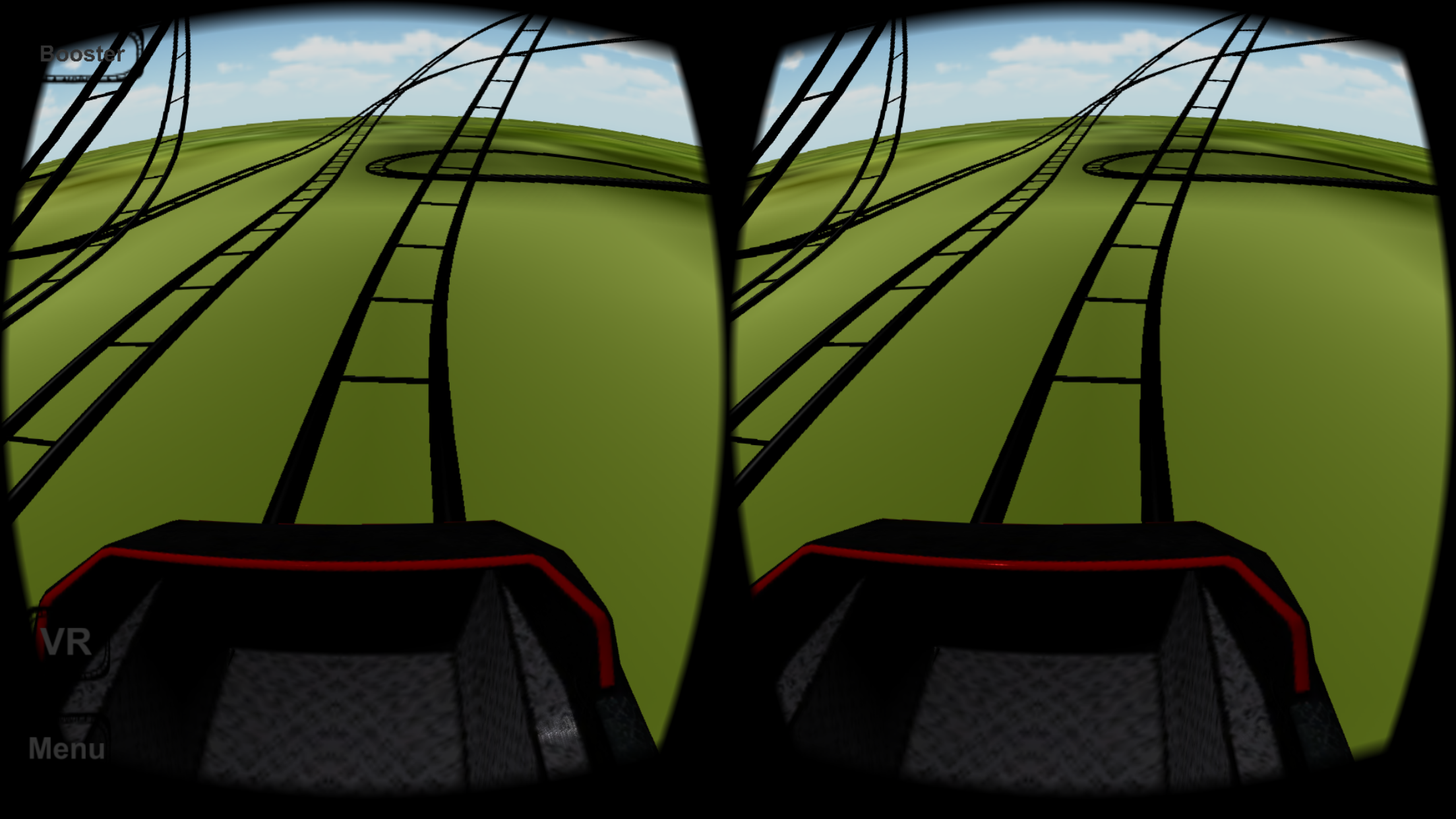
Increased computing power and better motion sensors enable realistic graphics with barely noticeable latency. This alleviates one of the main problems: When our eyes perceive a different movement than other sensory organs, some people react with nausea and dizziness (motion sickness). A roller coaster ride in virtual reality (Fig. 01) is thus not a pleasure for everyone.
The certainly broadest sector at the moment is Mobile VR, i.e. the use of smartphones as processor and screen, which are plugged into inexpensive cardboard glasses (Cardboards) or masks (e.g. Samsung Gear VR). They occupy the midfield of virtual reality, which allow a very non-committal trial in the VR world.4. As a branded give-away they are also suitable for campaigns and events5.
The lower category is offered by online platforms like YouTube and Facebook, which are desktop-bound - the former now supports VR features for glasses on all MobileOS, the latter makes 360-degree content popular in particular. However, you have to settle for significantly less immersion when using it without glasses.
Google has announced the launch of Daydream for this year: A VR platform with a community character for enjoying various applications. The special feature is that Daydream will be an integral part of the new Android version "Nougat". This interlocking of mOS and VR world is an absolute novelty6.
The hardware works, the user numbers grow - how do companies use this for themselves?
The first contacts with the second digital revolution often take place in entertainment or educational contexts: Walk through any big city thanks to the Google Streetmap VR app, hike through nature parks with a ranger, one click away you stand in the middle of the stage of a dance ensemble surrounded by dancers via the app Within (formerly Vrse), or you dive with whales - our imagination is already freed from its corset today.
Companies also use the format to make their respective brand worlds more (more) tangible. With the #project360 app from the outdoor company Mammut, for example, impressive mountain peaks can be climbed, while Red Bull invites its fans to plunge into the depths in a virtual wingsuit flight - with no risk of falling. VR is also an effective means of minimizing the need for money and space in the professional training of skydivers, astronauts and budding surgeons.
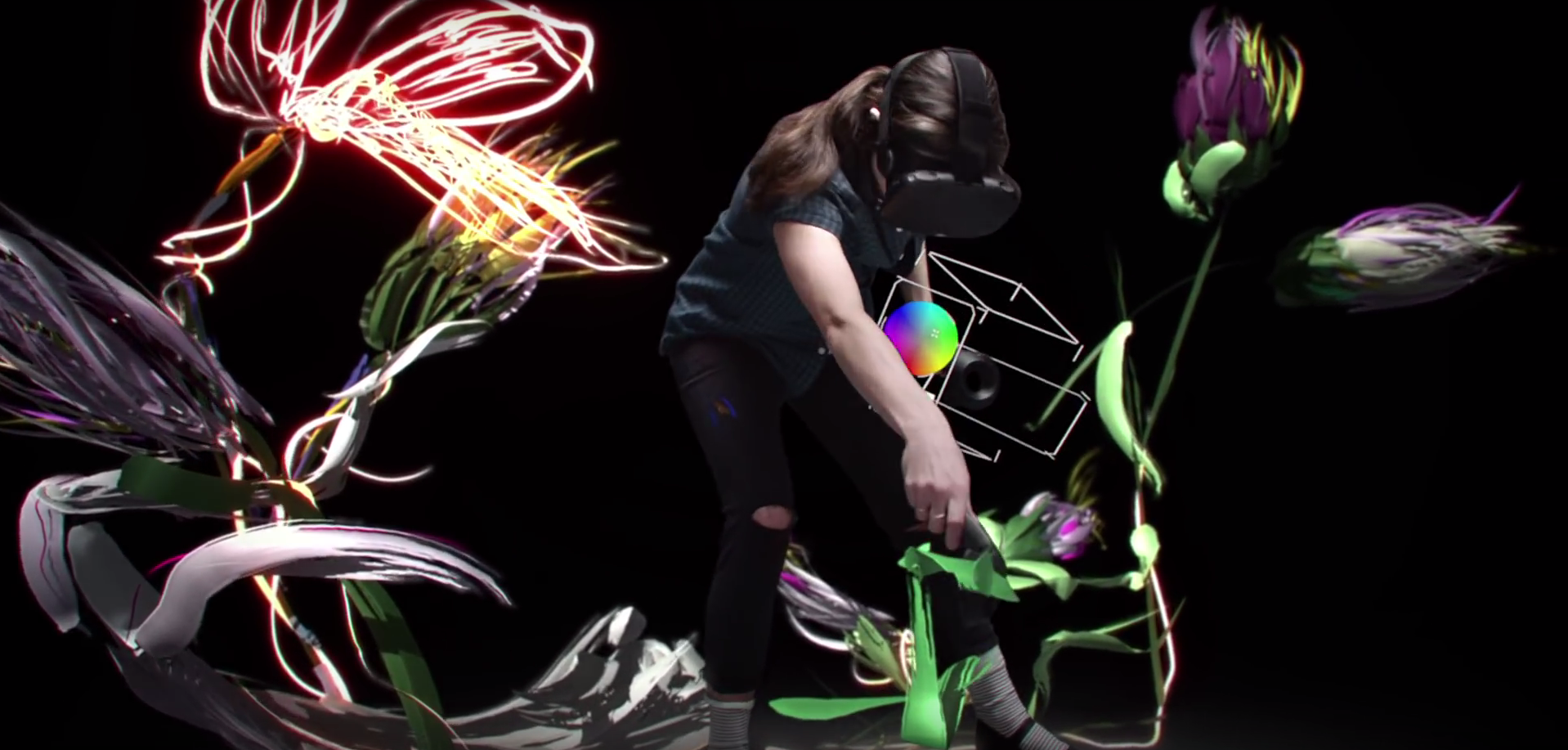
Google's Tilt Brush application is every artist's or designer's wet dream, allowing you to create images, spaces or products three-dimensionally in an empty virtual space using a virtual palette. Brave New World, in a positive way. This should finally put an end to the days when designers have to transform their ideas into digital creations with mice and keyboards (Fig. 02).
The Birdly research project of the Institute for Interaction Design headed by Max Rheiner at ZhdK goes even further, allowing the user to slip into the role of a flying bird. An artificial bird was constructed as the controller for the bird flight simulator. Besides the elaborate replica of the bird's body, it is a banal fan in front of the face that makes the illusion of flying itself perfect. Embodied interaction is achieved by lying on the artificial bird and using muscle power to move and control its wings. In the meantime, the revised series production is available for purchase by anyone with the appropriate budget. The virtual bird is marketed by the spinoff Somniacs from Zurich.7.
Content remains king
Streaming live VR content is on the rise, as proclaimed by the company Next VR, for example. This promises to revolutionize entertainment as we knew it. Their offering promises a rock concert in the middle of the band on stage or live events from sports (NBA) and entertainment (Oscar Night). The first 360° live streaming in Switzerland was realized by Bandara together with Yoveo in March 2016.8
VR pioneer Chris Milk calls VR the "ultimate empathy machine." A good example is the 360-degree short film Welcome to Aleppo9. Anyone who has experienced this will immediately understand why Syrian families had to flee their homeland. This development has also arrived on the Swiss market. The premiere was at the Pestalozzi Children's Village Foundation from Trogen in a special exhibition for the 70th anniversary, which conceived and produced the project together with Bandara. Visitors were sent directly into the everyday life of a schoolboy from Tanzania: "Ezekiel's Dream" lets the viewer sit in the classroom with him, bringing the faraway stranger up close and personal, without the possibility of looking away or hiding from reality. Acceptance for such pioneering projects has been very high internally at Pestalozzi, he says. "Everyone immediately understands how we can bring the situation on the ground in our worldwide aid projects closer to the visitor in this way," as Remo Schläpfer, responsible for media/campaigns at SKP, explained. Since sponsors for the elaborate production in Africa could also be found for this project, the conclusion is thoroughly positive: "This is a complete success, we are already planning further VR projects," said Schläpfer.
The VR landscape will be democratized by user-generated content (UGC), such as user-generated VR content that can already be published and consumed on platforms like PIE. Such content can be produced with a camera for a few hundred francs, such as the Ricoh Theta S, which, however, is not suitable for high-gloss experiences via VR glasses. Google cooperates with the company GoPro in its project for VR production Jump. These developments should achieve cost reductions and push the boundaries for commercial projects.
How do you use VR for your own brand?
The growing reach of virtual reality offers companies the opportunity to differentiate themselves from their competitors with completely new experiences. Whether producing a VR image film or providing interactive applications that give customers added value such as configuring products in a VR context: As is so often the case, the key is to recognize which goals are to be achieved with the technology.
VR technology is also ideal for bringing products to life that do not yet exist in physical form or that are individually adapted to customer requirements. In the crisis-ridden automotive market, for example, there is a veritable El Dorado of possibilities, if one thinks of the e-commerce innovations that VR can trigger on the go on a smartphone, at home on a computer, or in the car dealer showroom of the future.
About the author
Daniel Unger is Creative Director and member of the Executive Board of Nexum Agency Switzerland, headquartered in Bern, and likes to take a dip in the HTC Vive during his lunch break (see photo, favorites: Scuba Diving and Tilt Brush). Nexum is the consultancy and agency for communication, interaction and transaction in the digital age. Since April 2016 with new office in Bern.
Guided interviews
- Urs Langenegger
- Carsten Lucas, Freelance CD digital & VR, Frankfurt/Main (D)
- Remo Schläpfer, Pestalozzi Children's Foundation, Trogen
Images
- Screenshot App Rollercoaster
- Tilt Brush by Google
- Portrait Author: Daniel Unger, Creative Director / Executive Board, Nexum Agency Switzerland, Bern
- Author with HTC Vive: Daniel Unger, Creative Director / Management, Nexum Agency Switzerland, Bern
Sources
- Misappropriated quote from the song "Erst der Anfang" by Genetik from the album "Voodoozirkus" (2012).
- Cheat Sheet, "Pioneer Era Devices," accessed 5/25/2016. http://bit.ly/VRpioniere
- Heise Online, Ursprung Begriff VR: "Vor dem Internet kam der Dungeon", accessed 25.5.2016. http://bit.ly/virtualreality-dungeon
- Horizont, "Samsung reports over 185,000 VR glasses sold in Germany," accessed 07/06/2016. http://bit.ly/VRGearBundles
- 20 Minuten, Mobile phone manufacturer Samsung gives away 25,000 Cardboards at Swiss train stations in "Immerse yourself in new worlds with 360° videos!", accessed 25.5.2016. http://bit.ly/VRZurich
- Wired, "Here's how Google wants to shake up virtual reality," accessed 5/24/2016. http://bit.ly/daydreamgoogle
- Birdly http://bit.ly/ZHDKbirdly resp. http://www.somniacs.co
- Werbewoche, "First 360° livestreaming in Switzerland," accessed July 28, 2016. http://bit.ly/VR-liveSchweiz
- The Guardian, "Could virtual reality revolutionise crisis-response filmmaking ?", accessed 27.7.2016, http://bit.ly/VR-aleppo
Related links
- Platform and community with user-generated content (UGC) https://www.pie.video
- Various apps deliver content such as Within http://with.in/ or Next VR http://www.nextvr.com/
- Hyper Reality as 3D space in Salt Lake City https://thevoid.com/
- Hyper Reality as AR Vision http://bit.ly/AR-hyperreality
- Hololens from Microsoft http://bit.ly/hololensVR