How automated advertising is changing digital media


DIGITAL ADVERTISING Frank Bachér of Rubicon Project explains why display advertising is booming thanks to programmatic buying and is overtaking SEM.
Display ads are on the rise thanks to programmatic buying.If current forecasts from Zenith Optimedia and others are to be believed, big changes are coming. Mobile advertising is just gaining significant momentum and is expected to grow by 50 percent globally by 2016; and from an already strong base of $13.4 billion in 2013. Mobile is undoubtedly a very exciting area and news of its explosive growth has been around for some time. Our study on advertising on mobile devices as well as the figures of the IAB in Great Britain However, the story is much more complex and is not just about mobile. It shows the change that digital advertising in general is undergoing. When Zenith Optimedia, one of the world's most important media buyers, predicts a change in the ratio of display to search, we should listen up.
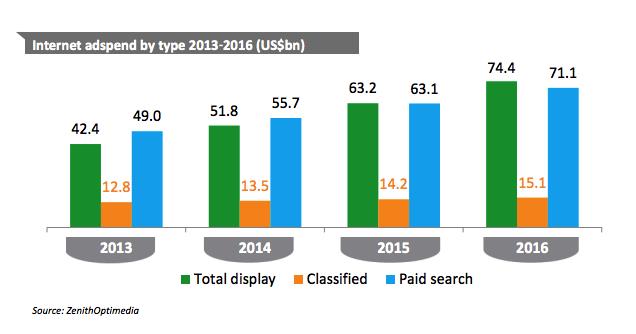
Revenue from display ads will overtake that of search by 2016, according to Zenith Optimedia.If these figures from the Publicis Group's media buying department are correct, more advertising budget will flow into display than into search in the future. The study explains the reason as follows: "Traditional display advertising (banners and other standard graphic formats) is growing by 16 percent a year due to the revolution in programmatic buying: It offers agencies and advertisers more control and a better price-performance ratio for the media trade. "In detail, this means that automated and data-based advertising will bring the same advantages to the display channel that are familiar from search advertising. The focus here is on simple and efficient systems for scalable media buying, such as those already familiar from online booking of flights and hotel rooms. Here, booking is already immensely simplified by a single website or app, as opposed to the old process, by simply eliminating the repeated calls to a travel agent, negotiations, and waiting for appropriate responses.Analogously, calls, faxes, and Excel spreadsheets are also being replaced by automation in our industry. Paradoxically, these are all tools that were important before the Internet and are still often used, especially in the digital media landscape. Whether for travel or advertising, the benefits of automation are the same: Time savings and efficient use of resources, resulting in a stronger focus on work that creates value and fosters creativity.Display vs. SearchSearch marketing is mainly a medium for direct response campaigns due to its limitation to a few lines of text. In contrast, the possibilities for display advertising are very diverse. Especially due to the increasing number of attention-grabbing high impact and rich media formats. The creative possibilities that Realtime Buying offersHowever, the advertising industry has hardly taken advantage of this up to now. Native advertising plays an important role on mobile devices. Those who claim that the hype around native advertising is having a negative impact on display advertising are ignoring the fact that the two formats are different sides of the same coin. After all, as new ways of delivering native ads emerge, content-based advertising can ultimately be distributed in the same way. Zenith Optimedia's study also suggests that social and video are also benefiting from the growth of programmatic media buying, because automated real-time trading is helping to sustain the strong growth of both formats.Automated television advertisingWhen you Media like ClickZ believes, television is one of the last channels to resist automation. A statement that sounds strange at first, because we often already closely associate TV with the digital world. For the next generation of viewers, who have never lived without smartphones or tablets, the two channels of TV and digital are already indistinguishable.The influence of the increasing popularity of Netflix, Apple TV, etc., and the Multiscreen Watching Trends to digital advertising is not yet foreseeable. Yet it is already clear that in the future, television will be viewed predominantly via addressable digital providers. You only have to consider how much viewing behavior has already changed, especially in younger target groups. Hardly anyone still plans their evening TV viewing with the help of program guides; instead, people are increasingly watching on-demand. In addition, what is on the screen in the living room can increasingly be linked to the mobile device, and multiscreen watching is therefore increasing significantly. In recent years, linear television has always been important for short-term reach building. With the use of multiple screens, it is becoming more part of integrated campaigns alongside mobile, tablet and desktop display. Critical voices from the television environment of course still exist in this context. They claim that programmatic is inefficient. However, the development of the last few years has clearly shown that programmatic buying brings a significant increase in efficiency for all publishers, media agencies and advertisers.The digital channel is changingA single company dominates the search market and therefore benefits solely from growth in this area. But the world of display advertising is much broader. Publishers should see it as a huge opportunity when display search overtakes: they will regain control over budgets that have historically been distributed mainly to the top portals. Publishers will benefit from the growth that is on the horizon for the next few years.Author: Frank Bachér, MD Northern Europe at Rubicon Project