
Is your company up to the challenge of digital consumers?


DIGITAL MARKETING It is no longer enough to increase advertising expenditure for online tools. Only if companies take a holistic approach to digital transformation will they be able to cope with digital consumers today and in the future.

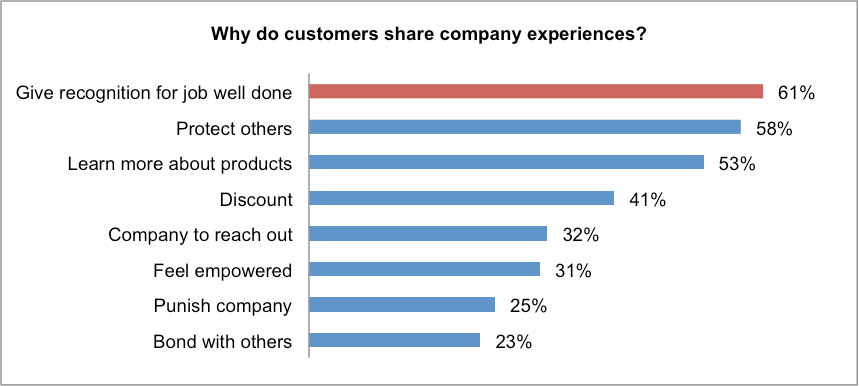
The ubiquity of smart devices is changing not only purchasing decisions, but media consumption.FROM ARMIN LEDERGERBER*Online information plays an important role in extensive purchasing decisions today. When searching for information to prepare a purchase decision, Mr. and Mrs. Swiss not only access official information from companies about products and services, but also rely above all on the recommendations and ratings of other consumers.Market research companies such as Nielsen or Ipsos have long since proven that when it comes to even risky purchase decisions, the opinions of friends or online ratings have much greater credibility than information from advertising or from a sales person in a store.Customer ratings at the point of saleWith the increasing spread of smartphones, these online reviews and user ratings are increasingly reaching the physical point of sale. Depending on the study, smartphone penetration in Switzerland is currently estimated at between half and three quarters of the total population. Store operators are therefore increasingly confronted with the fact that the recommendations of the community are also being followed for simpler or more everyday purchase decisions, and that information available at the point of sale is no longer the only source of advice.Smart devices and media consumptionThe ubiquity of smart devices (smartphones, tablets) is changing not only purchasing decisions, but media consumption in general. If we look at the advertising spending of companies and compare it with the media usage of Mr. and Mrs. Swiss, it seems that the changed reality has still not arrived in the media mix of many companies.Meanwhile, a survey by Fitkau & Maass shows that in the living room, two-thirds of Germans look more at the smartphone in their hand than at the TV. In Switzerland, this "changing of the guard in the living room" has probably also taken place.Always-on mentality challenges companiesThe ubiquity of smart devices is also leading to a change in consumers' expectations of companies. Not only must today's media content function independently of the access technology, but it should also be possible to consume it anywhere and at any time. This also applies to companies with their products and services. In particular, more and more companies are facing the fact that the demands on service and support are also constantly increasing. Whereas not so long ago it was common to receive assistance from a support employee only during office hours, today many customers expect direct and rapid access to know-how on the company side - around the clock.Convince online in case of serviceProblem resolution in the event of a service issue does not necessarily have to come from the company itself. Depending on the size and activity level of the company's own customer base, online support communities are an excellent way of resolving consumer concerns during off-peak times or in situations with high service volumes. Organizations that know how to offer customers low-threshold access to problem-solving in the event of service are at an advantage: there is hardly a better time to show customers that they are important to the company.Leveraging positive online word-of-mouthIt is precisely these moments after a quick and uncomplicated problem solution that offer great potential for positive word-of-mouth propaganda. A study by NM Incite shows that 61% of social media users who have had a positive experience with the company as a customer also share this experience on the social web (cf. Figure: Why do customers share company experiences?).In this way, they not only express their appreciation of the company, but also act as independent advocates vis-à-vis third parties. As explained at the beginning, customer experience plays a decisive role when future customers look for recommendations and reviews on the Internet.Digital transformation creates differentiation potentialCompanies that understand how to address these new challenges of the digital transformation create potential for differentiation. Today, it is no longer enough to simply enrich the media mix with online and social media tools or to adapt their own online content for mobile devices. Rather, organizations are required to put customers first, whether online or offline. They stand out for their consistent customer orientation by looking for ways to offer customers added value on the social web as well.On the one hand, it is crucial that these digital initiatives are not tackled in isolation, but are in line with the overarching corporate and marketing strategy. On the other hand, it is equally important to trigger a cultural change in the organization. Only if companies take a holistic approach to digital transformation will they be able to cope with the digital consumer today and in the future.
CAS Digital Marketing The certificate course (CAS) Digital Marketing takes an in-depth look at the new possibilities of digital marketing. Participants learn to evaluate the digital marketing readiness (maturity) of their company in order to identify fields of action and opportunities for generating added value. Based on this, they will be enabled to develop and successfully implement a digital marketing strategy. In addition, they will become familiar with the aspects of corporate management in the digital age, recognize areas of tension in change processes and know tools to actively manage them.Next course starting March 7, 2014 at the ZHAW in WinterthurInfo under www.imm.zhaw.ch/casdigmkt


