Gamification and eight really effective motivators


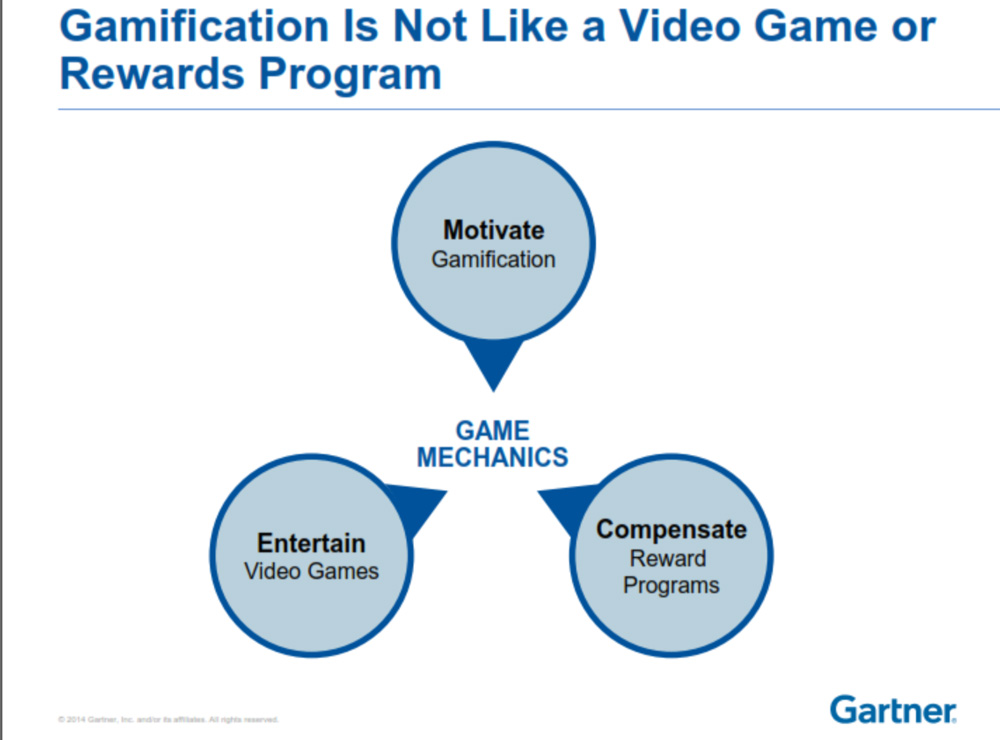
Although still in disrepute, gamification offers many possibilities.praised by some as a motivational miracle cure, ridiculed by others - in reality, gamification often unfortunately consists of a simple mechanism.1. the completion of recurring tasks is rewarded with points,2. the achievement of threshold values is rewarded with badges,3. the whole thing is tracked in a ranking list.the intention behind this is to turn the task into a playful competition. This trivialized form of gamification is often perceived as forced and rejected by users - which has given the term gamification a bit of a bad name. Wrongly so.The potential is obviousBecause the basic idea behind gamification is actually quite different. Namely, the question of people's fundamental drives that can ensure that they enjoy doing what they do. The world of video games is often used as a teacher and its mechanisms are analyzed. What is it that ensures that the same young person who does not do their homework solves repetitive tasks with the greatest perseverance and enthusiasm until 3 a.m.? In the real world, this is called "hard work" and is a thankless task that is preferably delegated to temporary staff; in the gaming world, it is called "grinding" and is an indispensable part of getting ahead that is gladly accepted. And the discipline and work ethic that people bring to it is second to none. If you now consider that the average gamer is 35 years old and the average female gamer is 44 years old, and that the gender distribution is roughly equal, it becomes clear how low the barrier is to using gamification mechanisms effectively in the workplace or in service and product design.Yu-Kai Chou's model and its 8 motivatorsA particularly exciting model of how these mechanisms can be interpreted and used in a targeted manner comes from Yu-Kai Chou from California. His "Octalisys" framework describes 8 basic "core drives", which can be loosely divided into white-hat and black-hat techniques - rewarding and punishing mechanisms as well as left-sided and right-sided techniques (i.e. those that are motivated by external influences and those that are self-motivated):1. meaning - charging the task with a higher purpose, for example the pursuit of an overarching goal2. empowerment - give users real-time feedback and the opportunity to contribute their own creativity3. social influence - the active networking of the user with a community in which he wants to be well positioned4. unpredictability - the deliberate inclusion of unpredictable events to maintain suspense5. avoidance - to give the user something they no longer want to give up6. scarcity - the creation of emphasized rare goods or events that the user wants to get or achieve7. ownership - to give the user a feeling of identification with the process or what has been achieved in order to strengthen the personal bond8 Accomplishment - the conscious creation of achievements and the celebration of their attainment: what sounds rather abstract in theory has already proven itself in practice. Viewed through the Octalisys lens, it quickly becomes clear that many successful companies' success models make use of these motivational factors.The Ebay exampleThe Ebay auction platform is a wonderful example of how a normal online store can be turned into a game through the use of the auction mechanism. The outcome is always uncertain (Unpredictability), you don't want to give up a high bid and therefore bid higher than you actually wanted (Avoidance), you get immediate feedback and options for action if another bid comes in (Empowerment), people give each other ratings (Social Influence), and the reputation status achieved is made transparent for everyone with stars and a ranking (Ownership and Accomplishment) - and every effort is being made not to drop down in this ranking (AvoidanceThere are countless other examples, and many are not even just at home in the digital world. Just think of collecting miles with the airlines (Avoidance), the happy hour in the bar (Scarcity), black credit cards (Accomplishment, Social InfluenceOften you can no longer talk about gamification here, because the result often has no game character. Instead, we prefer to talk about behavior design. Companies with a strong brand and a corresponding purpose-driven brand story have already laid the most important foundation stone for this - Meaning.ConclusionBehavior design can be a great way to massively strengthen customer loyalty without becoming disloyal to your brand and falling into a death spiral. And to turn employees into self-motivated brand ambassadors who enjoy doing the right thing - and what makes for a better brand experience than employee behavior?

*As an experienced expert in audiovisual brand development with many years of experience in the corporate branding sector, he is responsible for Patrick Ensslin the conception and creation of unique brand experiences at all conceivable brand touchpoints. At the end of 2007, after 10 years of branding experience, Patrick founded the agency Sensorial Surroundings, specializing in motion graphics, film and sound design in the corporate sector.