Digital brand management - strong brands on the web


MARK MANAGEMENT Digital brand management is also becoming increasingly important for small and medium-sized companies. Various aspects of digital brand management are highlighted in a six-part series.FROM PROF. DR. DIETER GEORG HERBST AND THOMAS MUSIOLIKThere are various reasons why digital brand management is also becoming increasingly important for small and medium-sized companies:► Many brands are represented in digital media and are therefore also available worldwide.► Consumers are increasingly buying in e-shops and ordering by cell phone.► They recommend their favorite brands to each other in social networks.► The Internet is becoming more and more widespread due to developments in technologies, the opening of markets, etc.► New applications and end devices are emerging such as mobiles, smartphones, iPads, tablets, etc.► Social software is spreading rapidly.

The number of Internet users continues to rise worldwide (source: http://www. internetlivestats.com/internetusersbycountry).Digital branding now complements traditional brand management in many companies - their own website, Facebook, Twitter and YouTube are firmly part of brand management, and forecasts show that companies are shifting their marketing budgets even more towards digital channels instead of traditional channels.
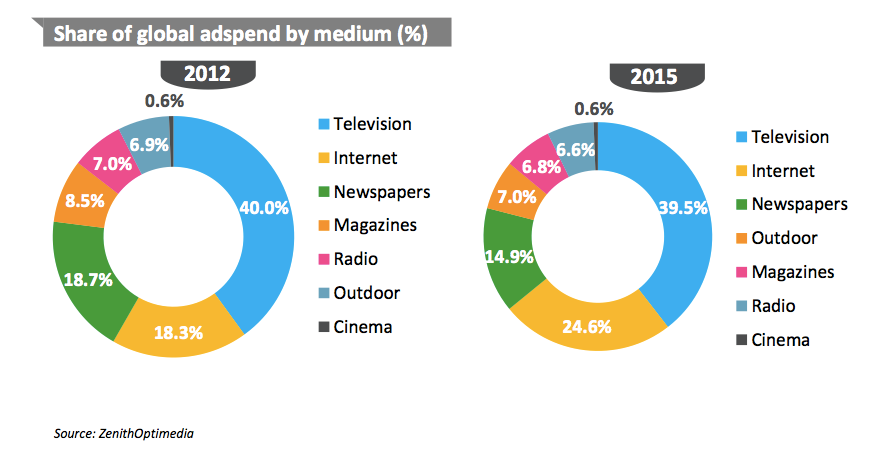
The focus of media planning is shifting in favor of digital media (source: http://techcabal.com/2015/02/26/digitaltrends2014forecast2015).Special features of digital media unclearHowever, many brand managers are unclear about the unique contribution that digital media and digital technologies can make to digital branding. Consequence:► Many brands in digital media do not correspond to the brand image from the offline world. This confuses customers.► Many customers cannot find the information they are looking for. Many pages are interchangeable and boring. As a result, visitors only stay for a short time.► Conversations with customers do not take place, although this would be perfectly possible in digital media.► There are hardly any brand experiences (digital brand experiences). Yet these are so important for differentiating brands from others and retaining customers in the long term.► Many brands fail due to cultural differences: How does branded chocolate sell in China? How do branded cars sell in Korea? Why do people love sports shoes in Africa? Companies waste billions of dollars every year because they don't adapt their brands to other cultures.► Facebook and Twitter are widespread and popular here - but not in other parts of the world. There, on the other hand, there are other networks with different ways of interacting with each other.► Companies are helpless when users around the world join forces and boycott brands: Greenpeace attacked Nestlé on social networks to protest against the destruction of orangutan habitats due to the cultivation of palm oil plants for KitKat production.Summarizing the mistakes, the following main points can be identified:► Providers think too much from the brand perspective: They transfer traditional advertising to digital media without considering its special features. Such offers do not provide any added value and are therefore not attractive. They just repeat what everyone already knows. However, other media, such as television and radio, have only prevailed because they had something new to offer!► The providers think too much in terms of the Internet: They tease out the technology, but the brand comes up short - the brand image conveyed does not match the one that users are familiar with from traditional advertising. One example is the Edeka advertisement on YouTube, which is entertaining but does not match the Edeka brand. This weakens the brand essence more than it strengthens it.Key questions for digital brand managementAlthough there are many insights into traditional brand management, there is still a lot of conjecture rather than extensive knowledge about digital brand management. Anyone who wants to be successful in digital media in the future should answer the following key questions:► What are the special features of digital media on the internet, cell phones, smartphones and other digital media? How do digital technologies such as augmented reality, virtual reality, Bluetooth and QR codes make a unique contribution?► How can these special features be fully exploited as potential?► How can brand experiences be created and continuously developed?► What unique contribution do they make to increasing brand value and therefore also company value? How will digital brand management develop in the coming years? We offer visitors a unique experience. They experience with us what they cannot experience elsewhere. They meet people they wouldn't otherwise meet. They feel what they would otherwise not feel. They experience what they would not otherwise experience. six-part series offers the following topics:1. how to make the most of the special features of digital brand management2. how intensive shopping experiences can be created in eCommerce3. How brands can be experienced through all the senses - multi-sensory technology in digital media4. Digital brand storytelling: How the computer tells exciting stories5. Brand management in social media: Do users even want brands in social media? 6. Mobile brand management: digital brand management in situations