Show attitude
"Purpose" is more than just a buzzword, and companies would do well to live out their purpose rather than just talk about it.


Purpose is more than just a short-term fad. Marketing plays a central role in identifying and communicating a company’s purpose and highlighting its relevance. In my opinion, this only works if the company truly lives up to its claims. Purpose-driven marketing is therefore a matter of credibility.
Purpose is about the big picture. A company’s purpose forms the foundation of its values, from which both its business objectives and its products and services are derived, and which guides the entire corporate culture. Ideally, a company’s purpose is reflected in every single action taken by the company and its employees. But this also means that companies that do not consciously engage with their purpose will not be able to champion any purpose at all. That’s why it’s essential to start with yourself and ask: What do I actually stand for? How can I incorporate and reflect the values I stand for in my products and communications?.
Purpose is worth it
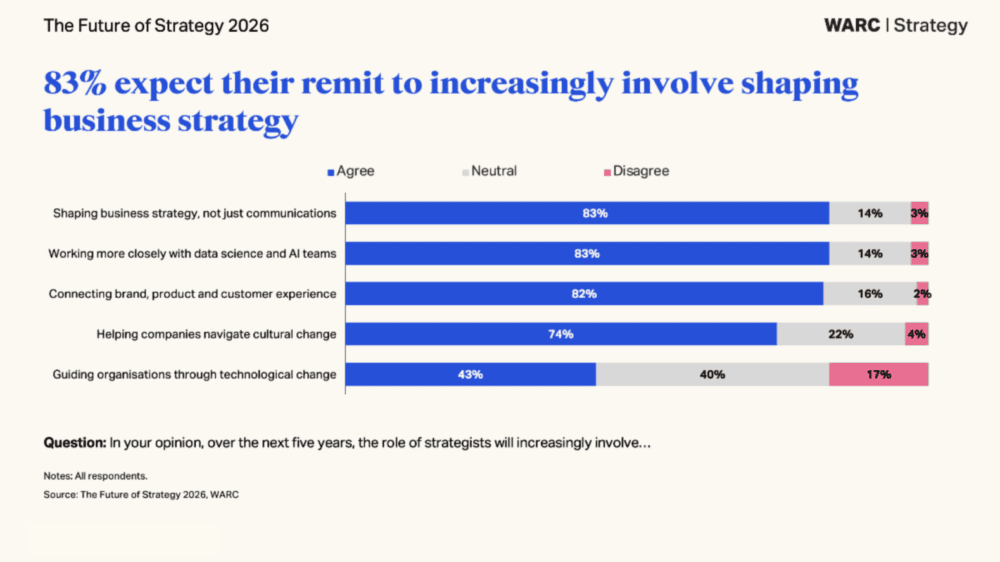
For economic reasons alone, companies should give this topic serious consideration. A study by the Organization of Advertisers in the German Brand Association (OWM) and Different, published in 2020, demonstrated that this effort is worthwhile. The study showed that purpose is not an aspect that interests only a small group of consumers. Rather, the entire spectrum of society is becoming increasingly interested in it: 60 percent of all consumers—across all socioeconomic groups—stated that they try to make purpose-driven purchasing decisions. Furthermore, a clear correlation was established between purpose and revenue. In addition, 51 percent of respondents said they were willing to spend more money on «good» consumption. So purpose pays off. In purpose-driven marketing, this raises some very fundamental questions: What does our product stand for, what do we stand for as a company, and where are we headed? Purpose-driven marketing, therefore, cannot be viewed in isolation from the company’s purpose. The two go hand in hand. This is precisely why the topic of diversity plays such an important role in the discourse on purpose, because purpose affects all employees equally. In other words: purpose-driven marketing must, to a certain extent, always be diverse as well.
Today, purpose-driven marketing is evident, on the one hand, in the way marketing is tailored to diverse customer groups—as seen, for example, in the case of Dove, whose campaigns consistently reflect the reality of its customers. On the other hand, it involves the people who develop the products or the marketing strategies; they, too, must be driven by a sense of purpose.
Customers are increasingly driven by political considerations and values in their purchasing decisions. This also means that the more diversity becomes the norm in society, the more naturally people think, act, and consume. As a result, the specific term “purpose marketing” will become obsolete in the future.
Tijen Onaran writes columns for m&k. She is the CEO of Global Digital Women and the author of the Mirror-Bestsellers *«Only Those Who Are Visible Are Taken Seriously»* and was named one of the ten most influential people on LinkedIn in 2020. Her areas of focus: diversity and inclusion.