Upper Engadin mountain railroads launch a unique pricing model in the Alps
In Zurich, the Upper Engadin mountain railroads presented their new, dynamic pricing model. Prices vary from day to day, starting at 45 francs and are open at the top.



"There has been a lot of talk about dynamic pricing in the past - but we are the first to apply it consistently," said Markus Meili, CEO of Engadin St. Moritz Mountains, to invited media representatives on Tuesday. Consistent means: from September, prices in the Upper Engadine will be determined completely and dynamically by flexible factors, and fixed prices for day and multi-day tickets will soon be a thing of the past. The prices will be determined by the time of booking, the number of guests who want to buy a ski pass on a specific day and the basic price, which is set individually for each day based on last year's experience.

In other words: the earlier the booking and the lower the number of guests, the lower the price. This starts at CHF 45 on less popular days and increases the more guests decide to book on the day in question - and the longer you wait before booking. Up to 15 days before the redemption date, guests benefit from a 30 percent early booking discount.
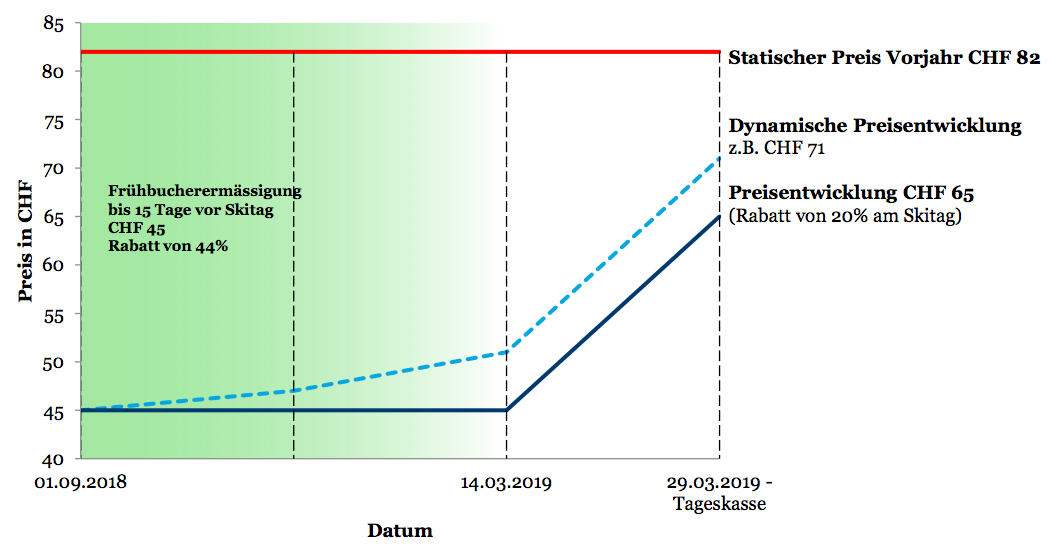
Example 1 shows a day that usually attracts rather few people to the slopes: March 29. If you book on September 1 - before everyone else - you benefit from a 44 percent discount compared to the previous year's price of CHF 82. The early booking discount remains unchanged until March 14, but the price change due to increasing demand will have an impact on prices before then:
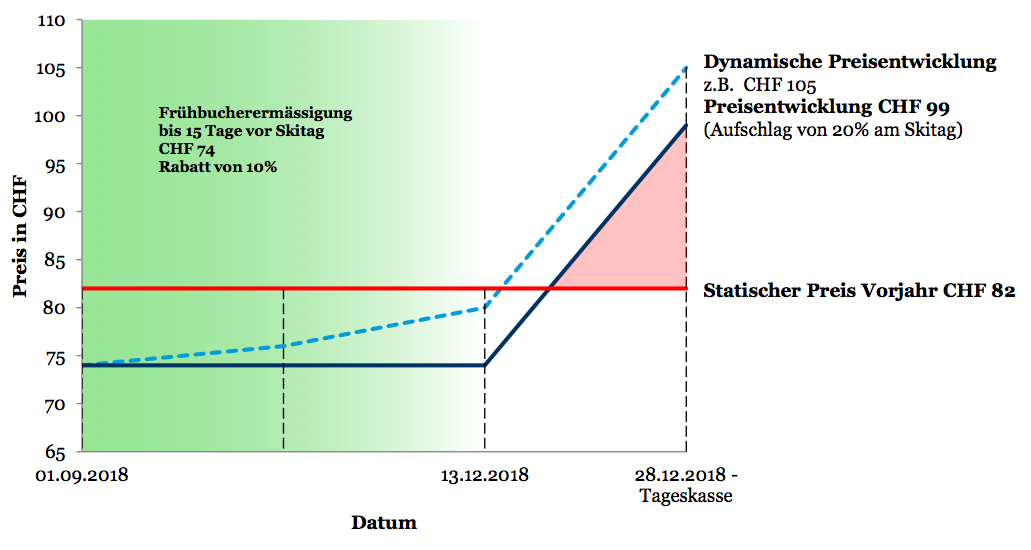
Example 2 shows one of the most popular days of the year - December 28. Here the entry price is higher, the savings potential lower. And if you miss the right time to book, you may end up paying considerably more for a day ticket than last year. Based on experience, those responsible assume that this could mean up to 105 francs for the ticket on peak days. At the moment, however, nobody knows how high the prices will actually go in the end - the price model is completely dynamic towards the top and is not "capped" by an upper limit. But if you book early enough, you can travel cheaper than last year, even on the top days.
In contrast to other destinations that include the weather in their dynamic pricing models - such as Andermatt-Sedrun -In the Upper Engadine, we are sticking to these factors. "We don't want to punish fair-weather skiers, but reward early bookers," says Markus Meili.
Increasing capacity utilization instead of a discount battle
The new price model is intended to respond to the overall decline in the number of ski days and extremely short-term, weather- and supply-dependent demand. The aim is to increase the number of ski days sold and thus also turnover, and to improve capacity utilization at the ski resorts over the season. And all this at an average price per ski day that remains the same. On peak days, the model could lead to less pressure on the slopes. "Dynamization has nothing to do with lowering prices," says Thomas Walther, hotelier and Vice President of Engadin St. Moritz Mountains. This is the big difference to the discount battles that some resorts have relied on in recent years: "They don't generate loyal customers and are ruinous". The price model is a response to guests' increasing need for flexibility - for example, if they are not tied to family vacations and want to benefit from this.
High need for explanation and training
The price model is called the "Snow Deal". In an initial phase, communication will focus primarily on internal measures in the ski resorts, as the innovation requires a great deal of explanation and training. At a later stage, a campaign will be launched to familiarize the general public with how dynamic pricing works. The aim is to prevent guests from being surprised (and dismayed) when they stand in front of the ticket office over the New Year and marvel at the high prices. Incidentally, the final price is set the evening before and does not change the following day.
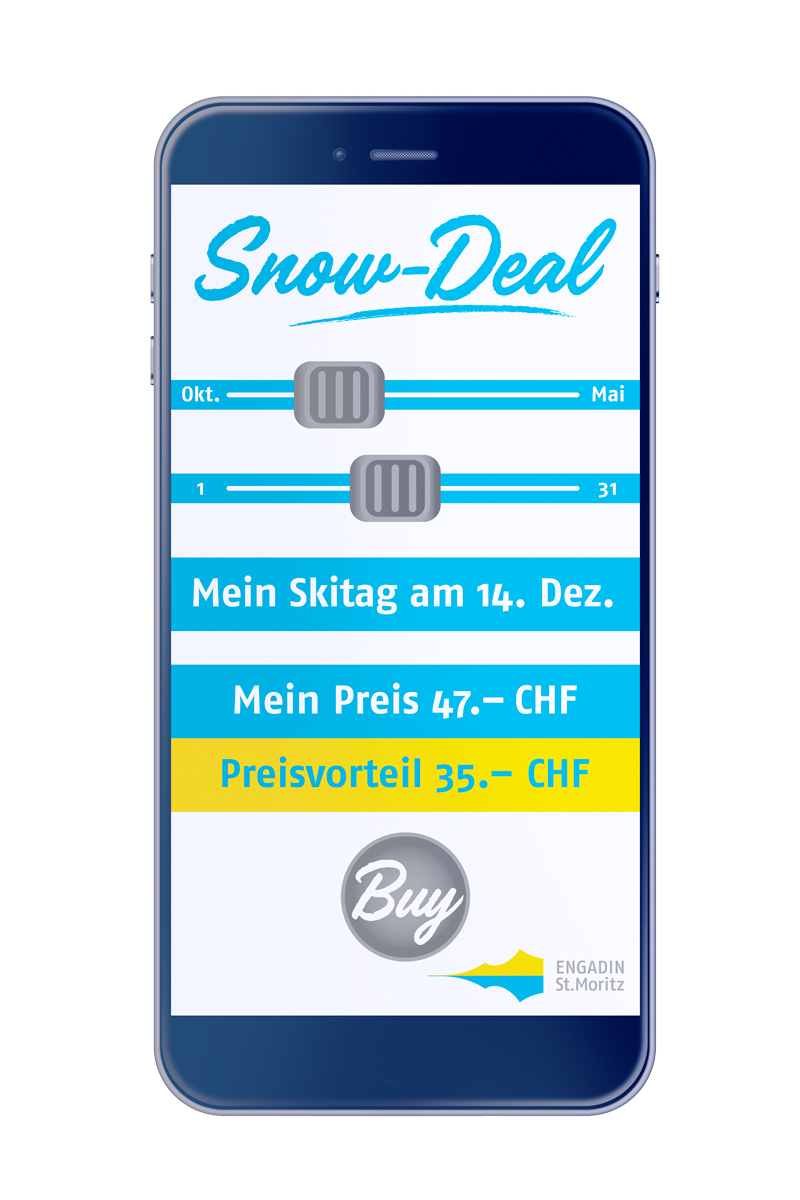
Bookings should be made online via a simple, clear web store: Using a slider, guests can change the price of their ticket in real time. The application has not yet been fully developed, but should be ready by the start of booking on September 1, 2018 at the latest. Tickets can still be purchased at the ticket office, the currently known points of sale and via additional platforms. (hae)