Of children and coke
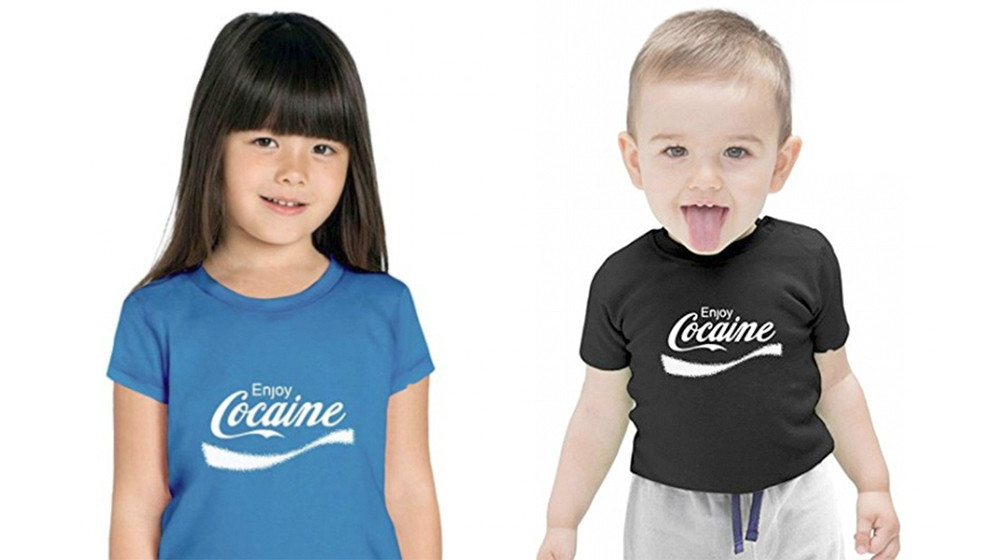
Amazon once again had to endure a shitstorm. Reason: cocaine-glorifying children's shirts on offer.


The assortment of Amazon, the world's leading online retailer, is so large today that the constant product failures are not surprising. Time and again, the giant comes under fire because users spot questionable items that third-party retailers sell via the platform. Presumably in the assumption that Amazon checks each item individually before it is included in the system. In the past, for example, the platform has increasingly come under fire because Nazi-glorifying articles were available for purchase.
To put this in perspective: In January 2017, Amazon sold 229 million (!) products. And today, it is likely to be even more. In other words, as long as no one complains, Amazon usually has no idea who is selling what under the "Amazon" label. And as long as no one complains and the money keeps rolling in, the platform doesn't care.
The latest faux pas: children's fashion that isn't even funny in adult size. "Enjoy Cocaine" is written on the T-shirts - based on the Coca-Cola claim "Enjoy Coke". Changing well-known brand logos in an original way (such as "Adihash" or "Würger King") was a popular T-shirt joke in the 90s - and has since rightfully disappeared from the scene.
A British customer uncovered the more than questionable children's clothes and made them public via Twitter. Whereupon the media - among others The Sun and The Telegraph - took up the story. Amazon UK immediately backed down and removed the disputed products from its sales program. The explanation from Amazon: "All Marketplace sellers must follow our selling guidelines. Those who don't will face action - including possible removal of their account. The products in question are no longer available."
However, many users are annoyed that Amazon only ever reacts when complaints are received. Instead of taking action and not even including questionable products in the assortment. However, this pious wish is simply not compatible with a product range in the hundreds of millions. (hae)