
An independent media genre
The challenges surrounding mobile technology will shape 2012.


The industry experts surveyed by Werbewoche agree: 2012 will see significantly more mobile-optimized campaigns with more interactivity, and content offerings will also adapt to the special requirements of this new distribution channel. The forecast that mobile will dominate the year is therefore obvious. The associated challenges are considerable, as mobile is not simply online for on the go, but represents a media genre in its own right.
Ever since Apple launched the iPhone in 2007, the smartphone boom has been omnipresent. Mr. and Mrs. Swiss are among the world leaders: while only 25% of Swiss people surfed the Internet on their cell phones in 2010, this figure had risen to 44% by 2011, as documented by the Y&R Group's Media Usage Index study last September. The study even confirmed that the Swiss set a world record for iPhones: 35% of Swiss people own an iPhone. Many more have purchased a mobile companion with the Android operating system. Added to this are tablets, which account for 13% of the Swiss population. The forecast is therefore easy to make here too, especially as it already seems to have been fulfilled in many circles: more than half of the Swiss will own a mobile device this year, which is primarily a powerful multimedia machine that can be used to make phone calls as well as many other things. This has created new opportunities for media consumption and thus new markets for advertising and content, which are only just beginning to be exploited commercially.
Publishers are particularly pleased: thanks to mobile, online usage has increased in the morning, in the evening and at weekends. According to Chris Öhlund, Head of Digital Media at the Blick Group, mobile media usage accounts for just under ten percent of total usage time, while Stefano Buzzi, Head of Advertising Market at Newsnet, speaks of a share of mobile traffic (visits, all mobile devices except iPad) of over 30 percent. Mobile is therefore good for business, as Marc Lottenbach, Publishing Director Online & New Media at 20 Minuten, confirms: "Advertising sales have increased by a high double-digit percentage. I expect further growth in 2012." NZZ has a similar view: "Thanks to the introduction of new advertising opportunities in our iPhone app, we were more than satisfied with the result in 2011," says Remo Baumeler, Head of Advertising Market NZZ Network. Although traffic has increased significantly, all publisher representatives report stable prices for mobile advertising, and there are still no signs of a price war. Mobile has decisive advantages as an advertising channel: Advertising reaches users in a personal environment. And because there is usually only one advertiser per page, the attention paid to mobile advertising is very high. "Click rates of up to 20 percent are not uncommon with mobile," reports Chris Öhlund from Blick. This is particularly impressive when compared with advertising efficiency on the web, where click rates above 0.5 percent are already considered a success. Michael Baum, Managing Director of Stailamedia AG, predicts that the market for mobile advertising will be driven in particular by the promotion of new applications this year. This is because the competition for apps is strong, and those who want their application to appear in the top charts will rely primarily on performance advertising on a click basis.
And anyone who wonders why mobile advertising hasn't been a big hit for a long time will soon come up against tricky problems that in many cases require a strategic response. Even on PCs, different versions of a website have to be created for different screen sizes and browser versions, at least in detail. Web designers and developers have been able to solve this problem to some extent, but with the advent of mobile devices, this challenge has multiplied and it is hardly possible to build a customized version of a website for every device. This is why there are new concepts known as "Responsive Web Design", with which websites can always be optimally displayed on the screens of small smartphones as well as large imposing screens in the office. But for this to work, websites need to be rebuilt from the ground up. If you don't take a systematic approach here in good time, you may be able to celebrate a quick success (with an isolated app, for example), but will soon find yourself faced with a costly mess (which external service providers can feast on financially). This explains why hardly any advertisers are yet present with their own offerings on mobile and why this new channel is only modestly booked. Not only individual companies, but the entire industry still has a lot to learn here. And so it will still take some time before not only a campaign can be launched on mobile, but also landing pages are available (for example, to process orders via an e-commerce system). This more technical problem is just one of many hurdles that mobile practitioners are confronted with and which require fundamental answers:
- The creative possibilities are limited on small screens and the bandwidths are narrower. It will be exciting to see how advertisers react to this challenge. The experts surveyed by Werbewoche expect mobile-optimized campaigns with more interactivity to increase.
- Content producers must learn to gear their offerings more towards the characteristics of mobile. This is not just about technical aspects, but above all about the special usage situation, as small snippets of information are often consumed rather than longer formats.
- The technical infrastructure for mobile will continue to grow strongly. This involves both simple booking processes and powerful ad servers.
- There is a lack of market figures that can be used to record and assess the mobile trend. But even the internal analytics tools are not yet geared towards mobile everywhere - or the figures collected with them are not yet evaluated in depth everywhere. If even basic data on mobile is missing, it is not surprising that more thorough and complicated data for precise targeting is also in short supply. One mobile insider complains that it is often not even possible to assign a user's gender.
Advertising networks for mobile are only just getting into position. It is still unclear which are the dominant players and which offers, such as real-time bidding, will make the breakthrough in the Swiss advertising market and when.
There are other mobile-related trends that could gain in importance at any time. These include: location-based mobile services (LBS), mobile search, mobile social and cheap eReaders as another device category alongside smartphones and tablets. Christoph J. Walther
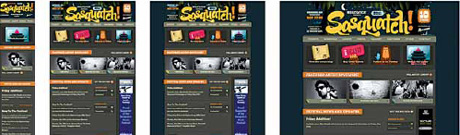
Today, websites have to work on very small and very large screens without causing costly duplication in production. There are solutions for this, but they cannot be implemented from one day to the next. It will therefore be some time before all websites are fully mobile-compatible.
In the coming issues, Werbewoche will follow the developments surrounding mobile advertising in Switzerland and examine various aspects in greater depth.


