DMEXCO 2026 AI: Now It's Time for the Industry to Deliver
Four years after the start of the generative AI boom, DMEXCO 2026 will be held under the theme «Scaling Intelligence.» In an interview with m&k, host Verena Gründel explains why AI-driven value creation requires more than just pilot projects—and why trust is becoming the hardest currency in marketing.


DMEXCO 2026 AI: From Experiment to Measurable Value Creation
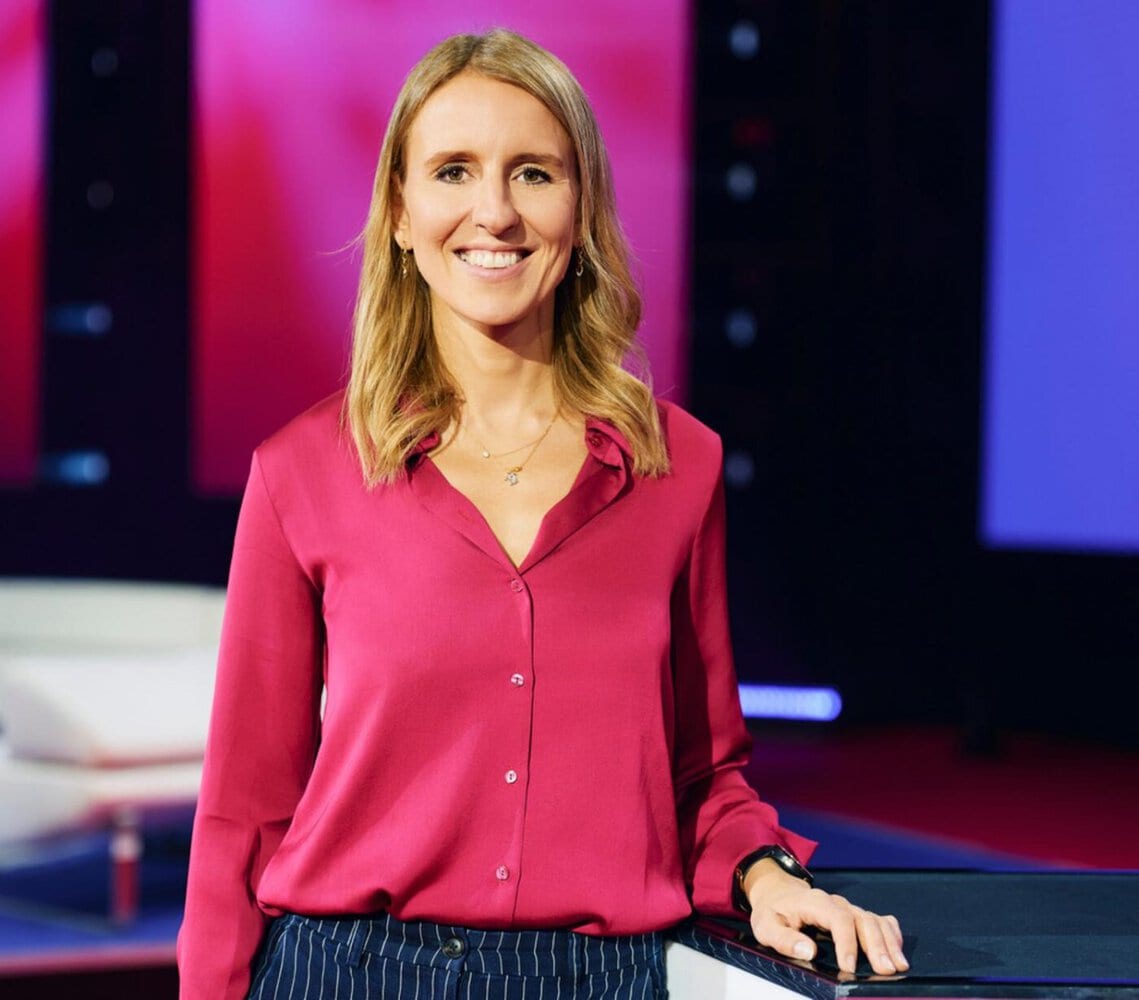
Artificial intelligence will be an unavoidable topic at DMEXCO 2026 as well. Under the motto «Scaling Intelligence,» the event in Cologne on September 23 and 24 will focus on a question that is becoming increasingly critical for companies: How can AI be moved beyond the experimental phase and integrated into processes, business models, and value creation in a way that generates measurable benefits? Verena Gründel, Director of Brand & Communications and host of the event, has a clear assessment of the situation—and explains in an interview with m&k why the industry must now prove that technological possibilities can indeed lead to viable business models.
The program reflects this trend through eleven thematic summits. Topics to be discussed include agentic media buying, identity solutions, autonomous marketing, AI commerce, new agency models, cultural brand management, and AI-powered films. Dedicated sessions will focus on creativity, content authenticity, connected TV, and the future of strong brands. Announced guests include Sir Martin Sorrell, WPP Chief AI Officer Daniel Hulme, Criteo CEO Michael Komasinski, Telekom Chief Brand Officer Ulrich Klenke, and Douglas CEO Rik Strubel.
Twelve percent—a figure that kept the creators on their toes
What observation led to the choice of this motto? For Gründel, it was a specific figure: According to a PwC study, just 12 percent of companies worldwide manage to simultaneously increase revenue and reduce costs through AI—and that’s after years of billions in investments and countless pilot projects. «Now, all companies must finally derive a measurable benefit from this. And because neither humans nor machines can do this alone, we deliberately chose not to call the theme »Scaling Artificial Intelligence,’ but rather ‘Scaling Intelligence,’” says Gründel.
In her view, whether a company is actually scaling AI or merely launching new pilot projects can be determined by four interrelated competencies: whether AI delivers real efficiency gains, whether it enables better decisions, whether it unlocks new revenue potential—and whether it generates new business models. Some companies have already reached the first two stages; the third and fourth are «the supreme disciplines,» in which there is still a great deal of long-term potential.
Marketing and Sales Are Leading the Way—But the Data Infrastructure Is Lagging Behind
How is the industry faring in terms of readiness? According to a McKinsey study, marketing and sales are leading the way in AI adoption, right behind IT and software development. Nevertheless, Gründel warns against overly high expectations: «AI—even if some would like it to be—is not a shortcut to digital transformation. In many cases, the data infrastructure and processes aren’t ready yet.» He adds that it’s at least as important to make AI a management priority, assign responsibilities, and think in terms of solutions rather than technology.
Gründel observes a common misconception on both sides: Companies overestimate AI when they believe the technology can compensate for a lack of strategy, poor data, or inefficient processes. Those dealing with unstructured data or unclear responsibilities are more likely to scale these problems up rather than solve them. At the same time, many underestimate the long-term potential and the pace at which other companies are already integrating AI.
According to Gründel, business models that «rely on volume rather than substance»—pure content production, interchangeable agency services, and opaque intermediaries in the programmatic business—are coming under particular pressure. Conversely, what cannot be automated—trust, attitude, judgment, cultural understanding, or a strong brand—will become more valuable.
DMEXCO 2026 AI: Trust as a Key Economic Indicator
The issue of trust will take center stage at DMEXCO 2026. Gründel describes the transition from the Attention Economy to the Trust Economy: «For years, we’ve been optimizing for reach. But today, anyone can buy that. In the future, what will matter is whether people trust a brand.» An analysis by effectiveness expert Peter Field, based on the IPA database, shows that trust is the second most important brand metric for profitable growth after perceived quality. Furthermore, large language models also benefit brands with a trustworthy reputation. «This is how trust is evolving from a soft image metric to a hard economic metric,» says Gründel.
This trend reinforces the «zero-click» reality, in which AI search engines are increasingly answering questions directly without requiring a click to a brand’s website. In the future, companies will need to be not only visible to people but also understandable, trustworthy, and citable by AI systems. Gründel’s conclusion: «Brand is the new SEO.» Those deemed trustworthy will also be recommended by AI. At the same time, she warns: If AI answers replace clicks without providing any value in return, this jeopardizes the business model of the open internet—and thus also the knowledge base of the AI systems themselves. DMEXCO is therefore also addressing the topic of digital sovereignty and the future of the open internet.
Creativity and brand management remain key
To ensure that AI topics do not overshadow other disciplines, the decision was made not to treat AI as an isolated pillar. Rather, it is «like a layer of content that overlays all disciplines.» Formats such as the CMO Summit, the Creativity Summit, the Next Agency Summit, and the Creators‘ Summit deliberately provide a space for creative strategy, brand management, and trust. At the CMO Summit, for example, Margot Edelman will speak about trust and reputation; her firm, Edelman, publishes the annual Trust Barometer.
In the agency business, Gründel has already observed «quite a few players who have taken a very strategic approach to AI from the very beginning» and are growing as a result. In the future, anything that AI can reproduce cheaply—such as standard texts, generic campaign implementation, pure execution, and adaptation—will become harder to sell. In contrast, strategic judgment, cultural understanding, original ideas—and the ability to critically evaluate AI output—will become more valuable.
Commerce, European AI, and What Makes Cologne Special
With its expanded «World of Commerce,» DMEXCO is moving closer to concrete business opportunities and applications. A study by the agency Serviceplan shows that 63 percent of CMOs ranked e-commerce, social commerce, and connected commerce among the most important topics for 2026. The AdTech Summit will focus on agentic media buying and identity solutions—and thus on the question of whether systems can independently reallocate budgets and prepare purchasing processes, and how much human oversight is still required in the process.
For the European AI ecosystem, Gründel is counting on a well-functioning pan-European network of startups, research institutions, user companies, and investors, as well as an openness to innovation. «»AI made in Europe’ can become a seal of quality if we work on it together and with this openness,” she is convinced.
When asked what DMEXCO 2026 offers visitors from Switzerland that they wouldn’t find elsewhere, Gründel replies: No other event captures the complexity of the industry on such a broad scale—«with a clear focus on the needs of decision-makers, on closing deals, and on real business in digital marketing, tech, and commerce.» And: «Plus, we’re the only ones where you can raise a glass of real Kölsch in the evening.»
For more information about DMEXCO 2026 and the agenda: https://dmexco.com