Nescafé Concentrate: Cold Coffee, Hot Plot
From the Seine to the Sihl: Following its grand debut at the Eiffel Tower, Nestlé is now bringing Nescafé Espresso Concentrate to Switzerland. Here of all places—in the land of fully automatic coffee machines, coffee capsules, and high standards for coffee—«cold coffee» is set to become the next big Nescafé moment.


In Switzerland, "cold coffee" sounds like something from yesterday. Like leftovers in a cup. Like something you'd be better off not serving anymore.
Nestlé sees it differently.
For the company, cold coffee is suddenly no longer old hat, but a new market. Not a stale drink, but a lifestyle statement. Not just emergency coffee for camping, military service, or mountain huts, but a TikTok-worthy gateway to a young generation that no longer necessarily drinks coffee hot, black, and in the morning—but cold, mixed, and at any time.
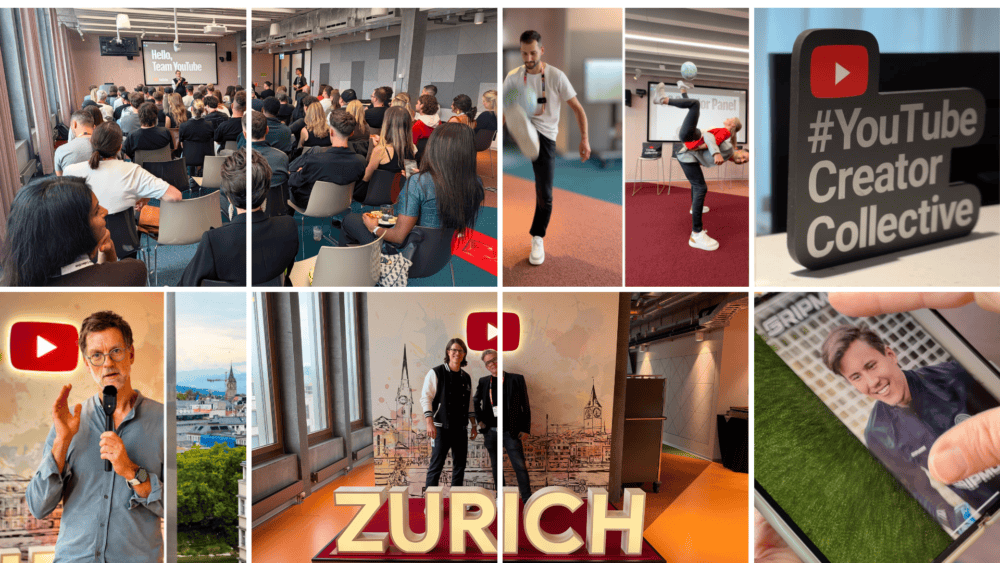
Following the launch in Paris, high up in the symbolic shadow of the Eiffel Tower, the next stop was on the Sihl River—at the Helvetia Pool Bar near Stauffacher. Less “Grande Nation,” more Helvetia. Less spectacle, more strategic test market.
But perhaps that’s exactly what makes it so exciting. Because if Nescafé Espresso Concentrate is going to succeed in Switzerland, it will have to do so in a country that loves coffee—but has never really developed a passion for instant coffee.
A Coffee-Loving Nation with a Capsule Craze
Switzerland consistently ranks among the world's top countries in terms of per capita consumption. At the same time, a large portion of the global coffee trade passes through Switzerland. Added to this is the enormous international significance of Nescafé and Nespresso as global brand powerhouses.
And yet, instant coffee has long struggled to gain a foothold in this country.
Swiss coffee culture loves fully automatic machines, portafilter machines, barista rituals, and capsule systems. Nescafé was often more associated with campgrounds, military service, or mountain huts than with an urban lifestyle statement.
That is exactly why this launch is strategically interesting and important for Nestlé.
With Espresso Concentrate, the company isn’t simply trying to sell a new product. Rather, the goal is to culturally revitalize the Nescafé brand—and align it with a consumer experience that has, until now, been more associated with Starbucks, TikTok, and urban coffee shops.
When Cold Coffee Is Served Hot
This contradiction runs like a common thread through the entire morning.
«The hottest beverage trend right now is cold coffee,» Nestlé states—almost provocatively—in its materials. And indeed, the numbers speak for themselves.
Worldwide, one in three coffee drinks served in coffee shops is now consumed cold. According to Nestlé, 11 percent of people in Switzerland already drink their coffee cold. Among those under 35, that figure rises to as high as 30 percent.

Guillaume Savoy, Head of Coffee at Nestlé Switzerland, puts it even more bluntly. For many young consumers, cold coffee is no longer a niche product but a part of everyday life.
At major international coffee shop chains, up to 75 percent of all coffee drinks are now ordered cold.
Or to put it another way: The younger generation is increasingly drinking coffee as if it were a soft drink.

Coffee Hacks, Ice Cube Style
That's exactly where the new product comes in.
Espresso Concentrate is simple to use: two tablespoons of concentrate, ice cubes, milk—and your iced latte is ready. No machine. No portafilter. No barista training.
What matters most here is not so much the recipe as the cultural logic behind it.
Coffee is going modular. Mixable. Customizable. TikTok-friendly.

Savoy explicitly refers to «coffee hacks» that are circulating by the millions on social media. Espresso martinis, tonic coffee, affogato, milkshakes, or caramelized cold coffee variations: coffee is becoming a subject of content.
And that is exactly why influencer marketing plays a central role in this launch.
Nestlé doesn't want to simply explain the product. It wants to let people see it for themselves.
Paris is followed by Zurich. Then comes the Montreux Jazz Festival. Creators are expected to demonstrate how to use the product. The influencers essentially become the brand’s user manual.
That's remarkable. Because it also shifts the role of traditional advertising.
Branding on the Rocks
Of course, Nestlé continues to focus on traditional visibility.
Out-of-home campaigns, tastings, product sampling, and special formats are also part of the strategy. Savoy even mentions advertising formats that Nescafé has never implemented before.
The fact that Cédric Böhm, CEO of Nestlé Switzerland, was personally present at the event and kicked off the launch alongside Guillaume Savoy further underscored the importance the company attaches to this initiative internally. That morning was not simply about adding another product variant to the shelves, but about a strategic future market within the global coffee business.
The more intriguing question, however, runs deeper.
What happens to a brand like Nescafé when it suddenly no longer stands primarily for a quick morning coffee, but rather for creative lifestyle moments?

Cédric Böhm, CEO of Nestlé Switzerland, talks about exactly that. For him, the product opens up «a whole new dimension» for the brand. The goal is to create a new «Nescafé moment.».
And Böhm made another key point: «Coffee was, is, and will remain a core strategic business for Nestlé.» That is precisely why it is crucial to be an early mover in new consumption trends—especially when the habits of a younger generation are undergoing fundamental changes.
That sounds like a marketing cliché. But it's highly relevant from a strategic standpoint.
After all, global brands thrive on constantly reinventing themselves culturally—especially when generations change their consumption habits.
From the field cup to the feed
And here is the slightly revised copytext:
From a historical perspective, that's almost ironic.
Nescafé once became a symbol of durability and efficiency. In Switzerland, instant coffee was long more closely associated with camping stoves, military service, and quick caffeine breaks throughout the day than with urban lifestyle rituals. It fit perfectly into an industrialized world where speed had become more important than ritual.
Today, that same brand is suddenly trying to embody creativity, individuality, and lifestyle.
The coffee is blended. Filmed. Shared. Staged.

No longer just consumed.
And perhaps that is precisely where the real transformation of this launch lies.
Cold coffee isn't the big innovation. Cold brew, frappé, and shakerato have been around for decades. The real innovation is how Nestlé is trying to turn these terms into a new everyday vocabulary for coffee.
A language that's a better fit for TikTok than for the traditional coffee commercials of the past.
Conclusion: Momentum on Hold
As this morning in Zurich draws to a close, one realization in particular stands out:
With its Espresso Concentrate, Nestlé isn't just trying to add another product to the refrigerated aisle.
Rather, the company is trying to tap into a new consumer trend.
The battle is no longer confined to the supermarket; it’s now taking place on TikTok, in coffee shops, in everyday urban life, and in the minds of a generation that thinks about coffee differently than their parents do.

For Nescafé, that could be the deciding factor.
After all, the greatest threat to established global brands is rarely a lack of brand awareness.
Rather, cultural insignificance.
And perhaps that is precisely why «cold coffee,» of all things, has suddenly become one of the hottest topics in the global coffee market.