
Why Brand and Performance Rarely Go Hand in Hand
A new WARC study identifies eight barriers that prevent CMOs from integrating brand and performance—and outlines concrete ways to bridge the «say-do gap.».


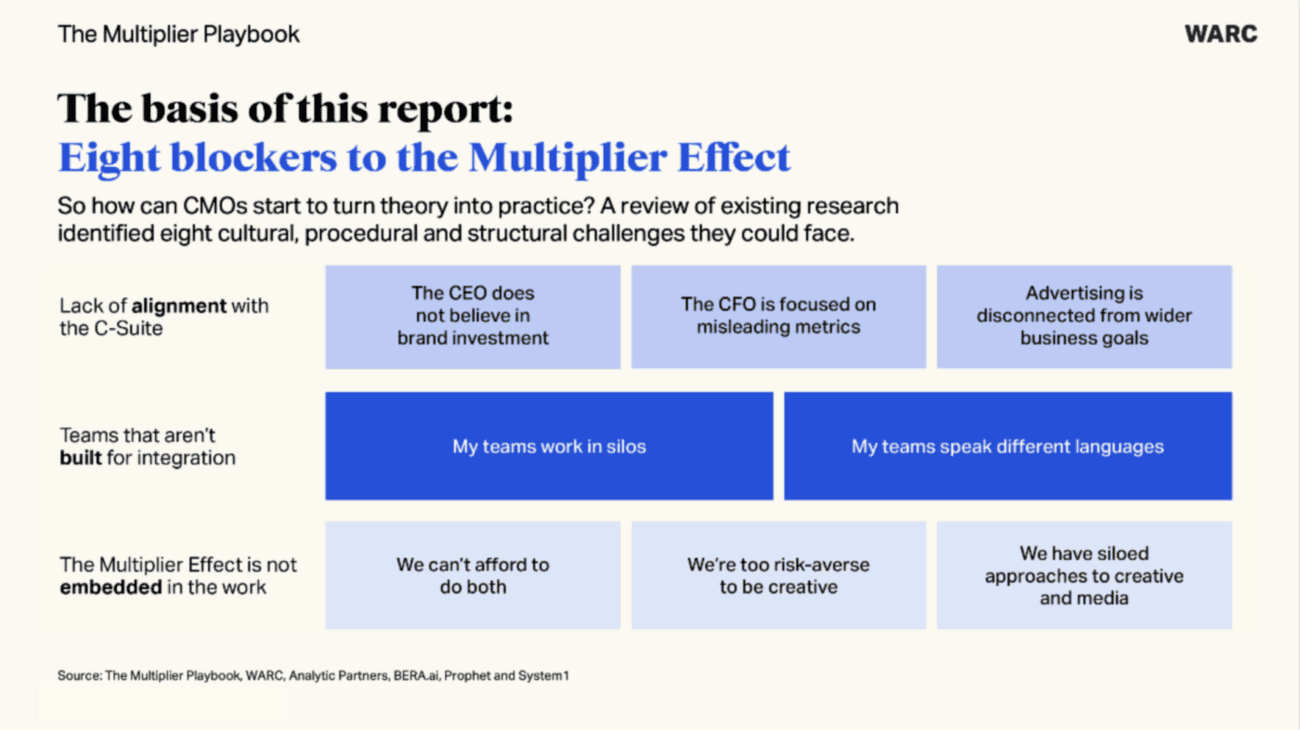
Most marketing professionals are familiar with the theory of advertising effectiveness—but there is a wide gap between knowledge and implementation. This «say-do gap» is the starting point of the new report The Multiplier Playbook, published by Warc in collaboration with Analytic Partners, Bera.ai, Prophet, and System1. The report focuses on why the integration of brand and performance fails in so many organizations—and how CMOs can overcome the biggest obstacles.
Eight Obstacles to Brand and Performance
The report builds on the findings of the study published last year The Multiplier Effect At the time, Analytic Partners used the ROI Genome to demonstrate that brands that shifted from a pure performance approach to a blended strategy combining brand and performance achieved an average uplift of 90 percent in revenue return on investment. Nevertheless, implementation in practice regularly fails due to cultural, procedural, and structural misalignments.
For the Playbook, more than 200 senior marketers were surveyed in a joint study conducted by Warc and the Association of National Advertisers (ANA) between December 2025 and March 2026 in the United States. The results were combined with existing data and frameworks from the partner organizations.
David Tiltman, Chief Content Officer at Warc and SVP of Content at Lions Intelligence, sums it up: «What’s needed is a playbook—a combination of data, frameworks, and real-world examples that help marketing professionals identify the key obstacles and take concrete steps.»
C-suite executives have little understanding of brand and performance
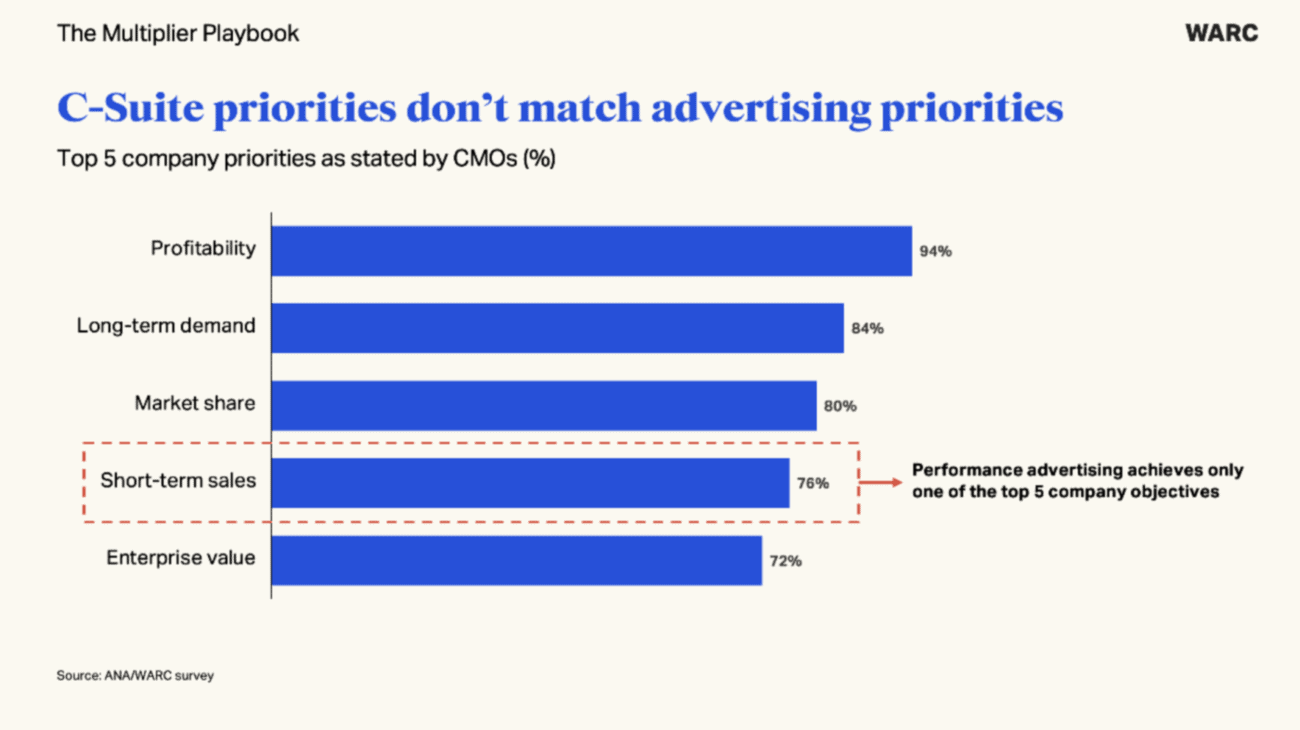
One key finding concerns alignment with senior management. While about two-thirds (67 percent) of the marketers surveyed agree that their CEO considers the brand to be important, However, only 19 percent said that the C-suite regularly demonstrates the connection between brand strength and concrete business results. Even more concerning: Only 21 percent of respondents strongly agreed that their advertising goals are aligned with the C-suite’s objectives.
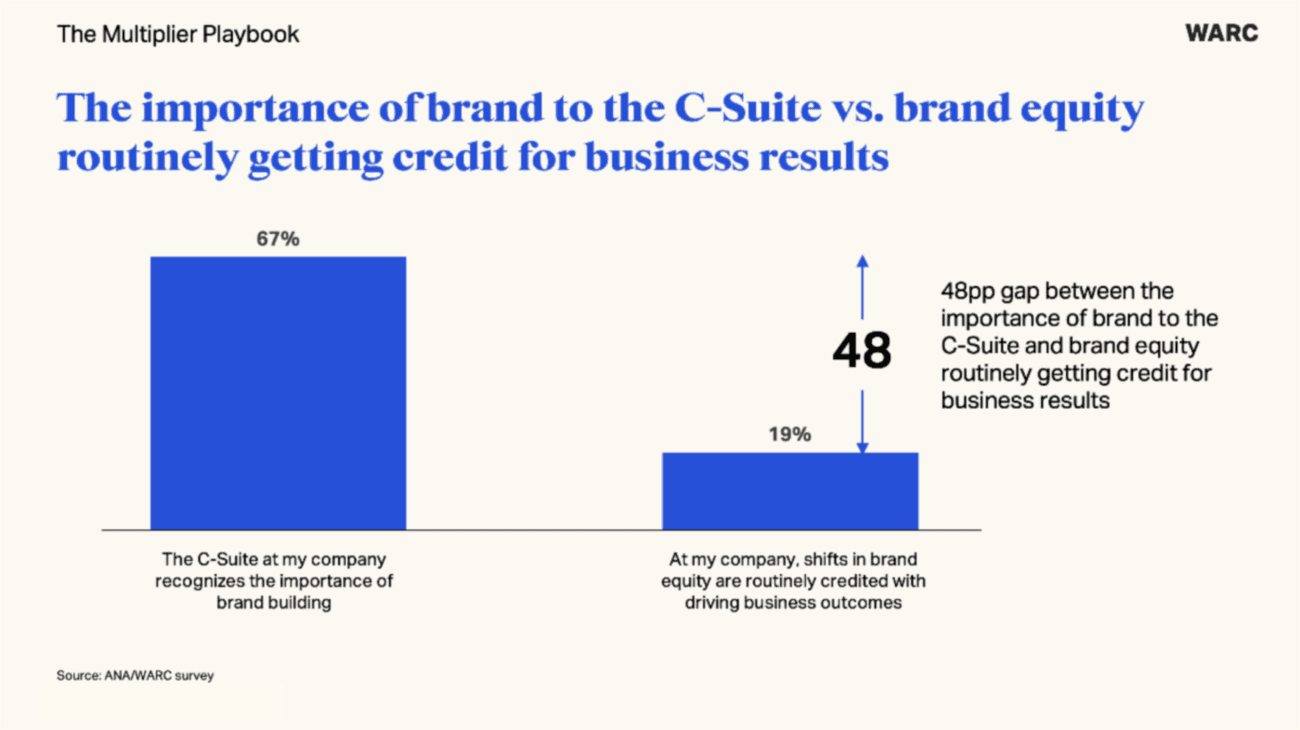
In addition, 60 percent of respondents feel that the C-suite does not fully understand the role of advertising in achieving commercial goals. The report states that the dominance of efficiency-based metrics such as platform-specific ROAS exacerbates this problem. As a result, advertising is viewed as a cost center rather than a value-creating investment.
Silos hinder integrated thinking
The survey also reveals significant structural shortcomings within marketing departments. In 49 percent of the organizations surveyed, brand and performance teams operate separately; only 25 percent have fully integrated teams. 65 percent maintain separate budgets for brand and performance. Only 44 percent of respondents say their teams share a common language or a common understanding of which target audiences offer the greatest growth potential.
The report recommends developing shared goals based on specific behavioral changes among consumers and deliberately creating moments in the annual calendar that require cross-team collaboration. Laura Jones, Chief Marketing Officer at Instacart, is quoted in the report as saying: «We have to »make our own weather.’ We need to create events and campaigns where we’re all rowing in the same direction and getting more out of our collective efforts.”
Creativity as an Underestimated Lever
Another finding from the Playbook concerns the approach to creativity. According to a survey by System1 and Effie Worldwide, 41 percent of marketers view creative advertising strategies as a risk. More than half (52 percent) stated that they do not have sufficient confidence in the effectiveness of advertising. Compounding this issue is the fact that, according to data from Analytic Partners’ ROI Genome, 90 percent of advertising materials are not used long enough to achieve their full impact.
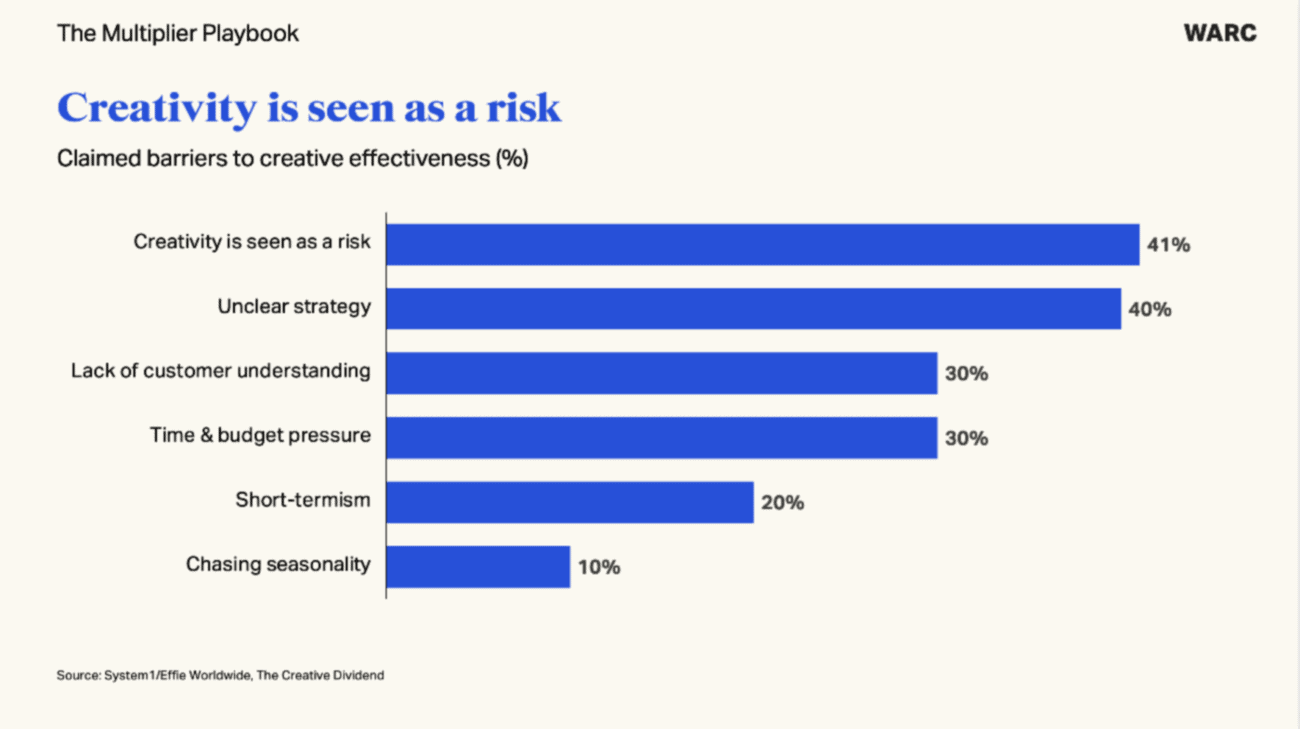
The report recommends a «Fewer, bigger, longer» approach to creation, as well as closer integration of media, creative development, and measurement. To minimize risk, the Playbook proposes a four-tier «Creativity Stack»: Consistency, showmanship, distinctiveness, and emotion. Mike Cessario, founder and CEO of Liquid Death, is quoted in the report as saying that creativity is particularly crucial for smaller brands: «If you’re a small business, it’s literally reckless to play it safe.»
The full report is available free of charge at: https://bit.ly/4eOaWxP
For more information about Warc and its studies, visit www.warc.com.


