"Women negotiate better"
As a negotiation coach, top lawyer, and former HR director, Wies Bratby is dedicated to ensuring—through her WINning program—that women get what they want, what they need, and what they deserve.


m&k: Wies Bratby, the communication framework you developed to coach women in their careers is called the WINning Program. What exactly do women gain from it?
As Bratby said: There’s a story behind the name. Let me back up a bit. About nine years ago, I began to realize that women need help advancing their careers. I’d known this for a while through my work as an HR manager and had heard it from friends, but I’d never really done anything about it. And then one day I woke up and thought: I want to make a serious commitment to supporting women. First, I posted a request on Facebook and asked my female friends if they wanted to learn how to negotiate successfully. Thirty women signed up. So I divided them into different groups and coached them for six weeks. I had just one request as «payment.» I asked them to suggest a better name than «Women In Negotiation,» or WIN for short. I’d come up with that name shortly before my Facebook post, but I didn’t particularly like it. Then, six weeks later, they said, “No, we love it—WIN should stay.” They were referring to both the name and the program. So I had to make a decision: Either I really launch this venture, or I’ll let my dream slip away and stay in my job. I was afraid of starting my own business.
What exactly scared you?
I thought: Me? Start my own business? No way! My brother—he’s an entrepreneur. Other people can do that: start a business and make it a success. Not me. I was a lawyer and an HR manager; I worked for companies. But then I realized that no one else was supporting women in their careers this way. So I had to start the company myself, even though I have two young children at the international school, a mortgage, and lots of other expenses (laughs).
You've been successful with WIN for years now. You say that standing up for yourself is a life skill that anyone can learn and that changes your life. Could you be a little more specific?
Successfully standing up for the things you want, need, and deserve is a skill, not an innate talent that some people have and others don't. You can learn it, just like you can learn any other skill. And yes, it will absolutely change your life if you master it!
How do you help the women who participate in your program?
Well, in two ways: I give them the tools they need to steer their careers and negotiate on their own behalf. And I help them develop the mindset that allows them to set high goals and have big dreams. That mindset—their attitude toward their career—is what really matters.
How do you define "mindset"?
Many women struggle with their self-esteem and don’t believe they are capable of achieving great things. They set their career goals too low. My special skill lies in recognizing people’s potential. And more importantly, I know how to help them see it for themselves and truly make it their own. I’m good at unlocking their potential so they can fully realize what they’re capable of achieving in this world. Only when they truly embrace this will they continue to grow. Only then will they dare to switch to a different industry or apply for the position that’s two levels above their current title. Do you just want a little more money? Do you just want a small raise? Of course, I can help you with that. And there’s nothing wrong with that. But there’s so much more that’s possible …

Why do women actually need negotiation coaching?
Well, it’s no harder for women to negotiate than it is for men. Research shows that, on average, women are better negotiators than men. But only when they’re negotiating on behalf of or for others: for their team, their boss, their partner, or their children. Helping others is built into our system. As women, we’re raised to care for others and serve them. And we’ve internalized this narrative—we believe it ourselves! So when you have to negotiate for your team, your partner, or whoever, it fits right into this pattern. It feels natural, it feels good—it’s something we’re good at. But when we have to stand up for ourselves, we feel uncomfortable, because that contradicts everything we’ve been taught. And that’s why women say, «Oh, I can’t negotiate—I’m not good at that.» It’s a bit like a self-fulfilling prophecy, because if you believe you can’t do something, you won’t do it, right? But then you don’t gain any experience, so you’ll never get good at it. Unless you change the belief that you’re bad at standing up for yourself, or that it’s wrong to do so. And that’s exactly where the WINning program comes in.
What is the first step toward overcoming this narrative?
My thinking has always been: We should take advantage of the fact that we’re very good at standing up for others. But we should also use that to our own advantage. So we need to change our mindset and get comfortable with doing for ourselves what we’re so good at doing for others. That’s an internal process. We also need to change the way we present ourselves throughout the entire negotiation process. And now we’re back to strategies and techniques, because we can’t use the same strategies and techniques that men generally use. Society doesn’t like it when we act like men. If a man comes across as confident, a woman is perceived as arrogant. If a man displays leadership qualities, the same behavior in a woman is considered bitchy. So we have to change the way we communicate and behave based on our gender. It’s difficult to get this right, but it’s something you can practice. And… the biggest hurdle is the internal process of daring to speak up for yourself.
You've coached over 500 women in the last seven years. Can you give us a few examples? Are there any highlights or stories that have stuck with you?
You’re asking for the impossible (laughs)! I love all my ladies and their personal stories. But there’s one thing I can say. I talk a lot about financial gains through good negotiation. That’s why many people think money is so important to me. The average pay raise for my WINner clients is 93%. I share many success stories from my clients because I want to inspire other women to see what’s possible. But anyone who knows me knows that I’m not interested in money. I live for the freedom it gives you—the freedom from toxic bosses, from toxic relationships, the freedom to say «screw you,» to change your circumstances, and to set your own course. The freedom to say: I’m going to do this or that with this one short life I’ve been given. The opportunity to make this a reality is what excites me.
One or two examples, please (I can't help but laugh).
Yes, well. For her. One example is a woman who was in an unhealthy relationship. And because of the work we did in the program, she realized that she’d be better off living in a small apartment without him, just with her child. I consider taking that mental step a success. And then, of course, she also has the financial means to take that step. She chose herself, her health, her well-being, and the health and well-being of her child… That means a great deal to me. Or a client who made it possible for her parents, who live in India, to retire because, after a promotion and a substantial raise, she was earning more money each month and could support her parents. Or the woman who had immigrated to Germany with her husband but had just divorced him and urgently needed a job to be able to stay. She had written 400 job applications, and even though she was highly educated and had been very successful professionally in her home country, she wasn’t invited for a single interview. After three weeks in the program, she had her breakthrough and signed a new contract! Hallelujah… I live for these successes!
So the program offers more than just negotiation skills?
Yes, much more. When we started, the focus was really on salary negotiation strategies. But I quickly learned that, as a woman, there’s much more at stake in career negotiations if you want to be successful. The entire process leading up to the negotiation: What are the expectations for the position itself? How confident are women that they’re the right person for the job? How effectively have they communicated that they’re the right person…? All of this influences how well they perform in the subsequent negotiation. So it’s not just about behavior or the words spoken at the negotiating table. But let me also make this clear: Every woman has different needs. Some want to learn how to negotiate their salary, while others want to completely revamp their careers. Some want to learn how to stop letting their boss belittle them, while others need clarity on what their next career steps might be. And, of course, your needs may change over time. Perhaps you wanted a raise, but then you realize you could also take on a more interesting role, so that you ultimately aim for a completely new, more significant position—and, naturally, demand a higher salary for it. Or you came to negotiate, but in the end, you turned your whole life upside down… The program supports all of that. The communication framework I’ve developed encompasses all of this; it’s precisely this work on mindset that enables women to reach a new level.

Over the years, they have built a strong community.
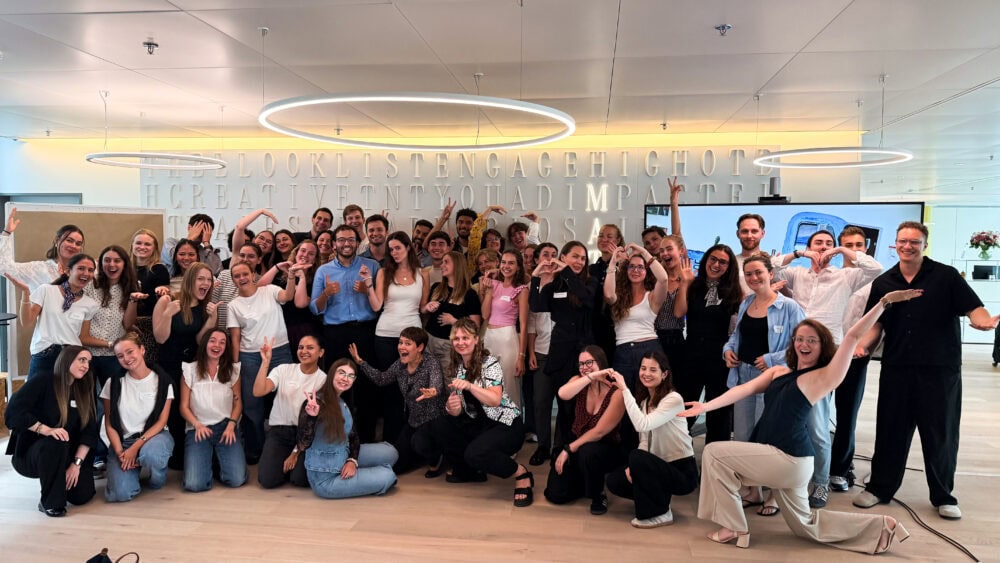
Community is an incredibly important part of the program. From day one, my WINners meet other amazing women who come from all over the world, live in very different places, work in various industries, have different roles, and occupy different positions in the hierarchy. What they all have in common is that everyone in this community—our sisterhood—is ultimately striving toward the same goal: Where and how can I do my best work? The realization that you’re not alone on this journey—that you can learn from others, practice with others, and are surrounded by this strong sisterhood that catches you when you’re struggling and celebrates your successes with you… there’s nothing better. Of all the things I’ve done in my career, I’m most proud of founding this sisterhood.
What is the program's USP? There are many female trainers out there.
I think what makes the WINning program so successful is that it focuses on leveraging the differences between men and women in terms of their communication and negotiation styles, and that it places a strong emphasis on mindset, which enables women to achieve far more than if the focus were solely on strategies and techniques. In that sense, it goes far beyond standard career coaching—and far beyond communication training as well. I’d like to underscore this by returning to the beginning of our conversation. The reason I took the plunge and started my own company was that, from day one, I was convinced there was a real need for this work. To this day, I’ve truly never met a woman—and I meet amazing women all the time!—who couldn’t use some support in this specific area. They’re fabulous at what they do; they just need help working on their careers—not just within them. We simply help them put the final piece of the puzzle in place so they themselves can reap the benefits of all the value they provide.
Do you see improvements in the areas of diversity, equity, and inclusion?
I really hope things get better. I always say that I’m working on making myself redundant. But if I’m completely honest, I think there’s so much fluff—hot air and whitewashing—when it comes to diversity, equity, and inclusion in companies. So many companies pretend that these issues are important to them. On International Women’s Day and at Gay Pride events, they wave flags. But when they’re called upon to back up their words with actions and take real, tangible steps toward greater equality, they go very quiet. According to the World Economic Forum, it will take 131 years to achieve gender equality worldwide. Think about that. We can’t wait that long—we’ll all be dead! Our daughters will be dead! That’s why I believe that while it’s important for governments and corporate boards to advocate for change, women must also take control of their own lives and stand up for themselves. We can’t rely on others when it comes to our well-being.
«Of all the things I've done in my career, I'm most proud of founding this community for women.»
You told me that men would also like to benefit from your program. Why are you so strict about only sharing this knowledge with women?
Much of what I teach revolves around having meaningful conversations that then develop into meaningful relationships; we practice active listening. These communication skills would also benefit many men—that’s certainly true. The reason I focus exclusively on women and people who identify as women is that there’s already a lot of material out there aimed at men. The vast majority of books published on these topics are written by white men for white men. And research clearly shows that things work differently for women. I haven’t found any books that focus specifically on women and negotiation. That’s why I’ve decided to work exclusively with women. Besides, I AM a woman—I’m just sticking to my own path, haha! I’m also very mindful of the sense of safety and sacredness that arises when only women are present. The atmosphere changes dramatically when men join the discussion—I always notice this when I lead separate workshops and there are a few men in attendance.
Could you give us an idea of how the 10-week program works—online, live calls with the community, one-on-one coaching, etc.?
Sure! Over the course of ten weeks, I’ll teach you the entire communication framework I’ve developed—from clarifying what your next step should be, to actively shaping the role itself together with the company that’s lucky enough to hire you, all the way through to the corresponding negotiations. I’ll do this through online lectures that you can attend in your free time. You’ll also complete exercises that tailor this theoretical framework to your specific situation—which means you can use it again and again whenever you’re planning your next career move. We focus heavily on mindset work, which is a bit harder to explain. This work thoroughly prepares the women for our one-on-one coaching sessions, during which we discuss the situation in depth and develop a step-by-step plan for the important conversations and negotiations they’ll need to have. And every week, we hold two group sessions where we answer questions, do role-playing exercises (I place great value on practice!), and share our successes. So by the end of the ten weeks, the women have either achieved all their immediate goals or have everything they need to achieve them in the near future. And we don’t say goodbye after the ten weeks—instead, we welcome them into our fantastic alumni group, a magnificent network and sisterhood. A group that still meets with me every month to continue advancing their careers. Sure, it’s intense, but what isn’t? If you want real results, you have to put in the work.
You and your husband are raising two daughters. Do you think the girls are growing up in a better, more just world? Will they have a say in shaping the public discourse?
I have a great deal of trust in my daughters. I like the way they behave, the way they stand up for themselves and their wishes. That’s partly thanks to me, too. Every day, I model equality for them; I’m a role model for them by taking myself seriously and taking them seriously. I love it when they «give me a good argument»—that is, when they really think about how they can convince me with their reasoning. The driving force behind raising our children—which I do together with my husband—is quite simple. I want our children to be brave and kind. That’s what matters to me: being brave and kind. The world needs more people who speak their minds and do difficult things. And we need more kindness. I want my girls to be the ones who stand up for a child who’s being bullied in their class. Courageous and kind. That’s what the world needs more of.
The «Women in Negotiation» Company», founded by Dutchwoman Wies Bratby, coaches women who want to take their careers to the next level.