
Poor availability of goods drives customers up the wall
Online shopping offers many advantages and is becoming even more popular, especially for Christmas shopping during the pandemic. But what bothers customers? And how do online retailers assess the situation? The latest «E-Commerce Frustration Barometer» from Elaboratum and Trusted Shops provides an overview of the most frustrating situations in e-commerce.


In the study, Elaboratum and Trusted Shops identified and ranked the top frustration factors. More than 1,200 German and Swiss online shoppers rated the frustration factor, reasons for abandonment and absolute no-gos when shopping online based on 15 situations. They wanted to know from the store operators how they assess the frustration potential of their customers.
No frustration tolerance for product availability, promotional emails and returns processes
Across all respondents, poor product availability, a large number of promotional emails and customer-unfriendly returns processes emerged as the three biggest frustration factors when shopping online. In contrast to Germany, a lack of contact options is a major frustration factor for Swiss online shoppers, which not only annoys them but also causes them to avoid the relevant stores. Unclear websites also cause greater annoyance in Switzerland than in Germany.
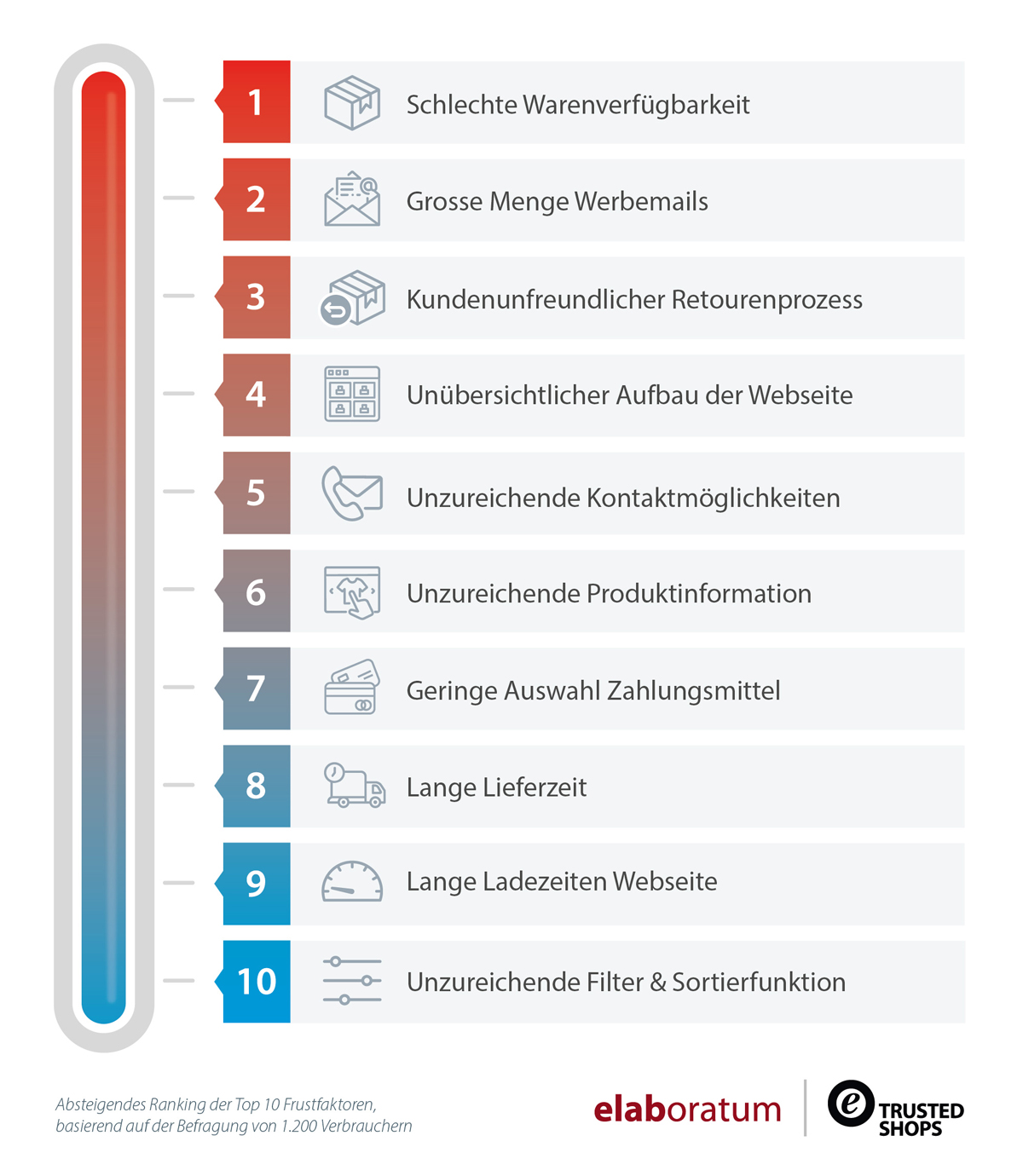
Descending ranking of the top 10 frustration factors, based on the survey of 1,200 consumers. (Source: Elaboratum/Trusted Shops)
Overestimated and underestimated frustration factors
In general, the store operators in the study are very reflective and self-critical: they rate most situations as frustrating from a customer perspective to a higher percentage than the online shoppers themselves, with loading times and extended hotline numbers among the factors overestimated by the store operators. While loading times do not play a significant role for consumers, they are in third place for store operators. The top frustration factor from the store operator's point of view is insufficient contact options, although this is less important for consumers and is particularly criticized by the over-60s target group.
Significantly, however, store operators underestimate the frustration factor of promotional emails and a customer-unfriendly returns process, i.e. the customers' top frustration factors 2 and 3. They therefore fail to see the customer's pain at these crucial points. Elaboratum Senior Consultant Saskia Roch sees this as an expression of the fact that process excellence in e-commerce is still partly misjudged: "While the focus in recent years has always been on new functions for the customer, the results of the frustration barometer herald a new era: Store operators should focus more on excellence behind the scenes, such as smooth processes and efficient data management."
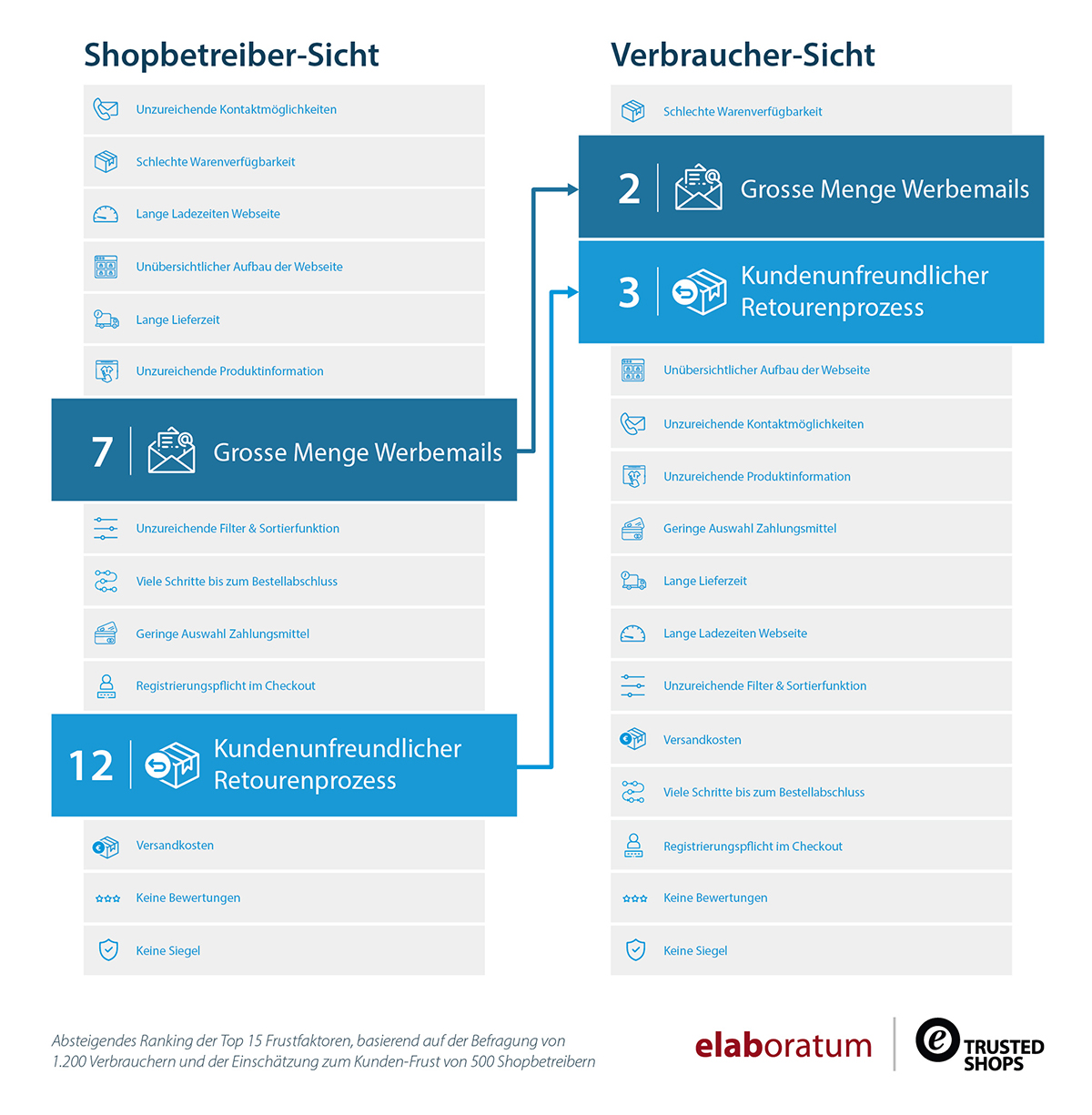
Store operators underestimate this. Descending ranking of the top 15 frustration factors, based on the survey of 1,200 consumers and the assessment of customer frustration by 500 store operators. (Source: Elaboratum/Trusted Shops)
Blind spots in trust
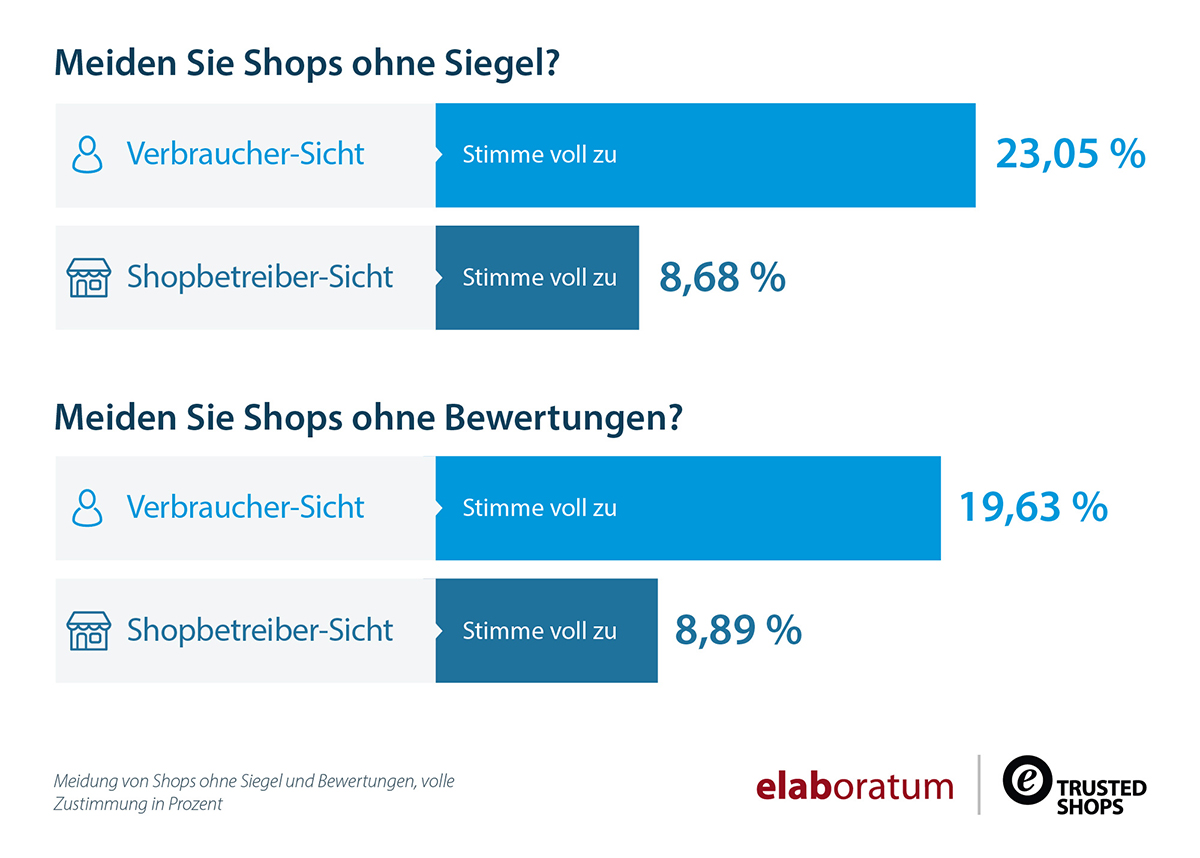
Store operators also underestimate the relevance of trust-building elements such as seals and ratings. Almost every second consumer (47%) avoids stores without a seal, while store operators estimate this proportion to be just 30%. For 44 percent of consumers, reviews are crucial when shopping, while store operators do not identify this as a critical issue. "It is interesting that the study results underline exactly what we advise store operators to do every day: Use seals and reviews. They are confidence-building elements and promote frustration-free shopping," confirms Britta Kristin Agel, Director Inbound Demand Generation at Trusted Shops.
5 tips for an improved customer experience when shopping online
Based on the results of the study, how can companies improve the customer experience when shopping online and reduce frustration? Elaboratum and Trusted Shops offer five tips.
1. mastering process excellence
Maximum transparency is the motto here. If goods are unavailable, the customer must at least be informed of this and also be aware of the ongoing status of their order. If everything takes too long, goodwill can make up for it: an information e-mail with a voucher code and a request for patience will often appease even the most annoyed customers.
2. consider relevance in the address
If I'm going to receive promotional emails, then please send them with added value for me - that's what customers expect today. Companies should therefore send newsletters and promotional emails with caution. The segmentation of customer groups and the relevance of the approach should be checked and the frequency scrutinized.
3. avoid customer resistance and risks
If the return slip is missing to make the return unlikely, the frustration can be alleviated by the "pseudo-justification" behavior pattern: Experience has shown that the customer accepts the pseudo-justification that a returns bill is only available for download for environmental reasons, so that the situation is perceived as less negative.
4. create trust
For new online stores and unknown brands, seals and reviews from other customers give first-time buyers the necessary level of security. They are also effective for long-established stores, as they positively influence the purchase decision through their authority when positioned correctly.
5. take demographic differences into account
The target group should be the focus of all efforts, but it does not always tick in the same way. Insights into differences between genders, age groups or country comparisons provide valuable input when it comes to designing user flows and customer journeys for the respective target group.
The study "Frustration barometer e-commerce" by Elaboratum New Commerce Consulting and Trusted Shops examines the most frustrating situations for customers when shopping online. In Germany and Switzerland, 1,200 consumers and 500 store operators were asked to assess 15 situations:
- How high is your frustration factor in this situation?
- How high is the probability of canceling a purchase because of this?
- How likely is it that you will no longer consider the online store for future purchases?
The results of the study compare the customer and provider perspectives, so that possible blind spots on the retailer side can be identified.
The results are presented in a Whitepaper which also provides five specific tips for retailers to enable an improved customer experience in e-commerce.


