
People no longer buy products
Am I the person wearing these jeans? Driving this car? Reading this m&k? Anyone who understands Sir Mary’s “Selfication” principle is rethinking brand communication. A guest post by Andi Portmann, Creative Director at Sir Mary.


Illustrations: Thomas Berger
They hold the m&k with a stinky finger on the cover in your hands. How does that feel? When other streetcar passengers see you with it? You put the magazine on the sofa at home? Your colleagues take it from your desk and leaf through it? Do you feel embarrassed? Or does it reveal the punk in your soul? Are you someone who finds such provocation pathetic? Or a person who uses it to show his intellectual curiosity? Observe yourself while reading: this is about a paradigm shift that you should not understand in your head, but experience intuitively. As what you are: a human being.
Interruption 1: People no longer buy products
You are witness to a revolution. Our lives are taking on an increasingly all-encompassing and powerful new dimension - the digital. It is changing not only our knowledge, but how we experience the world, interact with other people, and ultimately who we are.
Think differently: It's not that the Internet is just a new communication channel. The digital unfolds its revolutionary power by growing like an all-pervading organism, controlled by countless human needs and self-learning algorithms. In this way, it is changing not just communication, but all of life.
The new laws are not about individual touchpoints, but about being human. The digital allows people to join together, to exchange ideas, to act in a way that has never been possible before. It has turned students into opinion leaders who are launching the Arab Spring. Or teenagers to e-sports millionaires. Or TikToker into activists exposing the U.S. president. Or every single traveler into a potentially globally perceived hotel critic. Today, each and every one of us is in a position to be seen by the world. And as a result, who we want to be is more important to us than ever before. The image we want others to see of ourselves becomes the compass of our identity, on and offline: What feels like me? What doesn't? We use purchasing decisions to curate our identity: Am I the person wearing this cap? Using this smartphone? Booking this trip? In other words, we no longer buy products, but statements about who we want to be ourselves. You won't find clues to this just by paying attention on the street, navigating social media, or watching yourself buy - the examples are everywhere.
This is not an energy drink
Never before, for example, has a beverage failed so fundamentally in terms of taste in a go-to-market study as Red Bull. But the bold image that we project onto ourselves with the unmistakable can in our hands, making a statement about our own identity to others, has a stronger impact: people around the world want to be perceived as those who have wings.
This is not a company logo
In her book "No Logo," Naomi Klein quotes the Internet entrepreneur Carmine Collettion, who has a tattoo of a Nike logo: "I wake up every morning, jump into the shower, look down at the symbol, and that pumps me up for the day. It's to remind me every day what I have to do, which is Just do it." Collettion didn't get the tattoo because of Nike, but because he wants to show himself and the world that he is someone who gets things done. Like all people who walk around with Nike products.
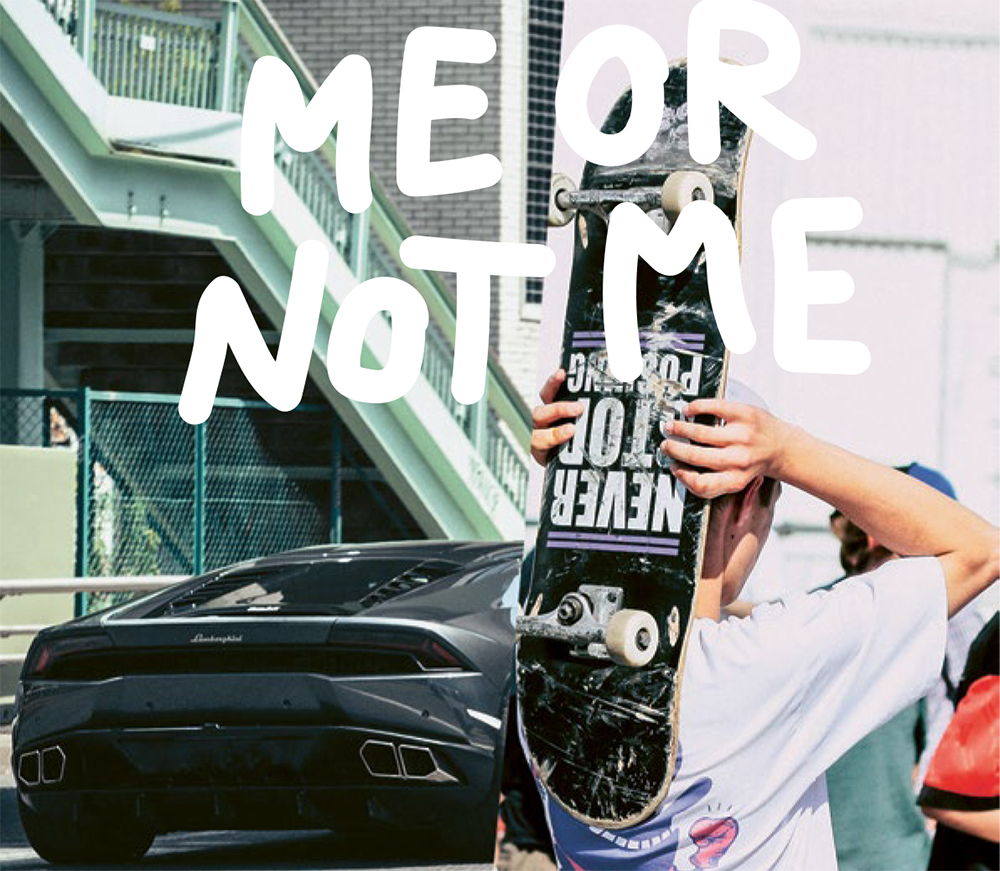
This is not a car
A study shows that nearly half of all hybrid cars sold in the U.S. in 2009 were "Toyota Priuses," and that its success is linked to its awkward-looking design. Because this is what makes the Prius a statement. Other hybrid cars (including those from Toyota itself, such as the Camry Hybrid or the Civic Hybrid) differ from conventional cars only in the technology under the hood. But the Prius clearly says: Look, my owner drives an environmentally conscious car. Consequently, the Prius share of hybrid cars is disproportionately high in areas where the eco-statement is understood. In areas where many people with an environmentally conscious attitude live.
These are not drinking glasses
In the novel "Love Life" by philosopher Alain de Botton, a couple argues at Ikea, i.e. at the point of sale: she wants to buy the "Fabulös" glasses, he the "Godis " glasses. "The whole drive home they stare out the window without a word, the silence in the car only occasionally interrupted by the click of the turn signal." Both are disappointed to find themselves at loggerheads over such supposed trivialities, but they were actually arguing not about glasses but about their identities: Both have fought to be seen by each other as what they are as people.
Interruption 2: People no longer act like consumers
Oh, you read the whole article? Thank you, after all, you could be doing something else: In the remaining three minutes of reading time, users stream 1,200,000 hours of movies on Netflix, post 1,000,000 stories on Instagram, download 1,500 hours of video on YouTube or share 120,000,000 Whatsapp messages. We are mutating into multitaskers, smartphone zombies, Ritalin swallowers. And the digital information overkill is setting the pace. Internet legend Douglas Rushkoff says: "I advise consumers to see every media technology as a drug."
Our reaction? We block everything that doesn't fit our self-image. What we humans have always mastered - an example from the 1970s: The media researchers Bonfadelli and Hättenschwiler examined how supporters and opponents of the Vietnam War perceived the reporting of the Zurich "Tages-Anzeiger." Those who personally supported the U.S. involvement in Vietnam perceived the coverage as pro-American. Those who disliked the U.S. involvement perceived the reporting as anti-American. Even though they all read the same newspaper. In other words, what gets attention is what we have an identity-forming relationship with. And in the networked world, the pros and cons are more extreme than ever before. Mentally, it's not the decision for the sneakers we want to buy that overwhelms us, but the decision against the thousands of sneakers we can't buy. The thousands of stories we can't watch. The thousands of singles we can't date. Swiping away news, games, pics, stories, trends, ads, trash, but also people is not just an act, but a metaphor of our time.
Only the minimal fraction of input - namely, what feels like what we ourselves want to be - penetrates our mental firewall. And that becomes a challenge for communication: because we don't create our self-image only when we're in consumption mode and brands are usually trying to reach us. But in our very normal lives. Yes, even while we sleep, as psychological studies suggest.
Conclusion: The usual brand of today already sees itself as up to date when it plays on all channels, networks them, and optimizes them with data-based measures. The one of the future moves our world by building relevance for our self-image as humans. It will be as much a part of our everyday lives as dogs, heartbreak, peer groups, crosswalks, gaming, a blue sky, gossip and politics. Because no one and nothing will reach us anymore as consumers, but only as what we all are: People. As we create digital reality, so it creates us. As a consequence, success in the market economy will be determined by who we allow access to our lives - and who we block. Because we want brands, things, actions, services, formats, start-ups or experiences that empower us to show the world what makes us tick. And it is at this multidisciplinary interface that the brand communication of the future will operate.
The paradigm shift according to the selfication principle
Crux
The principle explains why we humans no longer act like the consumers we used to be.
Journey
The principle provides answers from brand positioning to data-driven hard selling.
Future
The principle defines the fundamental question of the modern market economy: Me or Not Me?
Brand Experience Consulting: Sir Mary's Selfication Principle
Me or Not Me? Brands now only communicate with us humans when they are relevant in our lives. What does that mean for your company? Sir Mary was already Swiss Digital Agency of the Year, newcomer agency in the DACH region, works for brands such as Allianz, CSS, NZZ, Samsung, UBS or Polestar and is just four years young. Now Sir Mary shares her own success thinking: with the selfication principle. On this basis, you will develop the strategic basis for your communication as a team. From brand positioning to the entire customer journey to data-driven hard selling.
For more info, contact Daniel Zuberbühler, Founder and Client Service Director at Sir Mary. [email protected]
This article first appeared in m&k 10/2020.
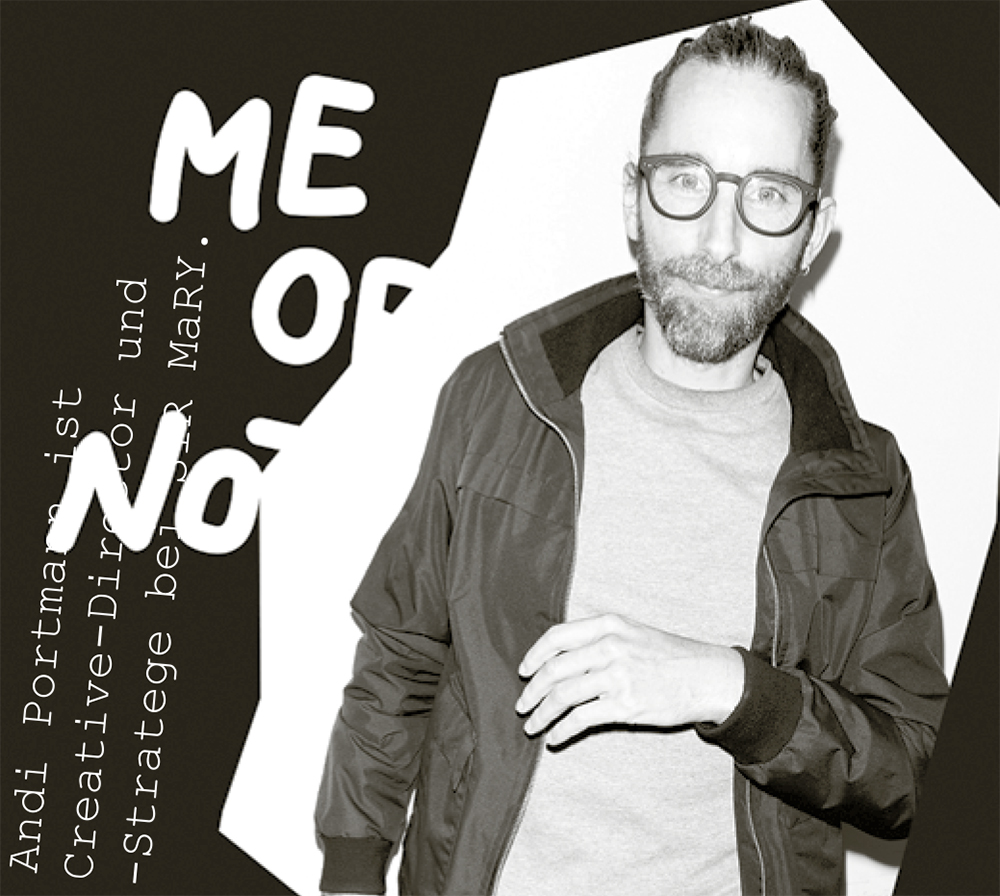
* Andi Portmann is creative director at Sir Mary.


