Digitization as a beacon of hope in the Covid 19 pandemic
Despite the current COVID-19 situation, the Swiss public has a more positive attitude toward the technological advances brought about by digitalization than it did last year. New technologies are making our personal and professional lives easier during the COVID-19-related restrictions. This is shown in the Oliver Wyman study «Switzerland’s Digital DNA.».



Digitalization has progressed rapidly in recent months, particularly as a result of the current Covid-19 crisis. A survey of 1,500 people conducted by international strategy consultancy Oliver Wyman shows that most Swiss citizens have a positive attitude towards the internet and technology. Although the downsides of digitalization in terms of jobs, data protection and health were once again a topic of discussion this year, the hopes associated with it have generally increased for most population groups, while fears have decreased.
New jobs
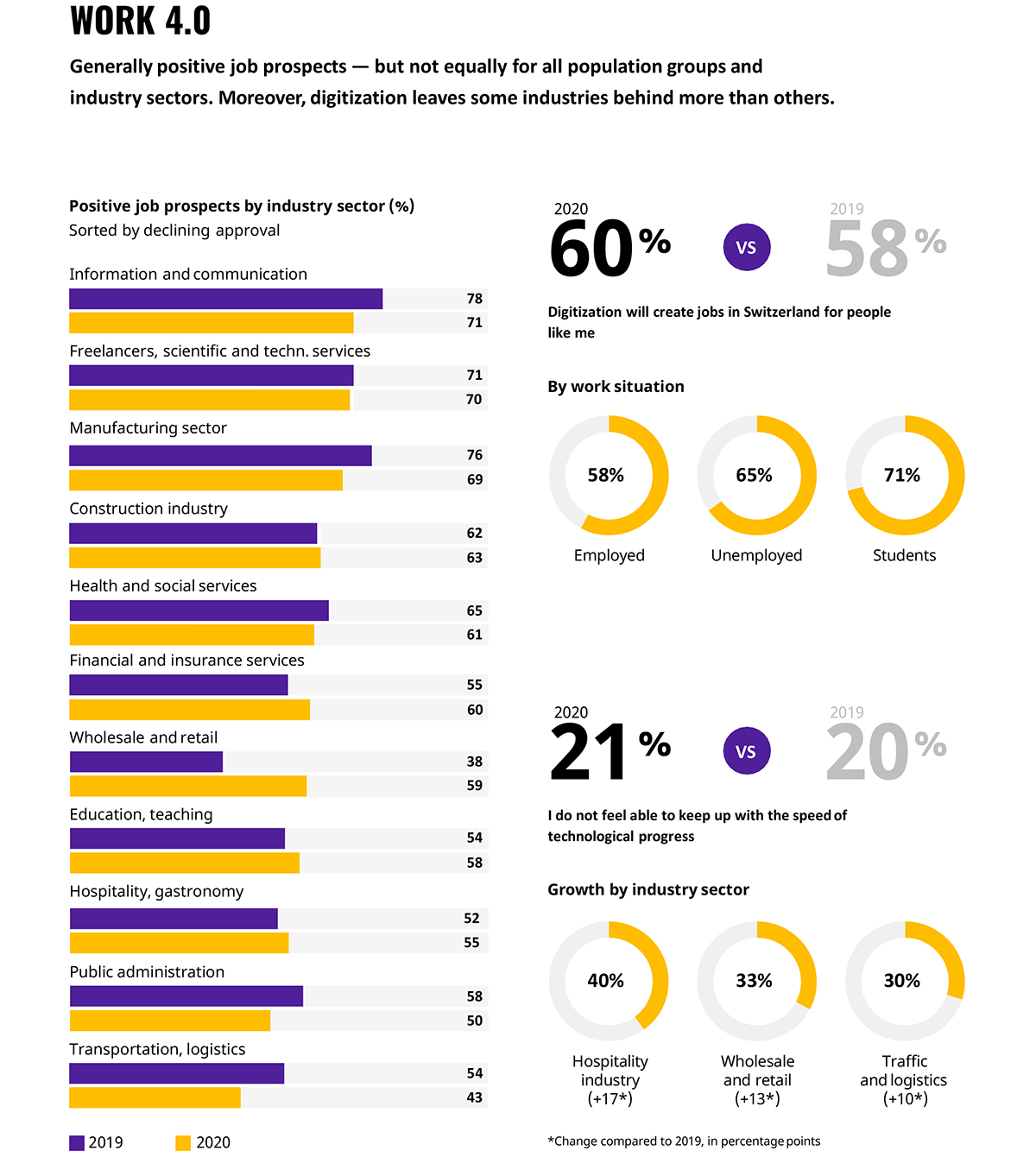
This year, 60% of people living in Switzerland believe that the internet and technology will create new jobs. In the previous year, this figure was 58%. While the approval rate among the working population has remained stable (2020: 58%; 2019: 59%), it has risen among the unemployed (2020: 65%; 2019: 41%) and school and university students (2020: 71%; 2019: 65%). "These differences can also be attributed to the fact that digitalization will create jobs and working conditions in the medium to long term that will encourage a greater prevalence of working from home and more flexible forms of work," says Nordal Cavadini, Partner at Oliver Wyman.
More positive job prospects in more crisis-resistant industries
There are also striking differences within individual industries: In wholesale and retail, positive assessments of job prospects have risen significantly (from 2019: 38% to 2020: 59%), while they have fallen from 54% to 43% in the transport and logistics sector, making it the lowest in the industry comparison. According to Cavadini, this is sometimes "an indicator of the extent to which the current Covid-19 crisis is unsettling employees in the transport and logistics sector, such as airlines". On the other hand, the retail sector is seeing opportunities that are opening up due to developments in the internet and technology despite the pandemic: the online boom, for example, is contributing to this.
Employees in the information and communication industry remain confident, with 71% of them assuming that new jobs will be created for them in the future. The proportion of the population who believe they will be left behind by technology is 21% and has therefore barely increased compared to the previous year across the population as a whole (20%), but has risen slightly among employees (from 21% to 24%).
Digital innovations in the healthcare industry
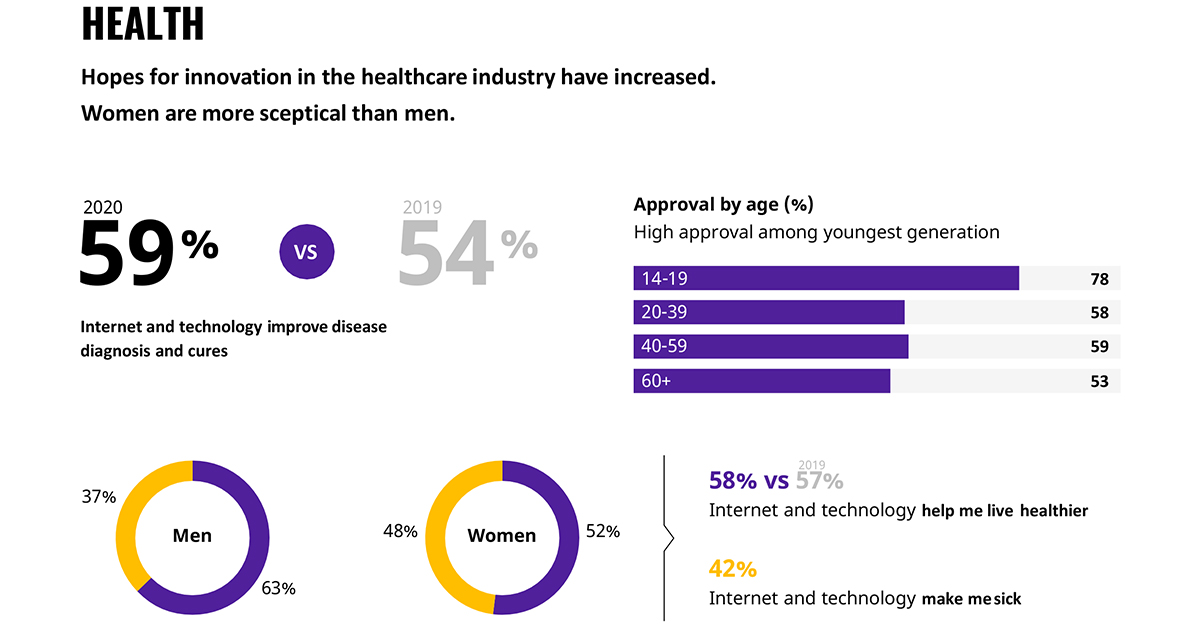
Hopes for better technologies for diagnosing and curing diseases have increased compared to the previous year, regardless of gender and age, and amount to 59% (2019: 54%). Younger generations in particular are more likely to agree (78%) that the internet and technology will improve disease diagnosis and healing than in 2019 (53% agreement).
For Kolja Dutkowski, Principal in the Digital division at Oliver Wyman, this is hardly surprising: "The current pandemic has made many people aware of the benefits of digital media. Remote consultations via video call, for example, have reduced the risk of being infected when visiting the doctor. In addition, with the introduction of the SwissCovid app at the latest, many people have probably realized that new technologies make important measures to contain the virus - such as contact tracing - much easier".
Increasing willingness to share data
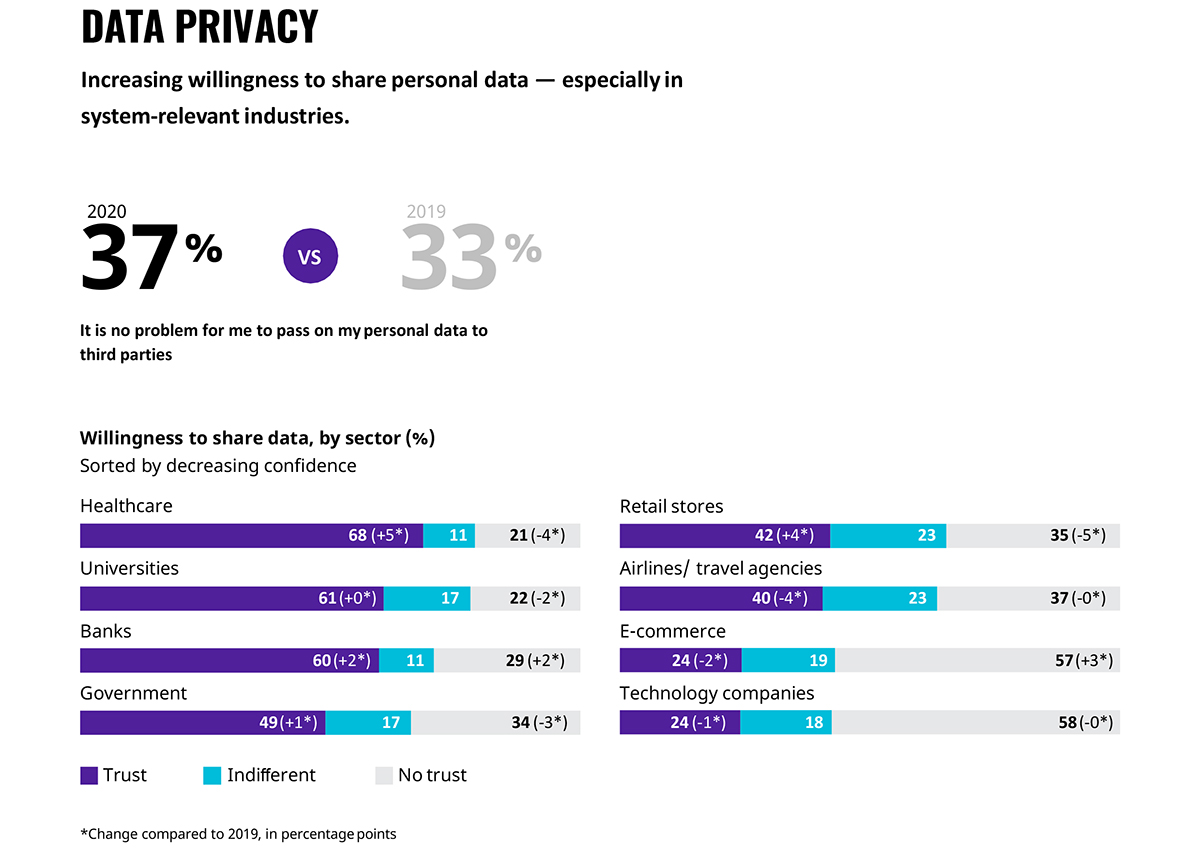
Compared to the previous year, the willingness to share data with third parties has also increased slightly (from 2019: 33% to 2020: 37%). Trust in providing personal data to the healthcare sector achieved the highest level of approval, with online retailers and technology companies achieving the lowest level of approval.
Due to the current pandemic, confidence in the internet and technology has increased again in Switzerland this year. Digitalization enables many industries to be relatively better positioned in the current situation. "The aim for companies, public institutions and NGOs should therefore be to adopt digital processes, solutions and services that have proven their worth during the crisis as quickly as possible," concludes Cavadini.
Oliver Wyman surveyed Switzerland's digital DNA for the fourth time at the end of September 2020. It surveyed 1,500 people in German-speaking and French-speaking Switzerland regarding their assessment of the current and future impact of digitalization on 7 different topics: Work 4.0, education, data protection, mobility & infrastructure, e-democracy, health and society & media.
The Study will be published as part of the Swiss Digital Days, an initiative of Digitalswitzerland. On the Digital Days from November 1 to 3, 2020, visitors can expect more than 400 free online and offline offers that promote dialog, strengthen future skills and invite inspiration.