"Customer needs, partner structures and value chains will change fundamentally"
Opening the country’s borders, through dialogue with other nations, is not only important for exports. At the same time, 40 percent of the gross domestic product depends on foreign trade. Simone Wyss, CEO of Switzerland Global Enterprise, explains the process.


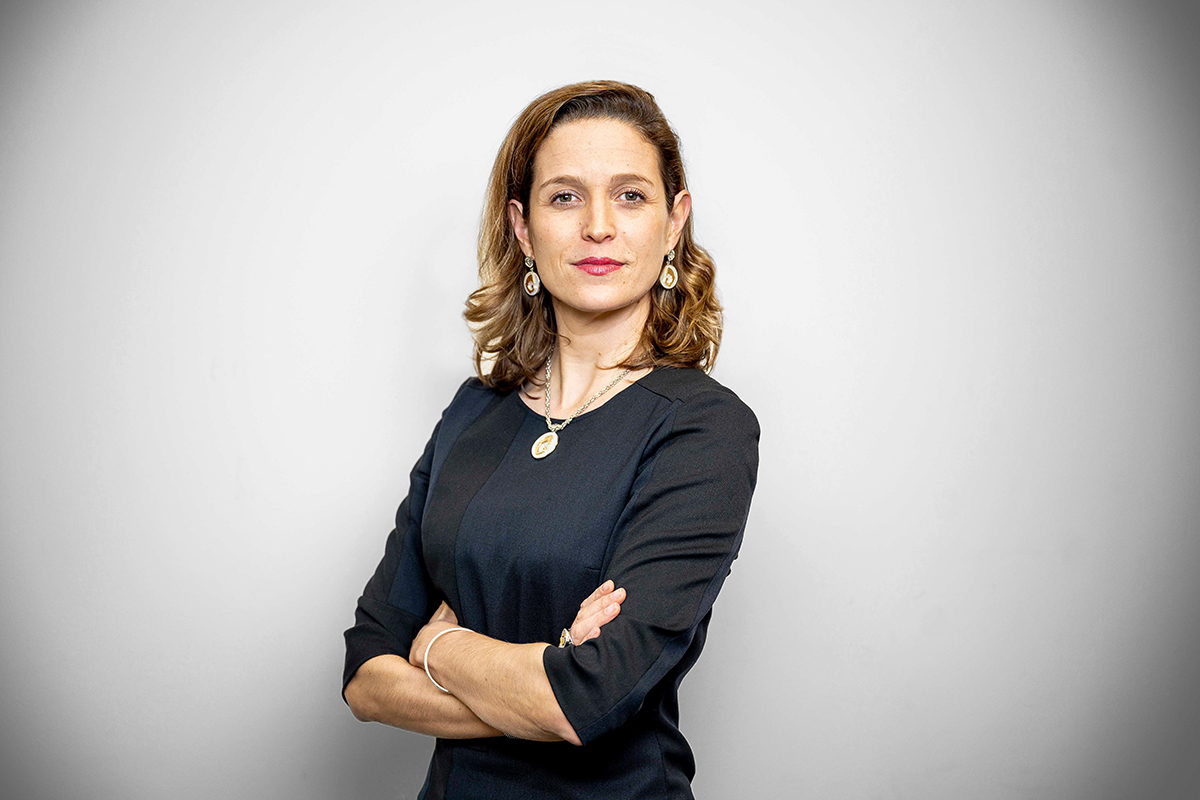
ExpodataMs. Wyss, what is on your mind the most on this day?
Simone Wyss: This is, of course, the current Covid-19 crisis and what it means for our customers. Our daily video call with the management starts at eight o'clock on the dot. We are at the beginning of one of the most severe recessions since the Great Depression: as a result, customer needs, partner structures and value chains will change fundamentally. We are working to support internationally active Swiss SMEs and Switzerland as a business location as effectively as possible in overcoming this challenge and seizing the opportunities that arise.
S-GE organizes trade fairs for Swiss industry all over the world. What is the future of trade fairs abroad? Can they still be saved?
For Swiss SMEs, trade fairs are a key element in opening up international markets. Before the outbreak of the pandemic, our trade fair focus was on Europe, particularly Germany, where we organized a Swiss Pavilion at four leading trade fairs, the Middle East, particularly Dubai with a catchment area of Africa and South Asia, as well as Asia, particularly Shanghai and Singapore, and the USA. Since the global outbreak of Covid-19, most trade fairs have been canceled or postponed. For many of our customers, this has severely impacted their market development. Against this backdrop, digital and hybrid formats are becoming increasingly important. We are investing in specific customer solutions here. During the transition period, when travel is not possible or only possible to a limited extent, digital formats will play a central role. After that, they will be used in addition to traditional formats. COVID-19 is driving digitalization in business - and 360 degrees - enormously.
Foreign trade is blocked by the border closures. What options does S-GE have to respond when advising its customers?
40 percent of Switzerland's gross domestic product depends on foreign trade. The current friction in international trade must therefore be taken very seriously. What can we do? First of all, we support our customers with troubleshooting and show them which restrictions apply where and what is permitted. Initially, the focus for our customers was on stabilizing the value chain. Following the acute crisis phase, the focus is now increasingly shifting to optimizing the value chain. A lot can be done digitally here. Our consulting team in Switzerland has been working virtually with our customers and partners for over eight weeks. We are present in 27 markets worldwide and carry out on-site clarifications for our customers or provide them with up-to-date market insights via webinars. We also organize digital market clarifications for our clients, for example - where we would previously have organized a physical meeting with local experts, we now hold virtual meetings.
When do you think national borders should be reopened for exports? What scenario can you imagine?
Well - as soon as possible. This means that the topic of "foreign trade" must be an integral part of the country exit concepts from the lockdown. There is currently enormous planning uncertainty for internationally oriented companies. This is leading to a sharp slump in their business and investment activity. A coordinated staged plan with a security concept for easing and then lifting business travel restrictions between countries is therefore needed as soon as possible. This is only possible in dialog with other countries. Of course, the timing for the staggered opening must be chosen carefully; nobody wants another lockdown. Our customers trust that the Federal Council will act with foresight and prudence in this matter and communicate transparently - the first steps towards easing restrictions have already been taken. We expect the first easing measures to be implemented in the second and third quarter of 2020; full normalization will only take place once the Covid-19 vaccination is available.
Is the current standstill in retail leading to the long-needed and now accelerated digital transformation of retail?
Retail is currently severely restricted, and the digital transformation will not change this in the medium term. However, the accelerated digitalization of many business processes is indeed one of the major opportunities offered by the current crisis.
The Association of the German Trade Fair Industry (Auma) launched a press release on April 24 entitled "The economy needs trade fairs for a fresh start". Who are the beneficiaries of trade fair activities?
Thanks to our many years of experience as organizers of Swiss Pavilions, we know that a trade fair is not only important for the participating exhibitors and visitors and their businesses, but also for the suppliers - for example the stand builders, the hotel industry or freight forwarders - at home and abroad.
The Auma also puts forward the argument for a reopening of the trade fair industry that, compared to other major events, they have a far lower density of participants per square meter than most other event formats. Could this play a role in the reopening of the trade fair industry?
Trade fair organizers around the world are now being called upon to come up with concepts that make it possible to resume activities quickly. There are many ways to enable social distancing - be it wider aisles, limiting the number of visitors, stricter guidelines for stands or the duration of the trade fair and, of course, digital formats.
What are your hopes for a staggered resumption of the trade fair business and over what time horizon? What is a realistic scenario for the resumption up to mega trade fairs such as the Hannover Messe?
This will become clear in the coming months. The staggered resumption with accompanying, effective safety concepts is important for companies. In the meantime, it is important to take advantage of the opportunities offered by digital formats and to plan as a hybrid trade fair organizer, both virtually and physically. It is important to be agile, innovative and solution-oriented in these times if you want to offer your customers added value. This is both a challenge and an incentive for us every day.