Stadtlandkind: "We invest relatively little money in marketing".
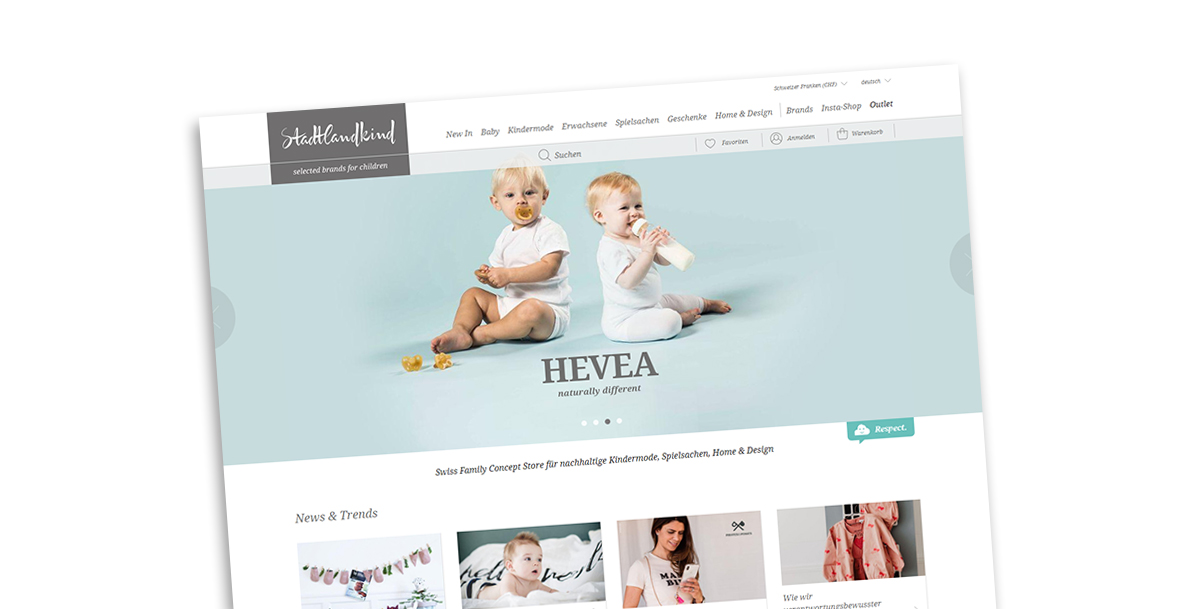
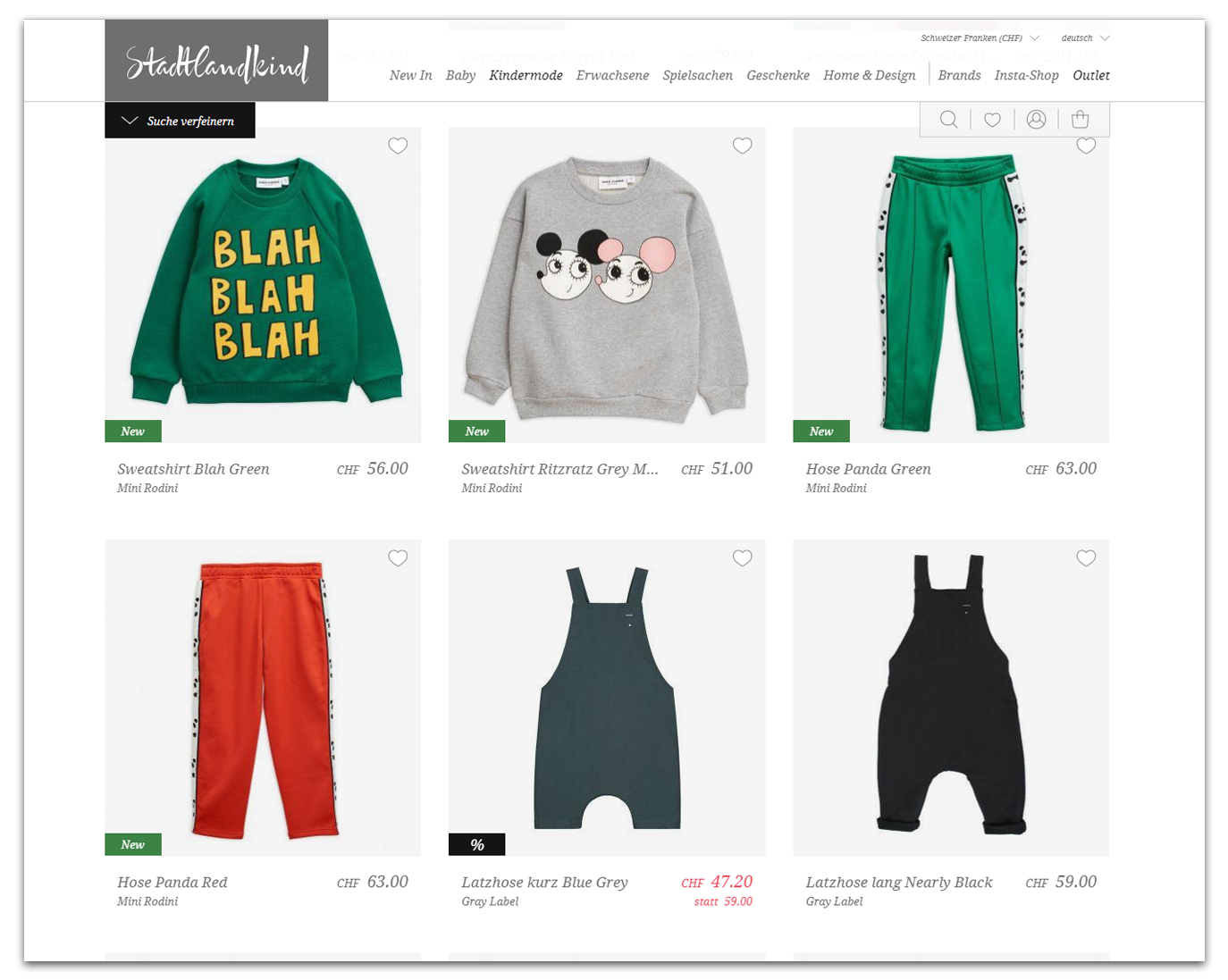
Anyone who wants to compete with Amazon, Zalando, and the like these days has to be creative. Stadtlandkind sells sustainable children’s clothing, toys, and home accessories. The success of the St. Gallen-based family concept store is built on personal interactions, word-of-mouth, and the smart use of social media channels. An interview with Roberta and Tobias Zingg, the founders of Stadtlandkind.


Roberta and Tobias Zingg, founders of Stadtlandkind and winners of the e-commerce award for best newcomer.
MK: Stadtlandkind has been selling sustainable kids' fashion, toys and home accessories all over the world since 2013. You entered online retail as an industry outsider - why?
Roberta Zingg: We both come from a commercial background, but had been toying with the idea of setting up something ourselves for some time. Together with a couple of friends, we developed the idea for an online store. I had just become a mother for the first time and realized that there was a lack of professional stores for sustainable, well-designed, organic and high-quality children's clothing in Switzerland. That's how the concept for Stadtlandkind was born.
What initial difficulties did you have to contend with?
Tobias Zingg: Fortunately, all four founders had skills that complemented each other perfectly. Christof Müller worked as an art director, his wife Corinne has a background in customer service, Roberta had already started her own business in the field of photography, and I advised e-commerce companies on entering the Swiss market. Thanks to the help of friends and acquaintances, we were able to set up the store with a relatively small budget. We started from scratch and did everything ourselves - today there are ready-made solutions for online stores.
R. Zingg: Since fashion collections have to be purchased about a year in advance, we started spending money before we were even online. Moreover, it wasn't easy to convince suppliers of our merits without having anything to show for it. We traveled to the international trade fairs virtually empty-handed and tried to win over the small, exclusive brands that we wanted to offer on Stadtlandkind in personal conversations.
How important are such personal relationships in a digital world?
R. Zingg: For us, they are crucial. Especially when you're in online business and communicate a lot by mail, it's good to see your suppliers face-to-face twice a year. We know each of our partners personally and talk on the phone regularly. For example, if items are returned due to quality or functional defects, you can point this out to the manufacturers and have the problem fixed.
This interview with Roberta and Tobias Zingg on Stadtlandkind comes from issue 10/2019 of MK Marketing&Kommunikation.
Many of your suppliers come from Southern, Eastern and Northern Europe. Are there sometimes cultural misunderstandings?
R. Zingg: You can already tell that in other countries the business culture is also different. For example, a Spanish shoe manufacturer supplied us
with really great products his sandals always in the fall. It took a while to explain to him that the Swiss no longer order children's sandals in October. Finally, we took the brand out of the range.
Not only are their suppliers international, so is the competition. How do you deal with that?
T. Zingg: There are heavyweights like Zalando that offer brands that we also have at a lower price thanks to German sourcing
can. When we notice this, we immediately seek discussions with our suppliers. After all, it also pays off for the manufacturers
do not mind if their goods are sold below value. Until now, we have always managed to eliminate such price differences.
were.
Stadtlandkind has a lot of international customers. Why?
T. Zingg: We have very many fans who post our products on social media. Especially in Korea, there are families who are always posting
order from us and also not be deterred by the high shipping and customs fees. In addition, we benefit from a good
Word-of-mouth. So far, we have invested relatively little money in marketing, but the topic of social media now goes so deep that we should hire a specialist for this area.
Stadtlandkind is still growing in the double-digit percentage range. What are the plans for the future?
R. Zingg: Next, we want to conquer the French-speaking Swiss market with a French store version. In parallel, we will expand the range in the non-fashion segment. We also want to launch more B2B products. We started with a birth box that managers can give to employees who have just become parents - that went down really well. In the medium term, we also want to conquer other markets abroad.
What advice would you give to someone new to the online market?
T. Zingg: I would start small and grow slowly and self-financed. That way you learn the most and don't have to deal with complex topics right from the start. There is now ready-made software for stores, so you don't have to design everything yourself. If someone wants to export abroad, I would recommend setting up the entire warehouse not in Switzerland, but in the EU. From there, the Swiss market can also be handled by means of collective customs clearance. And of course, a good composition of the team is important.