Consultation hours via video: Digital communication in healthcare
Nexmo's Lori Belton talks about programmable healthcare communications solutions and the future of physician consultations in her guest post.


The process a patient goes through no longer necessarily begins and ends in the waiting room. It extends over a longer period of time and is associated with different scenarios, touchpoints and communication channels. This is because every interaction should be an optimal experience for everyone involved, with the right information being conveyed to the right person at the right moment.
The sum of these interactions is what the modern healthcare experience is all about. This experience is made possible by programmable communication solutions.
So what might a day in the life of a patient and a doctor look like in the future, optimized with programmable communication solutions? The following scenarios show how new experiences are emerging in the healthcare sector:
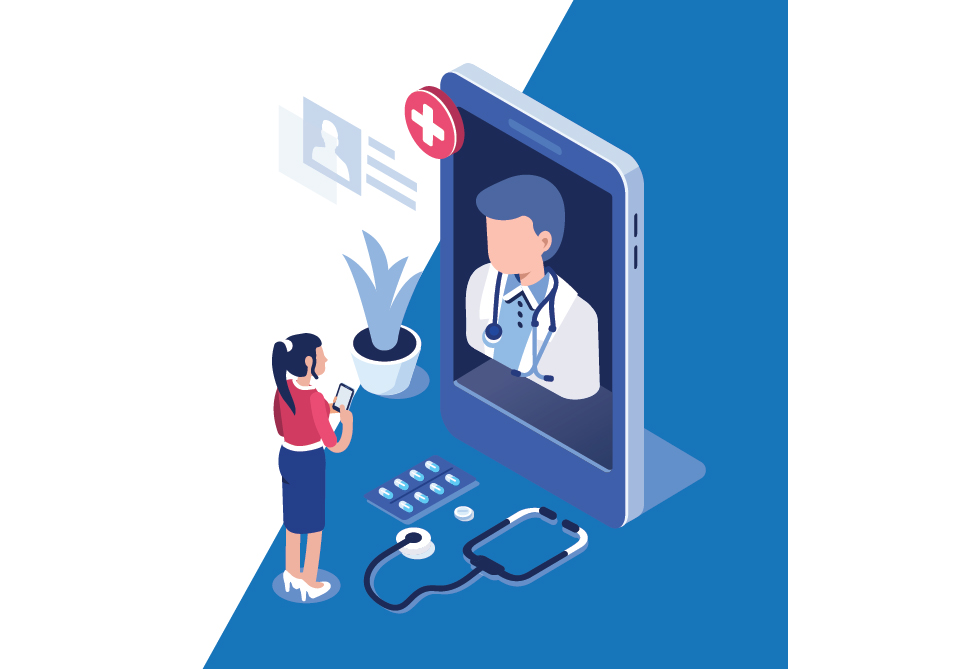
Virtual consultation
Patient Franka is feeling unwell, but unfortunately can't take time off to go to the doctor. That's when she remembers that her primary care physician, Dr. Dengler, has an app that allows patients to contact her from any device, whether they're at home or at work. Dr. Dengler is busy, so she got a new telemedicine app that allows patients to book a video consultation. This allows her to treat more patients than ever before.
Before she even arrives at the office, Franka downloads the app and creates an account. The last step of the account creation process is an identity verification. Here, Franka has to enter a secure one-time code that was previously sent to her via SMS.
Now a voice bot asks Franka to describe her symptoms. Using speech recognition, the bot determines whether her case is best discussed by live video, by phone, or with text messages. She gets a video appointment with Dr. Dengler for the evening. A confirmation message with the appointment data is displayed in the app.
Dr. Dengler now receives a notification that Franka has booked an appointment with her. She reads up on her medical history to prepare for the patient interview.
At 6 p.m. Franka receives a reminder by text message and confirms with "Yes" that she will keep the appointment. Dr. Dengler and the receptionist receive the confirmation from Franka. The video call is automatically recorded in the USA for legal reasons. In this way, Dr. Dengler can concentrate fully on Franka without having to take notes.
Dr. Dengler makes a diagnosis, explains her treatment plan and prescribes the necessary medication. She triggers a message in the chat asking Franka to make a follow-up appointment. With a response in the chat or a phone call, Franka can now schedule the follow-up appointment. She calls the receptionist and makes an appointment in two weeks.
The practice also sends her regular health tips and reminders on her favorite chat app. This makes it easier for her to stick to her treatment plan and make sure she stays healthy after recovery.
Medical cooperation
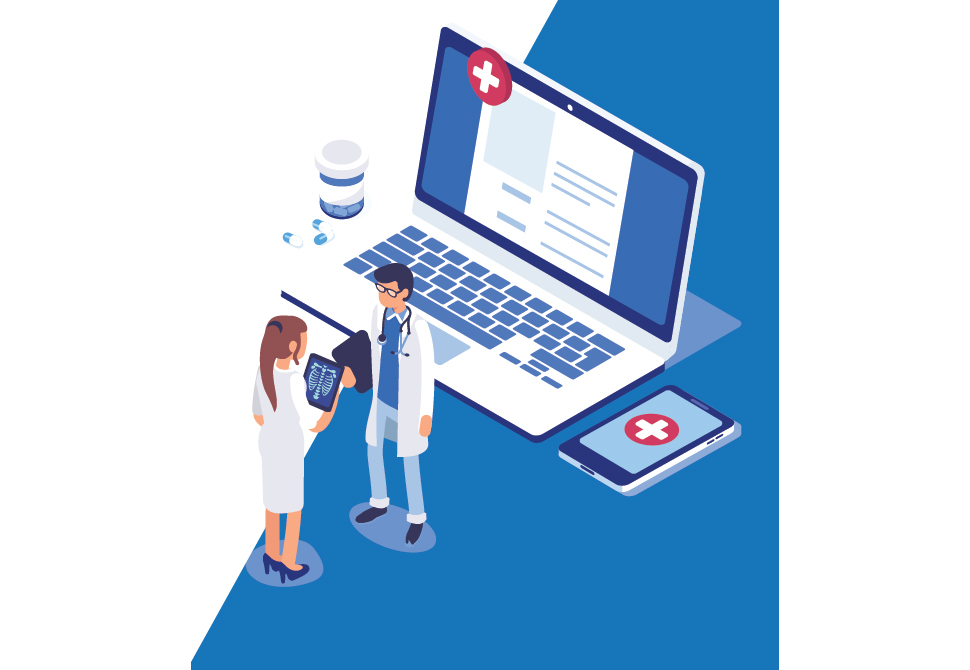
Another futuristic example involving multiple medical professionals: Jonas has a complicated knee injury. Instead of taking the long way to the nearest specialist, he decides to have a video conversation with his family doctor Dr. Dengler and a knee surgeon.
Dr. Dengler has scheduled an appointment to discuss the patient's X-rays and surgery. Instead of referring him to a specialist, she wants to consult directly with the knee surgeon via live video call.
Dr. Dengler reminds the surgeon of their joint appointment. To do this, she sends him a message with the information for dialing into the video call. The surgeon confirms that he will dial in from his clinic. He has already looked at the X-rays. The patient will have to undergo surgery followed by a rehabilitation program. The surgeon also asks for a physiotherapist to come in and explain the rehab program. This person can join in either by telephone or video call.
At 3 p.m., the patient registers for his appointment. This saves him the financial and time effort of having to drive to the practice himself. After a short chat, the doctor opens the video call with the surgeon. The surgeon identifies himself with a secure one-time SMS code. It appears remotely on the screen of a tablet mounted on the primary care physician's desk. The video conversation is automatically recorded.
The surgeon calls up the patient's X-ray images on the split screen so that the patient can also see them. He annotates them, circles problem areas and explains how he will proceed with the surgery. The surgeon now includes his physical therapist in the conversation, who explains the postoperative rehab process. She, too, identifies herself with a secure text message one-time code. Since she is currently on the road making house calls, she dials in from her smartphone.
After a long discussion, the patient finally sees that surgery is the best option and agrees. At the end of the conversation, an encrypted link to the recording is displayed. The specialist sends the link to his surgical team, who look at the results and prepare for the operation. After the appointment, Jonas receives a text message from the surgeon. The message contains several suggested dates for the surgery, to which he can respond by text message or phone call.
Group therapy
One last example of what the future looks like: Simon sees a psychotherapist to treat his depression. But sometimes life throws a wrench in his plans, and he's on the road. Fortunately, his psychotherapist, Dr. Burkhard, has an app that allows Simon to regularly attend his therapy appointments from any device, whether he's at home or on the road.
Dr. Burkhard has several patients with depression. He holds a group therapy session each week through his practice's telemedicine service. This allows his patients to participate via video or phone call. Dr. Burkhard thus helps them stay on the ball and reduces the number of therapy dropouts.
A text message reminds Simon that his weekly therapy session is that afternoon. But he receives dozens of messages every day, so he pays no further attention to them. Then his smartphone rings. Simon hears it, and he answers the call. An automated voice reminds him of his appointment. He confirms his attendance by pressing 1. Dr. Burkhard receives a list of patients attending via MMS. This allows him to prepare for the session and minimizes the number of dropouts. All the patients in the group have registered.
The session begins at 1 p.m. Simon identifies himself to the app with a one-time SMS code. Dr. Burkhard starts the video session from his PC and opens the conversation with his five patients. Simon is on the road; therefore, he decides to join the session from a park. He does not feel well enough for a video call. Besides, his connection is weak - so he dials in only by phone.
After the session, Dr. Burkhard compiles exercises for the coming week and sends them to his patients with a simple tap of his finger. Simon receives the message with the exercises via the app. If one of the patients wants to discuss something with Dr. Burkhard in person, he has the opportunity to do so via chat. Simon actually has a few questions and starts a chat with Dr. Burkhard in the app. He could also call him directly, but his questions can be clarified via chat. Dr. Burkhard now gets a message that a patient wants to communicate with him. He sees that it is Simon and answers his questions in the online chat. In addition, Dr. Burkhard's practice regularly sends reading material and mental health tips to their patients' preferred chat or social app, or to WhatsApp.
Summary
In the future, programmable communication functions will ensure better patient care, a trusting relationship with the patient, more efficient processes and better health outcomes. At the same time, they generate lower costs - and reduce the hurdles that often stand in the way of patients.
* Lori Belton is a writer and content marketer at Nexmo, Vonage's API platform. Her activities feed into blog posts, case studies and branding, among others.